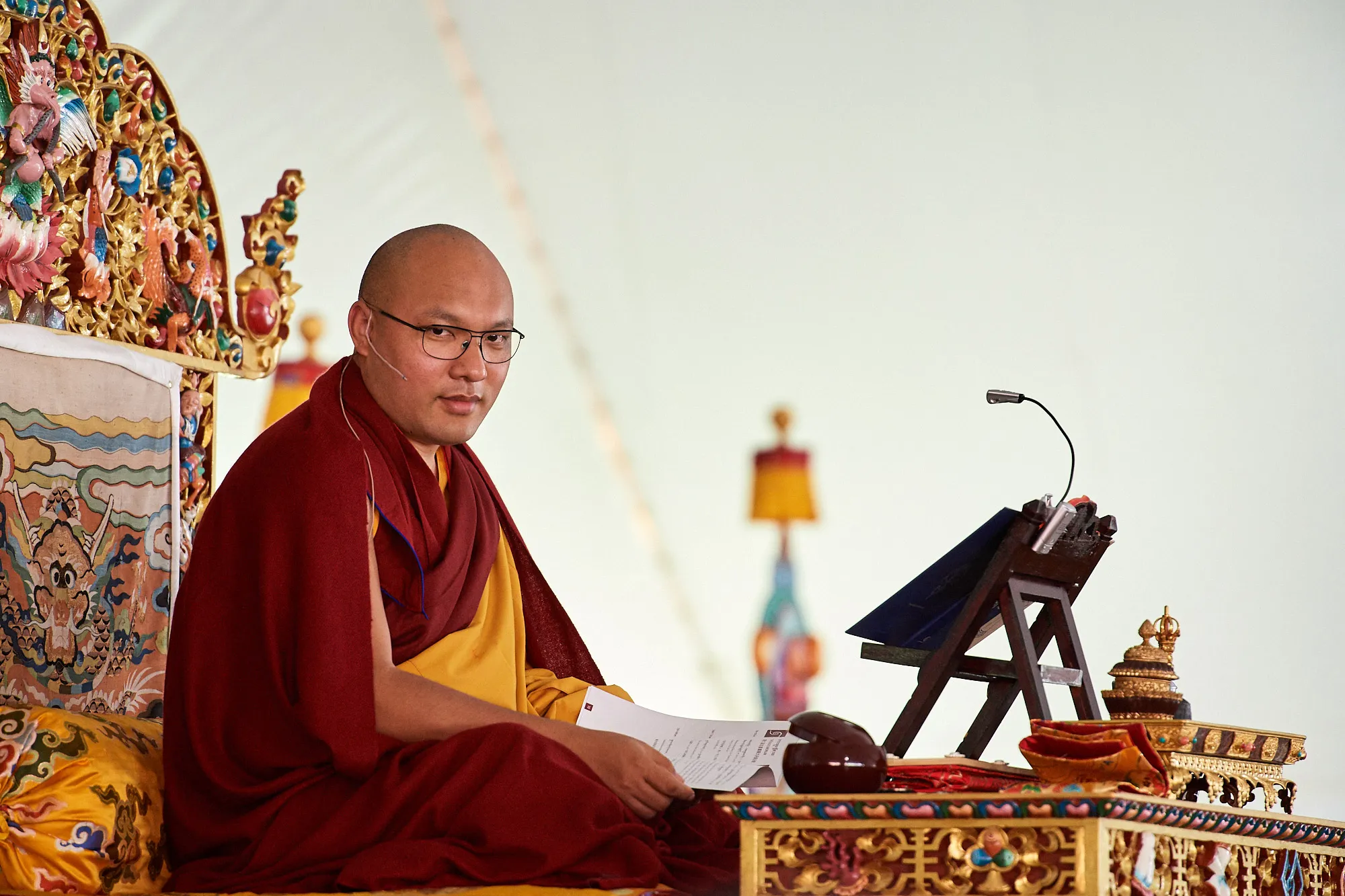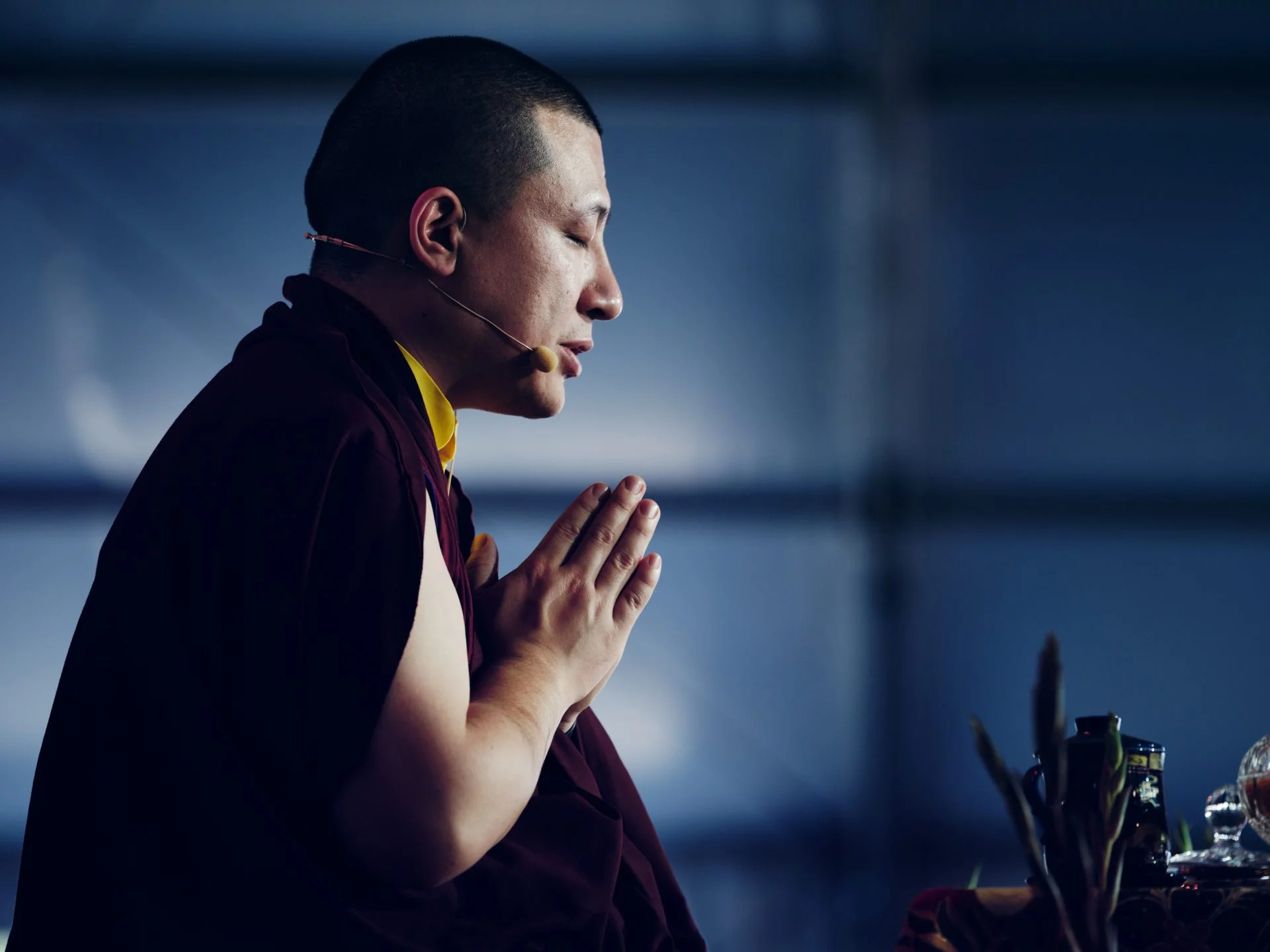

Ogyen Trinley Dorje holds one of Tibetan Buddhism's most demanding positions: he is the 17th Gyalwang Karmapa, the head of the Karma Kagyu lineage and heir to a spiritual office that predates the Dalai Lama institution by centuries. Born in 1985 in the Lhatok region of eastern Tibet, he was recognized at age seven as the reincarnation of the 16th Karmapa and enthroned at Tsurphu Monastery, the historic seat of the Karmapas. What distinguishes him from many of his peers is not only his position within one of the world's oldest continuous tulku traditions—the Karmapa lineage dates to the twelfth century—but also his willingness to use that authority to address contemporary ethical crises that earlier generations of Buddhist teachers often avoided.
His life changed irrevocably at fourteen. In 2000, Ogyen Trinley Dorje made an eight-day winter escape from Tibet to India, a journey that drew international media attention and positioned him as both a spiritual authority and a figure of geopolitical significance. The escape was not merely a personal act of defiance but a calculated move to access the full breadth of Tibetan Buddhist teaching and to reconnect with the diaspora community his lineage had cultivated in exile. It also marked the beginning of his emergence as a public intellectual, one who would eventually engage with audiences far beyond traditional monastery walls.
To understand Ogyen Trinley Dorje's work is to understand the weight of the office he occupies. The Gyalwang Karmapa is understood within Tibetan Buddhism to be a continuously reincarnating bodhisattva—an enlightened being who returns lifetime after lifetime to teach. The lineage he represents includes the third Karmapa, Rangjung Dorje, who systematized Mahamudra meditation, and the sixteenth Karmapa, Rangjung Rigpe Dorje, who brought Karma Kagyu teachings to the West in the 1970s and established a global network of centers that remain active today.
Unlike some spiritual leaders whose influence is primarily institutional, the Karmapa's authority is doctrinal and experiential. His teachings carry the imprint of classical Tibetan Buddhist training—he is versed in philosophy, debate, ritual, and meditation—but he has also cultivated a contemporary voice. Speaking and writing in Tibetan, English, and Chinese, he addresses audiences across linguistic and cultural divides with a directness that can feel startling coming from a figure steeped in such formal tradition.
Ogyen Trinley Dorje's core contribution lies in his ability to translate the rigor of Tibetan Buddhist thought into language and concerns relevant to a globalized, ecologically precarious world. His teachings frequently address climate change, nonviolence, and gender equality within Buddhist institutions—topics that have not always been central to monastic discourse. He has been outspoken about the need for environmental ethics rooted in interdependence, a concept already present in Buddhist philosophy but rarely mobilized in service of ecological activism.
This is not the work of a reformer seeking to dismantle tradition but of someone who believes the tradition itself demands evolution. He has publicly advocated for greater roles for women in Tibetan Buddhism, a stance that has met both support and resistance within conservative circles. His approach combines deference to lineage with a pragmatic recognition that institutions, like individuals, are subject to change.
One of the most striking aspects of Ogyen Trinley Dorje's current work is his embrace of digital platforms. He launched an official YouTube channel that archives video teachings on topics ranging from the Four Noble Truths to the Bodhisattva vow. He maintains verified accounts on Instagram and Facebook, and in February 2022, he began using Linktree to consolidate access to his official website and social media profiles. These are not superficial gestures. For a generation of seekers who encounter Buddhism online before ever setting foot in a meditation hall, these channels represent a primary point of contact.
His Spotify presence—with over 35,000 followers—suggests that his reach extends into unexpected corners of digital life, where teachings traditionally transmitted orally or in ritual settings now circulate as accessible, on-demand content. This democratization of access is both an opportunity and a challenge, and Ogyen Trinley Dorje appears to navigate it with awareness of both dimensions.
The Karmapa's audience is broad and, in some ways, unprecedented. He speaks to traditional Tibetan Buddhist practitioners who see him as the rightful heir to a lineage they have followed for lifetimes. He also reaches younger, often Western or digitally native Buddhists who are drawn to his environmental advocacy and willingness to question institutional norms. He is a figure of significance for those interested in interfaith dialogue, given his multilingual fluency and engagement with global ethical issues.
But perhaps his most important audience is the one that does not yet exist: the next generation of Tibetan Buddhists who will inherit a tradition shaped by exile, adaptation, and technological change. Ogyen Trinley Dorje is modeling what it might mean to hold lineage and innovation in the same hand, to honor the past without being imprisoned by it. Whether that model endures will depend not only on his teachings but on the institutions and communities that carry them forward. For now, he remains one of the most visible Buddhist leaders under fifty, a bridge between worlds that might otherwise never meet.