BrightStar

Browse All Events

Discover conscious gatherings

events

Yoga
Meditation
Breathwork
Qigong
Tai Chi
Sacred Music
World Music
Medicine Music
Sound Healing
Ecstatic Dance
Popular Destinations
BaliSedonaLos AngelesCosta RicaNew YorkSan FranciscoAustinMiamiJoshua TreeTulum
View All CategoriesView All Destinations

Explore All Features

Powerful tools to grow your events

Platform Features

Smart Dynamic Pricing
Ticket Categories
Assigned Seating
Abandoned Cart Recovery
Visitor Recovery
Donations & Sliding Scale
Affiliate Engine
Ticket Scanner
Coupon Codes
Custom Questions
Ticket Sharing
Upsells & Add-ons
Analytics & Reporting
Email Sequences
Waitlist / Notify / Remind
People & Places
Artists & TeachersEvent OrganizersVenues & StudiosKnowledge BaseGlossaryInspiration
View All FeaturesAbout Us
PricingBlog
Browse All Events

events

YogaMeditationBreathworkQigongTai ChiSacred MusicWorld MusicMedicine Music

Popular Destinations

BaliSedonaLos AngelesCosta RicaNew YorkSan Francisco

People & Places

Artists & TeachersEvent OrganizersVenues & StudiosKnowledge BaseGlossaryInspiration

Platform Features

Smart Dynamic PricingTicket CategoriesAssigned SeatingAbandoned Cart RecoveryVisitor RecoveryDonations & Sliding ScaleAffiliate EngineTicket ScannerCoupon CodesCustom QuestionsTicket SharingUpsells & Add-onsAnalytics & ReportingEmail SequencesWaitlist / Notify / Remind
View All FeaturesAbout Us
PricingBlog
Log inFind EventsHost Events
Tibetan BuddhistOm Mani Padme Hum · Om Mani Padme Hum · Om Mani Padme Hum · Om Mani Padme Hum · Om Mani Padme Hum ·
  • Browse All Events
  • For Seekers
  • Yoga
  • Meditation
  • Breathwork
  • Qigong
  • Tai Chi
  • Sacred Music
  • Retreats
  • Workshops
  • All Categories →
  • Bali
  • Sedona
  • Los Angeles
  • Costa Rica
  • Tulum
  • Byron Bay
  • San Francisco
  • Austin
  • All Cities →
  • For Creators
  • For Teams
  • For Writers
  • For Teachers
  • For Kirtan Artists
  • For Studios
  • For Festivals
  • For Retreat Centers
  • For Nonprofits
  • Brand Ambassador
  • Case Studies
  • Seva
  • Elevate
  • Amplify
  • 350K+ Buyer Network
  • Abandoned Cart Recovery
  • Smart Dynamic Pricing
  • Ticket Categories
  • Recurring Events
  • Assigned Seating
  • Affiliate Engine
  • Waitlist / Notify
  • Ticket Scanner
  • Embed Widget
  • Event Syndication
  • Message Center
  • Integrations
  • Reports
  • All Features →
  • About
  • The Ecosystem
  • Blog
  • Glossary
  • Inspiration
  • Help Center
  • Contact
  • API Docs
  • Brand Assets
  • Careers
  • Press
  • Terms of Service
  • Privacy Policy

Events

  • Browse All Events
  • For Seekers
  • Yoga
  • Meditation
  • Breathwork
  • Qigong
  • Tai Chi
  • Sacred Music
  • Retreats
  • Workshops
  • All Categories →

Destinations

  • Bali
  • Sedona
  • Los Angeles
  • Costa Rica
  • Tulum
  • Byron Bay
  • San Francisco
  • Austin
  • All Cities →

For Creators

  • For Creators
  • For Teams
  • For Writers
  • For Teachers
  • For Kirtan Artists
  • For Studios
  • For Festivals
  • For Retreat Centers
  • For Nonprofits
  • Brand Ambassador
  • Case Studies
  • Seva
  • Elevate
  • Amplify

Features

  • 350K+ Buyer Network
  • Abandoned Cart Recovery
  • Smart Dynamic Pricing
  • Ticket Categories
  • Recurring Events
  • Assigned Seating
  • Affiliate Engine
  • Waitlist / Notify
  • Ticket Scanner
  • Embed Widget
  • Event Syndication
  • Message Center
  • Integrations
  • Reports
  • All Features →

Company

  • About
  • The Ecosystem
  • Blog
  • Glossary
  • Inspiration
  • Help Center
  • Contact
  • API Docs
  • Brand Assets
  • Careers
  • Press
  • Terms of Service
  • Privacy Policy
BrightStar
© 2026 BrightStar. All rights reserved.
Back to Karmapa
Where to Start with Karmapa: A Beginner's Guide
For Beginners

Where to Start with Karmapa: A Beginner's Guide

If you're encountering the 17th Karmapa, Ogyen Trinley Dorje, for the first time, start with his digital presence—specifically his shorter video teachings available through official Karma Kagyu channels.

Karmapa
Karmapa
Jul 18, 2026
3 min read
Read · 1 sections

Where to Start with Karmapa: A Beginner's Guide

The Single Best Entry Point

If you're encountering the 17th Karmapa, Ogyen Trinley Dorje, for the first time, start with his digital presence—specifically his shorter video teachings available through official Karma Kagyu channels. Look for his talks on environmental ethics or interfaith dialogue rather than diving straight into technical Buddhist doctrine. These contemporary-focused teachings showcase what makes this particular Karmapa distinctive: a young spiritual leader who holds one of Tibetan Buddhism's oldest lineages while speaking directly to 21st-century concerns.

The Karmapa's online talks typically run 20-40 minutes and are offered in English, often with his characteristic directness and occasional humor. He doesn't perform "exotic spirituality" for Western audiences. Instead, you get a person who escaped Tibet at fourteen, carries the weight of a 900-year-old reincarnation lineage, and still manages to talk about climate change and religious pluralism without mystical vagueness.

What Comes Next

After your first encounter, move to his teachings on Mahamudra meditation. The Karmapa lineage has specialized in Mahamudra—a non-dual meditation tradition focused on recognizing the mind's fundamental nature—since the third Karmapa systematized it in the 14th century. The 17th Karmapa's explanations bridge ancient contemplative technology and accessible modern language. You'll find him referencing traditional texts while addressing the actual conditions of contemporary practice: distraction, doubt, the smartphone in your pocket.

Third, explore his environmental work. The Karmapa has positioned ecological responsibility as inseparable from Buddhist practice, not as a political add-on but as direct application of interdependence teachings. His environmental initiatives within Tibetan Buddhist institutions demonstrate how traditional authority can drive practical change.

Finally, investigate the context: learn about the Karma Kagyu lineage itself and the tulku (reincarnation) system. Understanding that the Karmapa represents the oldest continuously identified reincarnation line in Tibetan Buddhism—predating the Dalai Lama institution by two centuries—clarifies what you're actually encountering.

First Encounter Expectations

Expect someone younger and more politically aware than your mental image of "Tibetan Buddhist master." Born in 1985, the 17th Karmapa is likely the youngest major Buddhist leader you'll encounter. His teachings carry formal spiritual authority but also the perspective of someone who grew up in occupied Tibet, fled across the Himalayas as a teenager, and came of age in a globalized, digitally connected world.

Don't expect performances of serenity. Expect substance, often delivered with intellectual rigor. The Karmapa engages philosophy seriously but remains grounded in practice.

Common Misunderstandings

Beginners often mistake the title for the person. "Karmapa" refers to a lineage office, not a surname. Ogyen Trinley Dorje is the current holder. Understanding the tulku system—the idea that the same consciousness deliberately reincarnates to continue teaching—is essential, even if you don't accept it literally. For practitioners, this isn't metaphor; it's lived religious reality.

Another confusion: assuming the Karmapa's youth means inexperience. He's held this role since age seven and received intensive traditional training. His contemporary concerns don't dilute traditional authority—they demonstrate it applied to current conditions.

Finally, people overlook the geopolitical dimension. The Karmapa's escape from Tibet and his position in exile carry political weight, whether he emphasizes it or not.

When This Work Lands Hardest

Karmapa's teachings seem to hit hardest during two life phases: when you're questioning inherited religious frameworks but not ready to abandon contemplative practice entirely, and during moments of moral reckoning about your place in interconnected systems—environmental, social, political. His work offers sophisticated philosophy without requiring you to adopt cultural performance or abandon critical thinking.

His environmental ethics particularly resonate when you're confronting complicity in ecological destruction but find secular environmentalism spiritually hollow.

One-Week Starter Plan

Day 1-2: Watch two introductory video teachings on different topics—one on meditation, one on contemporary ethics.

Day 3: Read about the Karma Kagyu lineage and tulku system. Context matters.

Day 4-5: Watch a longer teaching on Mahamudra or Buddhist philosophy. Sit with concepts you don't immediately grasp.

Day 6: Explore his environmental initiatives. Notice how traditional frameworks address modern crises.

Day 7: Return to practice instruction. Try the meditation techniques described. Tibetan Buddhism is a doing tradition, not just a thinking one.
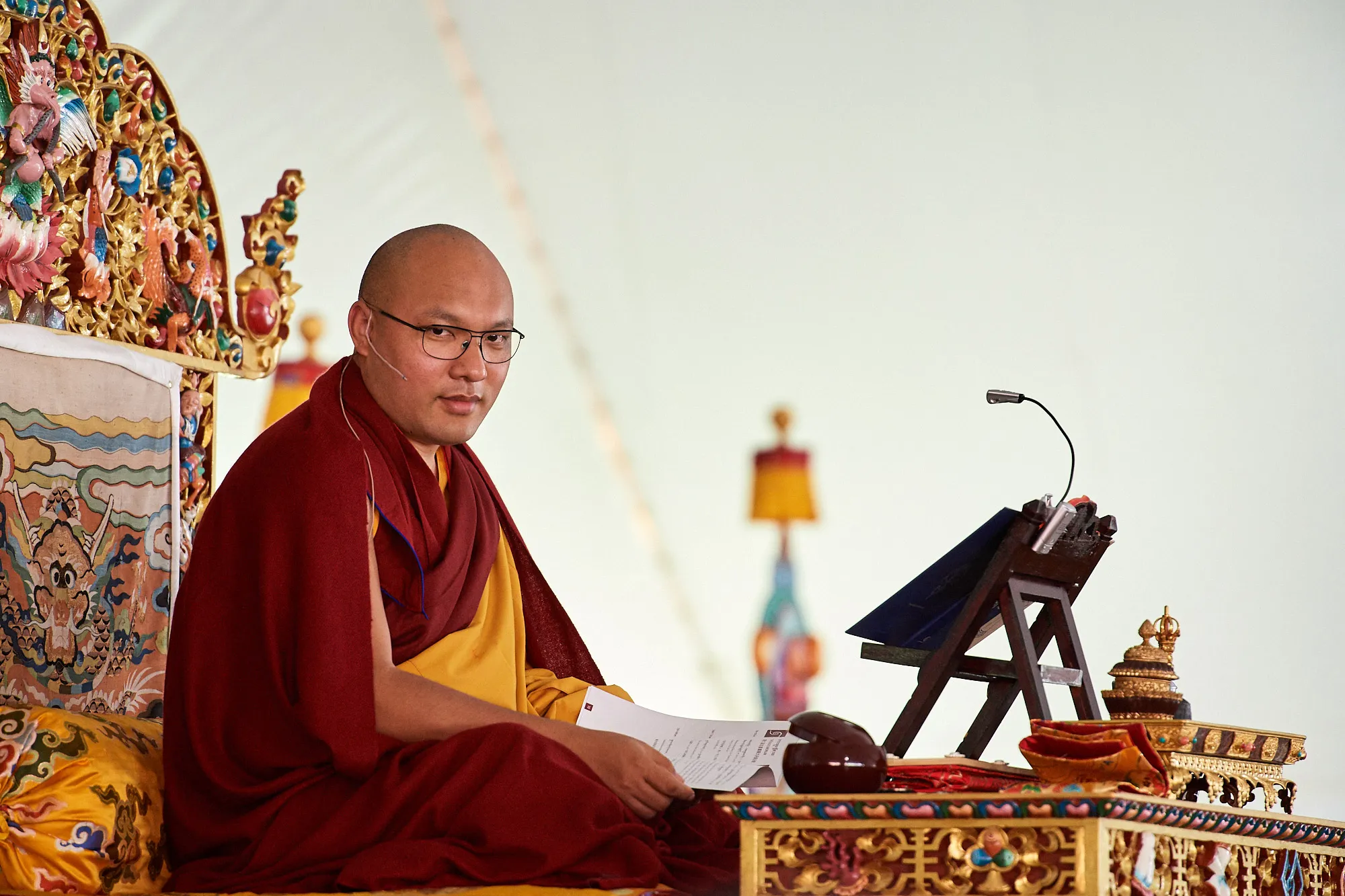
Karmapa
AboutKarmapa

Ogyen Trinley Dorje is the 17th Gyalwang Karmapa, the head of the Karma Kagyu lineage of Tibetan Buddhism. He teaches on the Dharma through both traditional monastery settings and…

View profileWebsite

Continue Reading

More about Karmapa

View All
Karmapa's Teaching: Approach, Method, and Voice
Article

Karmapa's Teaching: Approach, Method, and Voice

Who Is Karmapa? Life, Work, and Legacy
Article

Who Is Karmapa? Life, Work, and Legacy

Keep exploring

Continue your journey

More wisdom and gatherings from across the BrightStar directory.

More Articles

Browse the full library of teachings, interviews, and guides.

Back to all articles →

Teachers & Artists

Explore the lineages, musicians, and guides of the conscious world.

Explore artists →

Find an Event

Kirtan, retreats, sound baths, breathwork, festivals — happening soon.

Browse events →