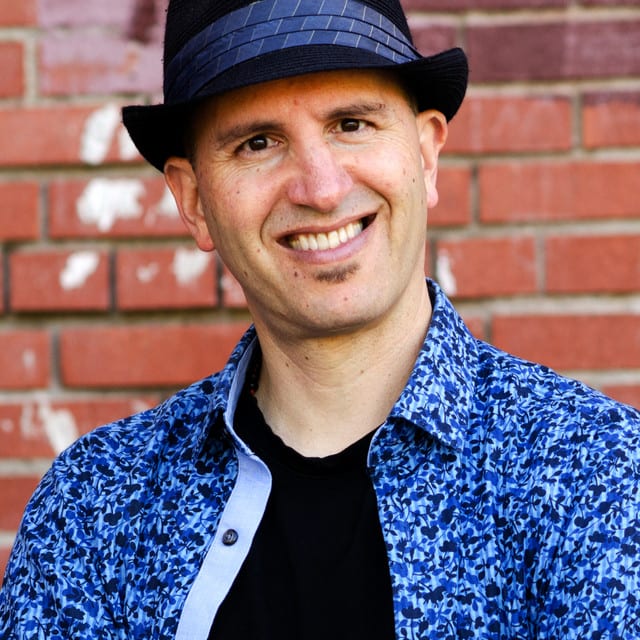

"Gymnopédie No.1" arrived on January 10, 2025, as a single with one track. It belongs to a stretch of regular releasing for Jim Gelcer: multiple singles through 2024 and 2025, followed by the full album "Quiet Expanse" in July 2025. Gelcer is a Toronto-based drummer, singer, composer and producer who trained in jazz at the Eastman School of Music and York University, and who later became a yoga teacher and kirtan leader within the Sivananda tradition. His body of work is built on a synthesis of kirtan, the devotional music of India, with jazz, R&B and rock.
The title is the notable thing here. Gymnopédie No.1 is a piece from the Western classical repertoire, and a single that takes its name carries a different kind of promise than his Sanskrit-titled work. It suggests an artist who is as comfortable in the harmonic world of Western composition as in the chant tradition. That is consistent with the way his career has run: a musician with real compositional training who found his way to devotional music, not the reverse.
I can't offer a verified account of this particular recording's arrangement, so treat what follows as the context his catalog provides, not a track-by-track report. Across his work, Gelcer's voice is warm and precise, an alto that sits in the mid-register and favors clarity and sincerity over display. His arrangements often draw on jazz-influenced chord voicings and an improviser's sense of space. His recent pacing is deliberate and slow, sometimes holding a single phrase for minutes, in an aesthetic closer to chamber music than to high-energy kirtan: intimate, conversational, musically literate, never showy.
Those qualities make a piece like this a natural fit for him. A work built on stillness and unhurried repetition suits a musician whose strength is restraint. Go in expecting patience, not propulsion, and expect the mood to be meditative.
This is a single, and it holds one track: "Gymnopédie No.1." What makes it worth your attention is the question it poses. How does a musician formed by jazz, session work and devotional practice approach a piece so familiar that it is often treated as background? Gelcer's catalog suggests an answer built on attention: he is at ease holding material without ornament, letting space do part of the work. Listen for how much he leaves alone, and for where his instincts as an arranger and improviser show themselves, if they do. Let the recording tell you what it is doing instead of arriving with a fixed expectation.
Gelcer's practice sits within the Sivananda Yoga lineage, which treats asana, pranayama, meditation and bhakti as integrated paths. Kirtan came to him when he was invited to chant in the temple at the Sivananda Ashram in the Laurentian Mountains. This single stands somewhat to the side of that devotional core. It is closer to ambient and contemplative instrumental territory, or to the quiet end of his catalog, than to call-and-response chanting. Still, the sensibility that connects his kirtan to his recent work, a preference for repetition, silence and sincerity over spectacle, is the thread that links it back to the tradition. It reads best as a companion to his devotional work, not a departure from it.
This single is for listeners who want calm without a chanting framework: someone winding down after a demanding day, someone in a period of grief or transition who needs quiet, or someone who already knows his meditation-paced singles and wants another door into that mood. It also suits people who came to Gelcer through his yoga teaching and want music for practice. It is less likely to satisfy anyone seeking energy, groove or the ecstatic communal feel of live kirtan. His aesthetic is understated by design, and this single appears to follow that line.
Give it a single uninterrupted sitting. Because it is one track, there is no sequence to navigate, which makes it well suited to a ritual: an evening, low light, headphones or a quiet room, perhaps before or after a yoga or meditation session. Put the phone out of reach. Let the first minute settle before judging it, since his work rewards slow attention more than quick impressions. If the piece moves you, follow it with "Quiet Expanse," the full album from July 2025, to hear the same patience stretched across a longer span.

