
Floating Waves arrived on March 28, 2025, as a single with one track. It is a small release, and it is best heard as a short, focused statement from an artist who has spent years refining a particular balance of devotion and musicianship.
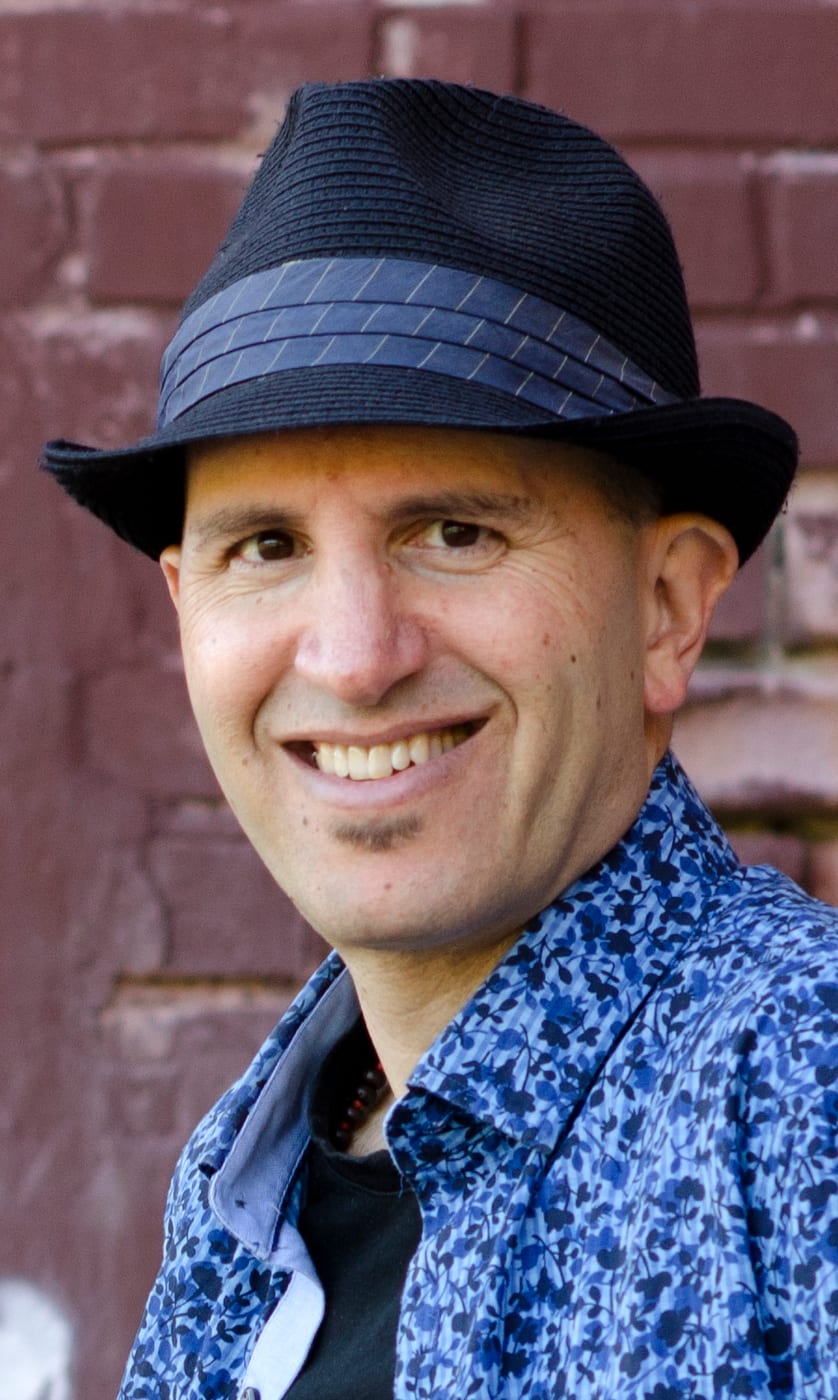
Jim Gelcer was born in Cape Town and moved to Toronto in 1968. He studied drums, vibraphone, arranging and improvisation at the Eastman School of Music, then jazz at York University, and worked as a professional musician. He toured and recorded with Lee Aaron and the Flying Bulgar Klezmer Band, and he composed for film and television, including CBC's The Journal. After studying Sivananda Yoga, he was invited to chant in the temple at the Sivananda Ashram in the Laurentian Mountains, and that invitation led him to kirtan.
His catalogue runs from the 2010 debut Bhagavan through Bhakti Groove Machine (2013) and Cape Town to Kolkata (2019), to Quiet Expanse in July 2025. In 2024 and 2025 he also released a run of thematic singles. Floating Waves, released earlier in 2025, belongs to that recent period of shorter, more focused releases. It is a compact piece that sits alongside the larger work rather than replacing it.
I can't list the personnel or instrumentation of this particular recording, so I'll describe what Gelcer's work typically sounds like and let you test it against the track. His voice is a warm, precise alto, placed in the mid-register and focused on clarity and sincerity rather than display. Harmonium is the usual center of his sound. His jazz training shows in the chord voicings, the unexpected harmonic movement, and the room left for drums or keyboards.
His recent pacing is deliberate and often slow. He is known for holding a single phrase for long stretches without adornment, which lets the listener settle into repetition instead of being pushed along. There are no stadium drums and no manufactured ecstasy. The mood is closer to chamber music: intimate, conversational, literate but never showy. Listen for whether Floating Waves follows that pattern, and for how its title, with its suggestion of drift and buoyancy, shapes your sense of the pace.
There is only one: "Floating Waves." Because the release is a single, there is no sequence to navigate, and that is part of what makes it useful. Without a tracklist to move through, you can give the whole piece your attention. Gelcer's strength is restraint, so the things to notice are what he leaves out, how long he lets a phrase breathe, and where a jazz-inflected harmonic turn appears under an otherwise simple line. Those details are where a piece like this succeeds or fails, and a single track gives you nowhere to look but there.
Gelcer's work belongs to bhakti, the path of devotion, and to kirtan, the devotional chanting of India, practiced within the Sivananda lineage he studied. That tradition is classical and nonsectarian, and it treats chanting as part of a wider practice that includes meditation and self-inquiry. Gelcer openly blends this with jazz, R&B and rock, and he doesn't present the result as a purer tradition than it is. Yoga Chicago magazine called him "the perfect bhakti singer." Floating Waves sits at the quieter, more spacious end of that hybrid, closer to a meditation aid than to a call-and-response festival piece.
This is for listeners who want devotional music that is understated and musically literate. It suits someone already drawn to meditation or a home yoga practice, and anyone tired of wellness music that feels generic. It also fits a moment when you need to slow down: after a draining day, during a period of grief or transition, or at the start of a quiet morning.
It is not for listeners who want high-energy, ecstatic kirtan, dense layering or propulsive rhythm. If you want to avoid any engagement with mantra or Hindu devotional practice, Gelcer's explicitness about his tradition may not suit you either.
Give it a single uninterrupted sitting, in the evening, with headphones or good speakers and the lights low. Since the release is one track, you can treat it as a complete practice session. Try listening once with your full attention, noticing the voice, the harmonic color and the silences. Then play it again while you sit, breathe or stretch, and let it recede into the background. Compare the two experiences. If you want more context afterward, move on to Quiet Expanse, or try one of his daily yoga classes on Insight Timer, where you can hear his voice and pacing without the production around it.