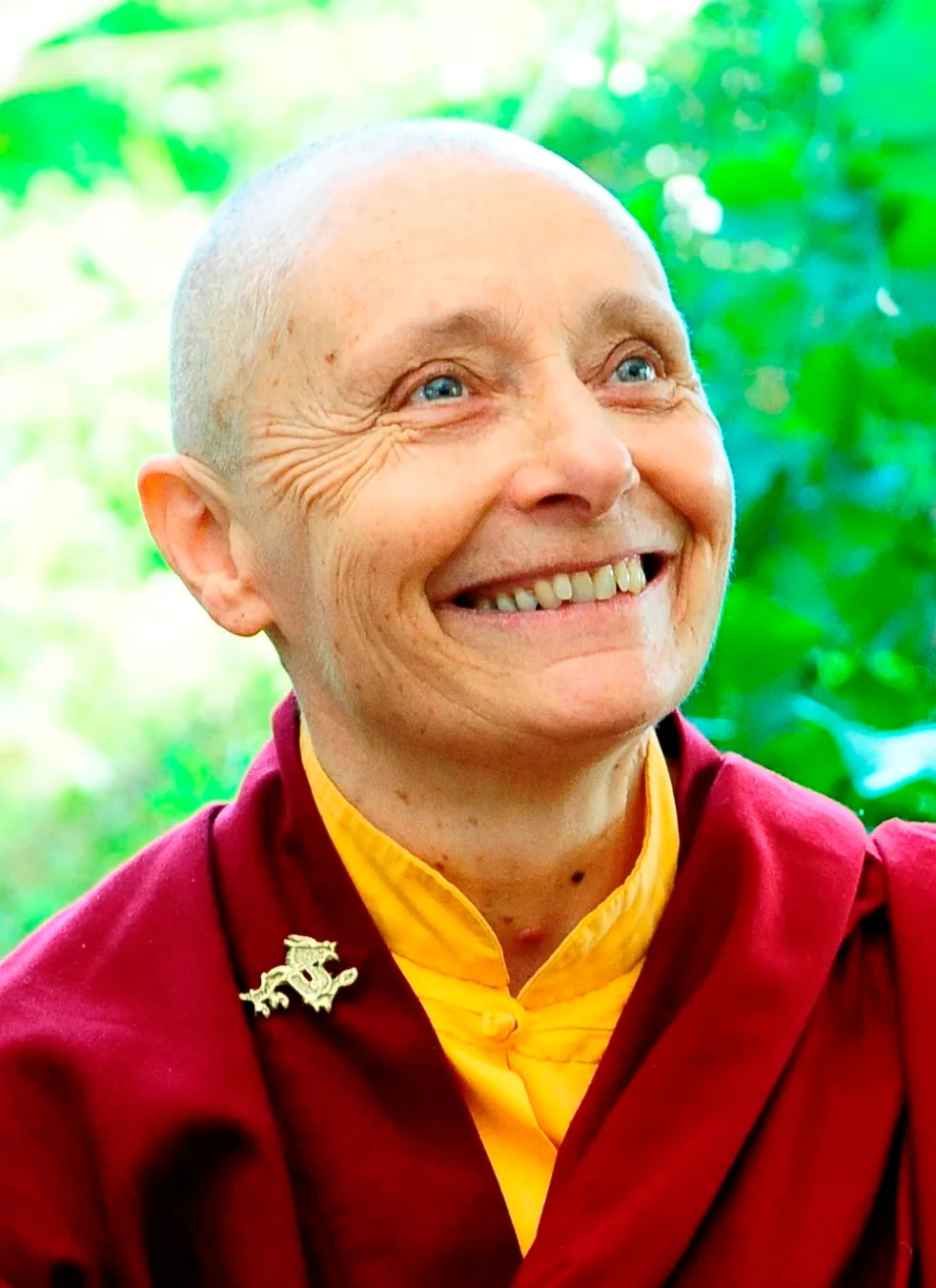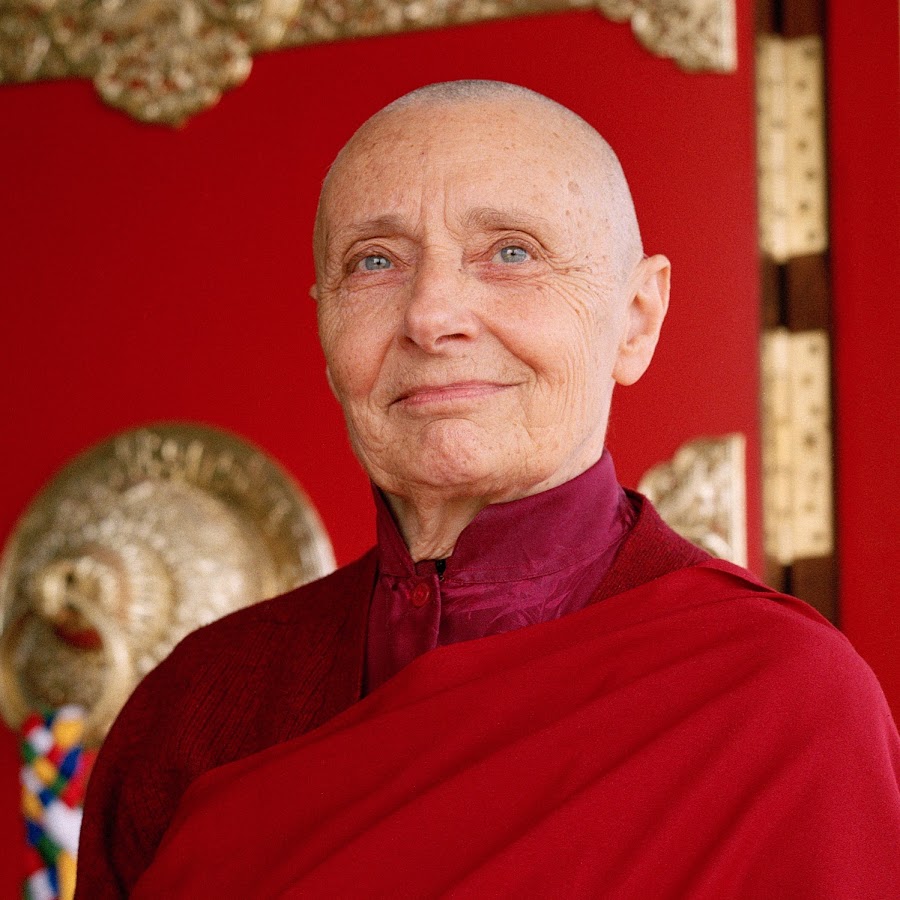

Jetsunma Tenzin Palmo was born Diane Perry in London in 1943, entering a world far removed from the Himalayan peaks and Buddhist monasteries that would later define her life. While little is documented about her childhood, what is known is that by her early twenties, she had already found her calling. In 1964, at age twenty-one, she traveled to India and met the Eighth Khamtrul Rinpoche in Dalhousie, a meeting that would alter the trajectory of her entire life.
This encounter led to her ordination as a novice nun in the Tibetan Buddhist tradition, making her one of the first Western women to take such vows. She began training in the Drukpa Kagyu lineage, one of the "Red Hat" schools of Tibetan Buddhism, under Khamtrul Rinpoche's guidance. It was an unusual path for a young British woman in the 1960s, but Perry—who would later receive the name Tenzin Palmo—had found something that resonated at the deepest level.
What followed was perhaps one of the most extraordinary periods of solitary practice in modern Buddhist history. After her ordination, Tenzin Palmo moved to Lahaul, a remote region of the Indian Himalayas, where she eventually retreated into a cave at 13,200 feet. There, she spent twelve years in solitary retreat, three of those in strict closed retreat, rarely seeing another human being.
Her practice centered on the traditional Tibetan Buddhist three-year retreat format, which she extended across twelve years. The focus was Mahamudra meditation and other practices from the Kagyu tradition—demanding contemplative work requiring absolute dedication. The conditions were harsh: bitter cold, isolation, minimal supplies, and the constant challenges of high-altitude living. Yet Tenzin Palmo persisted, demonstrating a level of commitment that few practitioners, Eastern or Western, male or female, could claim.
This period became the subject of Vicki Mackenzie's 1998 biography Cave in the Snow, which brought international attention to Tenzin Palmo's story. The book introduced Western audiences to a practitioner who had undertaken one of Buddhism's most rigorous paths and succeeded, challenging assumptions about what Western converts—particularly women—could achieve in traditionally male-dominated contemplative systems.
When Tenzin Palmo emerged from her years of retreat, she didn't retire into quiet teaching. Instead, she turned her attention to a systemic problem she had witnessed firsthand: the lack of educational and institutional support for women in Tibetan Buddhism. While monks had access to prestigious monastic universities and advanced degrees, nuns were largely relegated to support roles, denied the rigorous philosophical training that defined the tradition's scholarly elite.
In 2000, Tenzin Palmo founded Dongyu Gatsal Ling Nunnery in Tashi Jong, Himachal Pradesh. The institution was groundbreaking from its inception—the first nunnery in the Drukpa Kagyu tradition to offer the full geshe degree equivalent to its residents. A geshe degree represents years of intensive study in Buddhist philosophy, logic, and debate, traditionally reserved exclusively for monks. By creating this opportunity for nuns, Tenzin Palmo was fundamentally challenging centuries of institutional inequality.
Today, Dongyu Gatsal Ling houses over 100 nuns and offers a rigorous curriculum encompassing Buddhist philosophy, debate, ritual arts, and meditation. The nunnery trains togdenmas—female practitioners who complete the traditional three-year retreat—providing women with access to the same advanced contemplative and scholarly training that had long been the province of men alone.
As founder and director of Dongyu Gatsal Ling, Jetsunma Tenzin Palmo continues to oversee the nunnery's development and the education of its residents. Her work extends beyond administration; she teaches, guides practitioners, and advocates for the full recognition and ordination of women in Buddhist traditions worldwide. She has become an author and international speaker, though always with the practical goal of supporting female monastics and transforming institutional structures.
Her influence has helped shift conversations within Tibetan Buddhism about gender, opportunity, and the preservation of contemplative traditions. While some Buddhist institutions remain resistant to change, Dongyu Gatsal Ling stands as proof that women can engage these traditions at the highest levels—and that doing so enriches rather than diminishes the teachings.
Jetsunma Tenzin Palmo occupies a unique position in contemporary Buddhism. She is both a traditional practitioner—someone who completed one of the most demanding retreat practices in the Tibetan system—and a reformer working to expand access and opportunity within that same tradition. Her story resonates with Western audiences drawn to Buddhist practice, offering a model of serious commitment that doesn't require rejecting one's origins. Yet her work matters most to the nuns she teaches and the institutional changes she has catalyzed.
In a religious landscape often dominated by male authorities, Tenzin Palmo has quietly built an alternative: a place where women can pursue the same depth of study and practice, where they can become scholars and adepts in their own right. Her legacy isn't just about personal achievement—twelve years in a cave, international recognition, books about her journey. It's about the doors she has opened and the practitioners who will follow through them, carrying forward teachings that might otherwise have remained inaccessible.