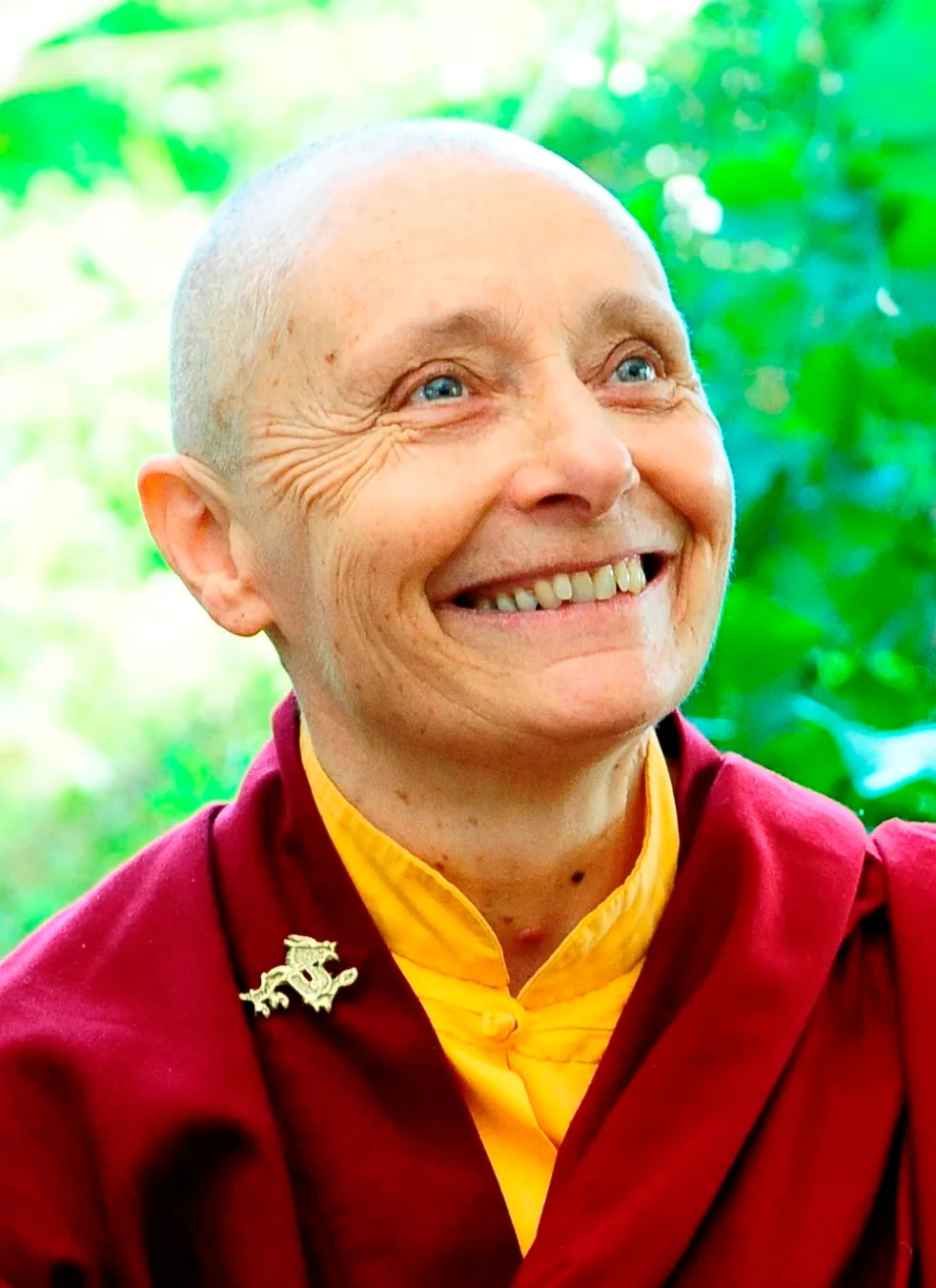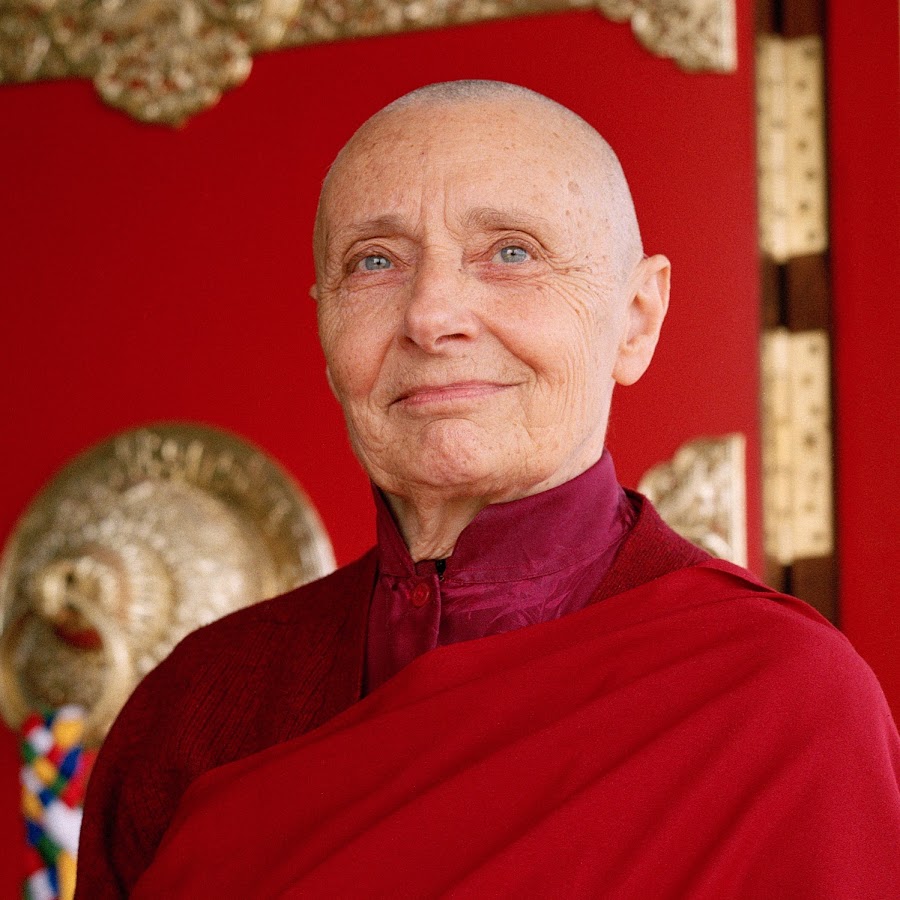

Jetsunma Tenzin Palmo's Teaching: Approach, Method, and Voice
The Architecture of a Session
A teaching session with Jetsunma Tenzin Palmo rarely begins with fireworks. She settles into her seat with the unhurried precision of someone who has spent twelve years in a Himalayan cave, and the room adjusts to meet her tempo. What follows is structured but not rigid—typically a forty-five-minute exposition on a specific theme, often drawn from traditional Kagyu texts or the gradual path teachings, followed by questions that she fields with directness bordering on surgical. There is little preamble, minimal scene-setting. She assumes you have come to work.
Her retreats follow a similar architecture: grounded in the traditional three-year retreat model she herself completed in radical isolation, but adapted for householders and Western practitioners who cannot or will not disappear into a cave. Morning sessions emphasize shamatha practice and foundational meditation instruction. Afternoons lean toward analytical meditation and Mahamudra pointing-out instructions. She does not coddle, but neither does she withhold. The container is firm.
Recurring Territories
Tenzin Palmo returns, again and again, to a small constellation of themes that circle the question of what genuine practice actually requires. The first is motivation: why you are practicing, whether you have examined this honestly, and whether your reasons can sustain you past the initial enthusiasm. She is unsparing about spiritual materialism and the Western tendency to collect teachings like merit badges.
The second is the role of women in Buddhism. Her teaching here is not sentimental but structural. She speaks frankly about the institutional obstacles women face in the Tibetan monastic system, the ways in which nuns have been historically under-resourced and undertrained, and the work required to create genuine parity. This is not window dressing in her curriculum; it is a through-line that shapes how she reads texts, organizes retreat schedules, and discusses renunciation.
The third theme is solitude—not as ascetic performance, but as the condition necessary for certain kinds of seeing. She speaks from twelve years of lived experience, but without romanticizing it. The cave was cold. The practice was often dull. What emerged was not bliss but clarity.
The Questions She Poses
Tenzin Palmo does not traffic in koans, but she does pose questions designed to destabilize comfort. "Are you willing to be uncomfortable?" is one she returns to frequently—not as rhetorical flourish, but as diagnostic tool. She asks students to examine their relationship to distraction, to busyness, to the ways they perform practice rather than enacting it.
She is equally direct about renunciation, a concept she does not sentimentalize. The question is not whether you can give up everything and live in a cave, but whether you can recognize what genuinely binds you and whether you are willing to loosen that knot incrementally. She asks students to sit with the gap between their stated aspirations and their actual conduct, and she does not offer easy reconciliations.
Aesthetic and Delivery
Her delivery is precise, her accent still British despite decades in India. She uses humor sparingly, and when it comes, it is dry and self-aware—often at her own expense, occasionally at the expense of romantic notions about retreat practice. She tells stories, but they are functional rather than ornamental: an illustration of a teaching point, a biographical detail that clarifies motivation, a traditional tale that maps onto contemporary confusion.
She quotes scripture extensively—primarily Kagyu texts, Milarepa, Gampopa—but does not hide behind it. She interprets, contextualizes, argues. Silence is frequent but not theatrical. She pauses to let a point settle, to allow space for integration. The aesthetic is monastic: minimal, intentional, unsentimental.
Who It Lands For
This teaching finds traction with practitioners who have survived their first infatuation with Buddhism and are asking what comes next. It appeals to those suspicious of charisma, wary of guru theatrics, and hungry for transmission that does not require them to abandon critical thought. Women, particularly, find in her teaching a model that does not ask them to be exceptional to be taken seriously.
It may bounce off those seeking ecstatic experience, rapid transformation, or teachings that center emotional catharsis. Tenzin Palmo is not warm in the therapeutic sense. She offers respect, precision, and the fruits of decades of practice, but not consolation. Students looking for a maternal figure may be disappointed. Those looking for a clear-eyed guide will find one.
Lineage and Location
Tenzin Palmo teaches within the Drukpa Kagyu tradition, a lineage emphasizing Mahamudra meditation and the synthesis of sutra and tantra. She holds the transmissions of the Eighth Khamtrul Rinpoche and maintains the formal structures of Tibetan monastic education, even as she works to reform them. Her establishment of Dongyu Gatsal Ling as the first nunnery in her lineage to offer full geshe-level training is both an act of preservation and transformation—maintaining rigor while dismantling inequity. She teaches as someone who belongs fully to a tradition and refuses to accept its limitations.