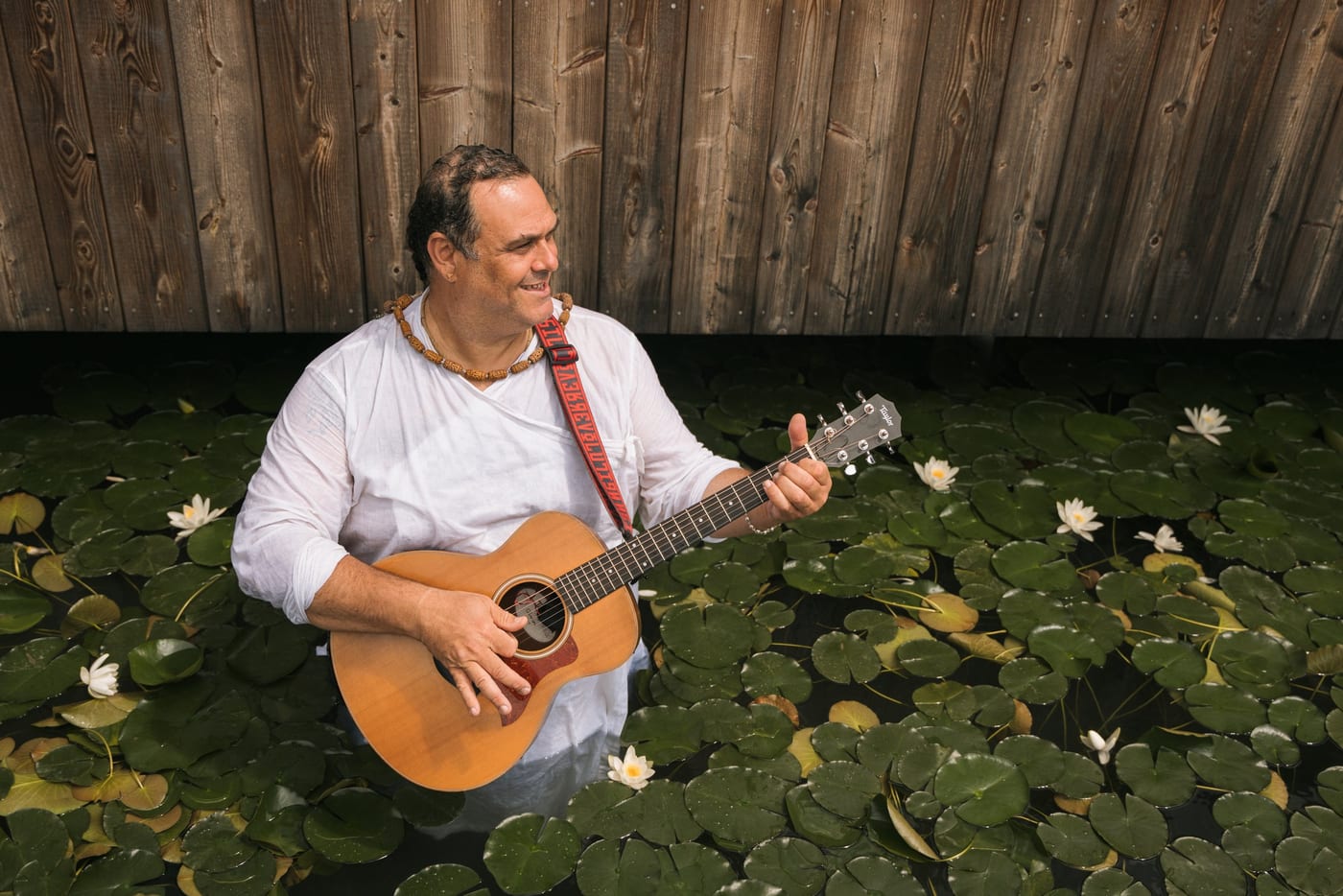

Krishna Kripa Ho Tabhi arrived on July 27, 2024, as a single with one track. That detail shapes how to listen. This is not a statement album or a sprawling studio project. It is a single devotional piece placed in a catalog that, by the data, has leaned toward frequent single releases since 2021, alongside fuller records like Love (2022) and Meditation & Mantra (2023).
For a musician raised by monks in temples from the age of four, who later rebelled, acted in Hollywood, and then spent two decades touring and recording, a single like this reads as a focused return to source material. The title itself, with Krishna named directly, reflects an instinct that runs through his work: anchoring a song in a named deity and sacred words. No label is listed for the release, which fits a catalog largely self-directed in its presentation.
The honest starting point is that the available record does not itemize the instrumentation, credits or running time for this release. Anything specific, such as a particular harmonium or drum setup, should be confirmed through the Spotify credits or gauravani.com rather than assumed.
What can be said comes from how Gaura Vani's work generally operates. The human voice carries the center, delivering devotional lines in the bhajan vocabulary, where repetition and the name of the divine matter more than melodic showmanship. Pacing in his studio work tends toward the sustained and meditative, and the repetition is part of the design rather than a flaw. Expect a first listen to feel slower than anticipated, and let it.
The ensemble world around him is worth knowing. In As Kindred Spirits, the East-West fusion project rooted in bhakti, the players include Shyam Kishore on tabla and sarod, Acyuta Gopi on vocals, and Ananta Govinda on mrdanga (khol). Whether any of them appear on this particular single is not documented, so treat them as context for the sound he works within, not as a credit list.
A single-track release has one signature track, and it is the title piece, "Krishna Kripa Ho Tabhi." Its title points to grace (kripa) in a devotional register, and that framing is the way in. Rather than offering variety, the piece rewards staying with one idea. What makes it land is concentration: no sequencing, no arc across a tracklist, just a single devotional thought given the full length of the recording.
Listeners comparing it to the rest of the catalog may find it closer in spirit to the mantra-focused releases than to the loud, crowd-driven festival kirtan he leads with The Juggernauts.
The work sits in the bhakti tradition, the devotional path centered on love for the divine expressed through song. Kirtan, the call-and-response chanting of names and mantras, and bhajan, the devotional song form, are his two working vocabularies. This release is tagged devotional and bhajan, which places it on the songful, textual side of that pairing.
His formation came from inside temple life, so mantra and ritual practice predate any career decision. The public record does not name a specific guru lineage or sampradaya, and it would be a mistake to assign one. What can be said is that the music belongs to a living devotional practice, not to generic wellness or ambient background sound, even where it overlaps with those uses.
This single suits a listener already curious about bhakti who is willing to hear devotional song as a sung, performed practice. It lands especially for someone in a reflective stretch: a quiet evening after a heavy day, a period of seeking, or a moment when a short, concentrated piece is easier to hold than a full album.
It is a poor fit for listeners who want high-BPM electronic energy, remix-style kirtan, or wordless abstraction. The language and named deity carry weight, and those unfamiliar with Hindu names will face a small learning curve. Anyone expecting a loud festival singalong should look to his more energetic projects instead.
Give it a dedicated sit rather than a background spot. Evening works well, with headphones or a quiet room, and with no other task competing for attention. Listen once simply to take in the voice and the pacing. Then play it again while following the title phrase, letting the repetition do its work.
If you want to use it as part of a ritual or personal practice, a single track is convenient: one piece, one sitting, repeatable day after day. For deeper context afterward, move to Meditation & Mantra or the twenty-track compilation Kirtan: The Bhakti Yoga of Chanting Mantras, both better suited to extended listening.