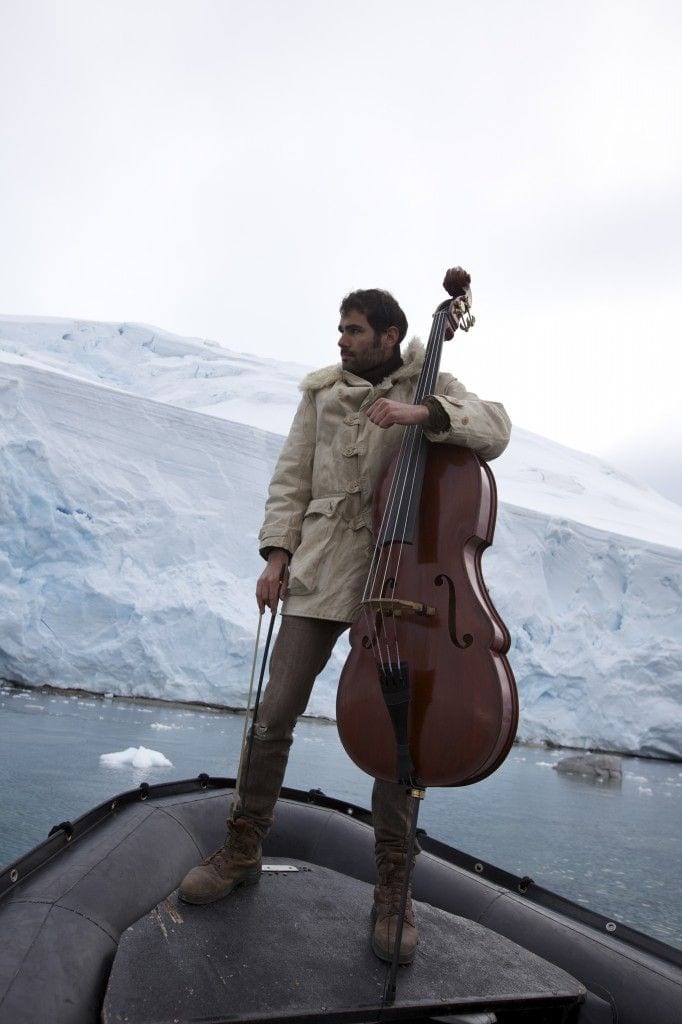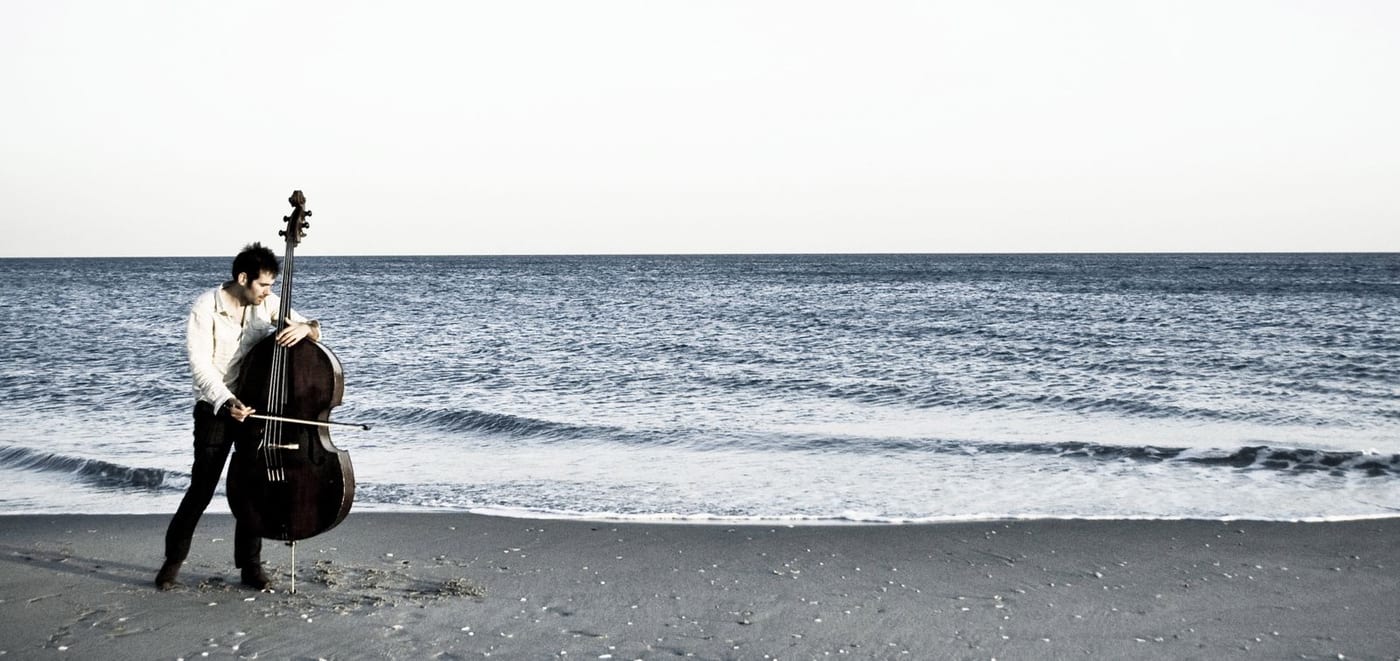
Start with Voyage, a 13-track album released in November 2016. It shows Garth Stevenson's method at full album length: a double bass played unaccompanied, in place, in a remote landscape, with minimal processing. Wind, water and natural reverb are not added afterward. They enter through the performance itself. If you want a single record that explains the project, this is it.
If you'd rather sample before committing to an hour of listening, his YouTube channel is a practical way to hear the location sound first. Then put on Voyage with headphones, which bring out the low register and the room sound most clearly.
Alpine (2007). The earlier, more compact record of the same approach. It is useful for hearing where the signature began, before the method matured.
Flying (2011). This 14-track album sits between the two. Listen to it after Alpine and Voyage and you can compare how the location recordings changed over time.
Tracks (Original Motion Picture Soundtrack). The three-track single from 2015 is a short sample drawn from the film soundtrack. The full 2014 album runs 25 tracks and shows how his restraint carries over to screen work. Ten Thousand Saints (2016) does the same. The Ken Burns compilation, The U.S. and the Holocaust (2022, 18 tracks), is a different listen: documentary film music rather than the core of his solo work. Save it for later.
Expect slow, sparse, wordless music. There is no sung voice. The bass has a woody attack, bowed sustain and plucked textures, and it sits close to how it sounds in the room. A phrase may hold for a long stretch before the next one arrives. The silences carry as much weight as the notes.
Because each piece is improvised in a specific place, the same kind of material can sound entirely different on a coastal British Columbia beach than on the Antarctic Peninsula. The recordings read less like produced ambient albums and more like a field notebook kept in sound. The aesthetic favors patience and space over virtuosity.
"It's background music." It can be, but the audible wind and the silences are part of each piece. If you want something to fill a room, you may find the environment too present.
"There's a hidden layer of field recordings." There isn't. Many ambient artists layer or synthesize environmental sound in post-production. Stevenson performs in the location and leaves the surroundings unprocessed. The room is a participant in the composition.
"It should have song structure." Expecting verses, choruses, rhythm or a melodic hook will make the recordings feel formless at first. That is intentional.
"He belongs to a meditation lineage." No named lineage, teacher or school is documented. The work is closer to contemplative listening, and it began as a personal experiment in solitude and attention, rooted in his music training, backcountry hiking and environmental observation.
"Laptop speakers are fine." The desert and Antarctic recordings especially can feel thin that way.
It tends to land when you are overstimulated and want to recalibrate your attention, such as at the end of a crowded week, during a long yoga hold or final relaxation, or at the start of a meditation sit. It also suits people who already spend time outdoors and want sound that matches the pacing of a walk. Most people arrive through the meditation and mindfulness side and stay for the patience of the bass. It is a poor fit for a party or a fast-moving workout.
If you want to experience the work live, he leads Music Meditation Hikes, which combine slow walking, silent observation and live double bass. Check garthstevenson.com for schedules and physical demands. The one dated event listed is a concert at Kripalu Center for Yoga & Health in Stockbridge on 13 November 2026.
Day 1. Watch a location recording on his YouTube channel. Notice how the place answers the bass.
Day 2. Play the first half of Voyage on headphones at low volume, doing nothing else. Sit or lie still.
Day 3. Finish Voyage. Note which moments feel emptiest and whether you start to fill the silence yourself.
Day 4. Listen to Alpine while walking, ideally outdoors. Pay attention to the sounds around you as well as the ones in your ears.
Day 5. Play Flying and compare it to Alpine and Voyage. What changed in the way the bass sits in the space?
Day 6. Try the three-track Tracks single, then sample the full soundtrack. Notice how the same restraint works when it serves a film.
Day 7. Return to your favorite stretch of Voyage and listen again with no other activity. Then decide whether to explore the documentary soundtrack, or look into a Music Meditation Hike through garthstevenson.com.