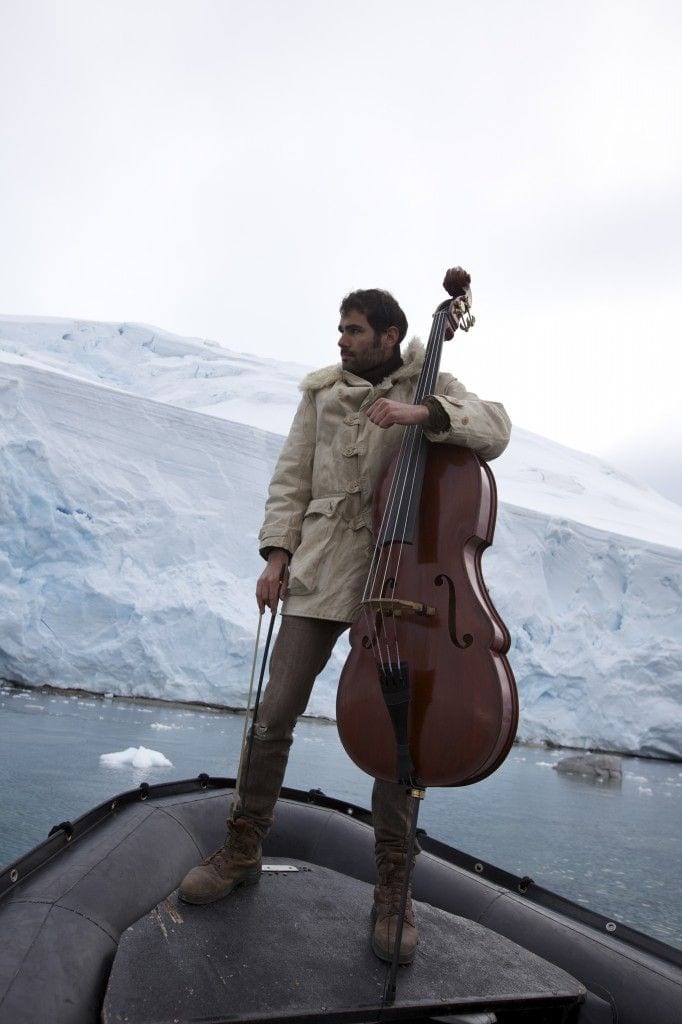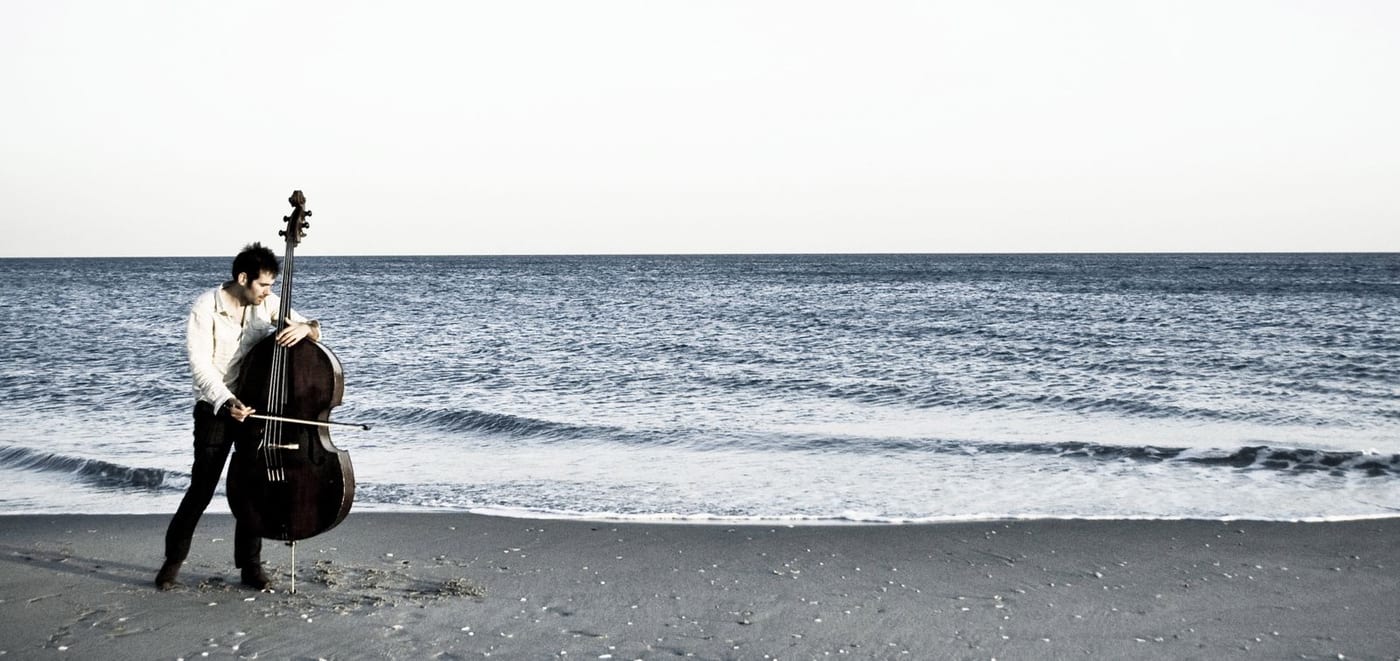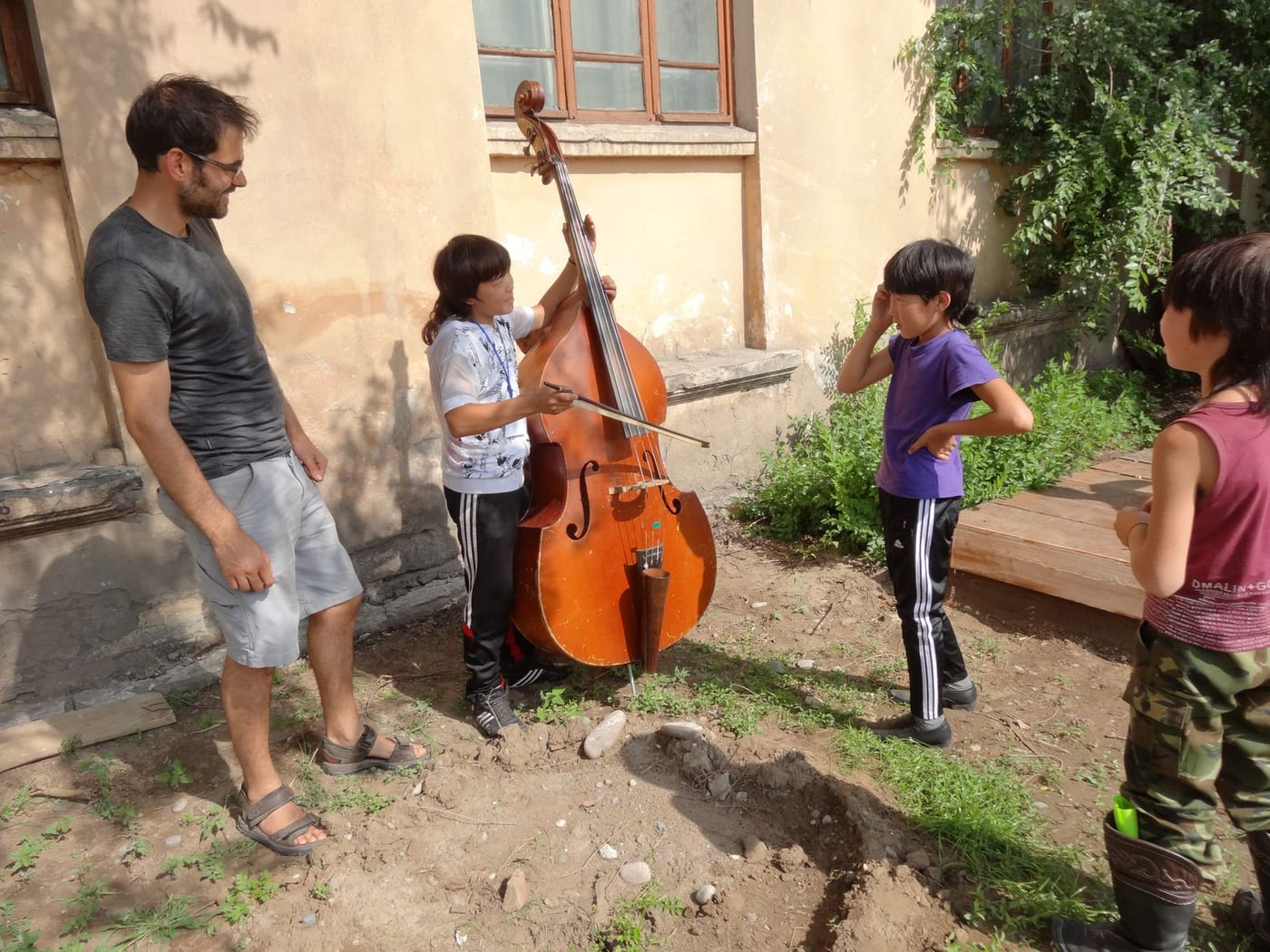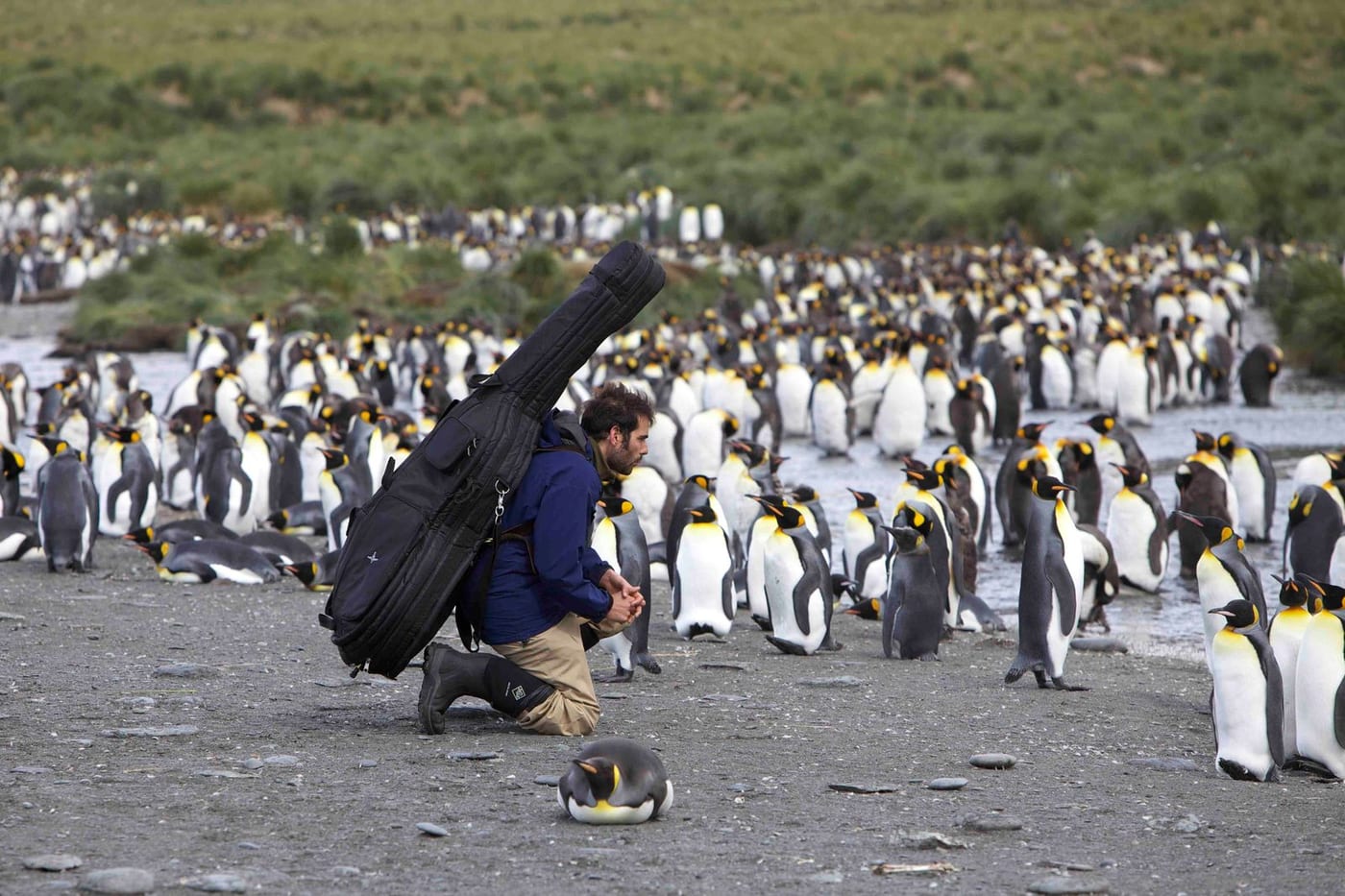
Garth Stevenson is a composer and double bassist raised in the mountains of Western Canada, and his catalogue reads like a field notebook kept in sound. It begins in 2007 with Alpine, moves through Flying in 2011, and arrives at Voyage in 2016, three solo records in which he carries the double bass into remote places and plays unaccompanied, letting wind, water and natural reverb shape the music. Between and after them come film and documentary soundtracks: Tracks (2014, with a 2015 single), Ten Thousand Saints (2016), and, most recently, the 2022 score compilation for Ken Burns, Lynn Novick and Sarah Botstein's The U.S. and the Holocaust. The thread throughout is patience, space and a refusal to layer environmental sound in post-production. What follows takes the releases in the order given, newest first.

Released in 2022, this 18-track compilation is the most recent entry in the catalogue and the most sober. It is documentary film music, so it serves a story rather than a landscape, and the restraint he brings to his solo work becomes a kind of gravity here. Expect weight, quiet and room for reflection rather than the open-air shimmer of the location albums. In his arc, it marks the furthest extension of his textural discipline into screen work on a major production. It is a different listen from the core solo records, so approach it as a companion piece. Because individual track titles are not listed in the facts here, begin with the opening piece on the album and let the tone settle before moving on.
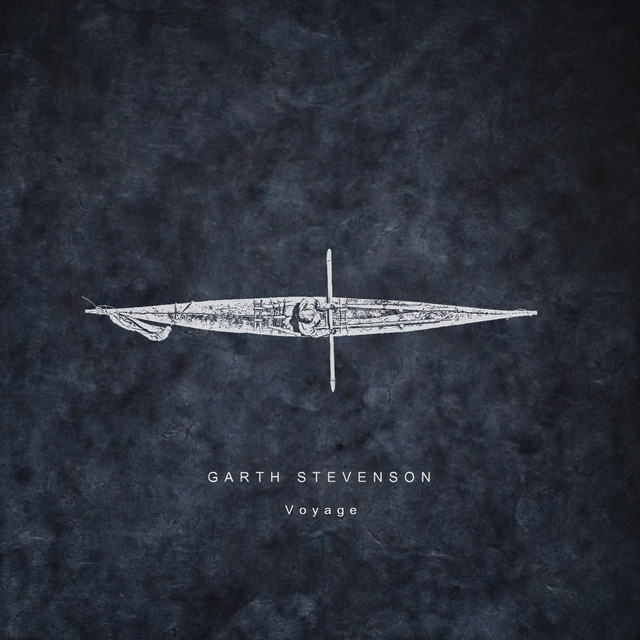
Voyage, from 2016, is a full 13-track album and the most complete statement of his method: solo double bass, played in place, with minimal processing. The pacing is slow and phrases are allowed to hang, with the bowed sustain and woody plucked attack sitting close to how they sound in the room. In the arc, it is the mature culmination of the line that began with Alpine and continued through Flying, which is why it is the most straightforward entry point for a newcomer. Listen with headphones to bring out the low register and the sense of space. Track titles are not given in the facts, so start with the first track and let the album unfold in sequence.

This 2016 soundtrack runs to 19 tracks and shows how his restraint travels to the screen. It is a film score first, so its moods follow the needs of the story rather than the pure solitude of the location albums. It arrived the same year as Voyage, which makes 2016 a year in which his solo and screen sides sit side by side. In the arc it is a companion to Tracks, further evidence that the sparse, patient approach translates beyond the wilderness. Track titles are not listed in the facts, so drop in at the opening cue and listen for how the bass supports rather than dominates.

Released in 2015, this is a compact three-track release drawn from the Tracks film soundtrack. It makes a good short sample for a listener who wants a taste before committing to a longer record. It is concentrated, quiet and unhurried, a small window onto the larger 2014 score. In the arc it works as an afterword to that album, distilling its mood into a few minutes. Because track names are not given in the facts, simply begin with the first of the three and let it play through; the whole release is brief enough to hear in a single sitting.

The 2014 album is the full 25-track version of the Tracks soundtrack and the largest release in the catalogue by track count. It shows how his unaccompanied, minimally processed bass carries over into film, with space and silence doing as much work as the notes. In the arc it sits between Flying and Voyage, the first major screen credit among the soundtracks, and it points ahead to Ten Thousand Saints and the Ken Burns score. It is best taken in slowly, as a long immersive listen. Track titles are not listed in the facts, so start with the opening track and allow the album's patient mood to build.
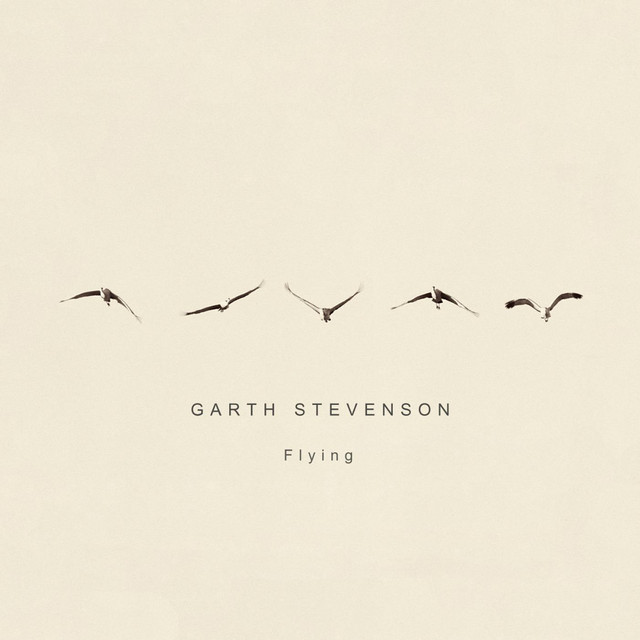
Flying, from 2011, has 14 tracks and sits between his earliest record and his most complete one. It is valuable for hearing how the location recordings changed over time, with the same solo bass approach and the same willingness to let wind, water and reverb answer the instrument. In the arc it is the bridge: the signature of Alpine is there, but the scope is wider and more assured. It rewards a listener who wants to trace his development rather than start from the finish. Track titles are not given in the facts, so begin with the first track, preferably through headphones, and listen for how the room responds.
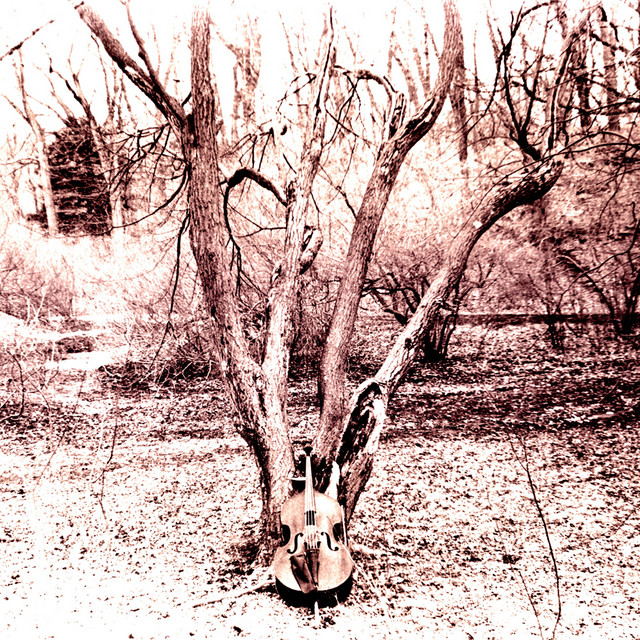
Alpine, released in 2007, is the first record in the catalogue, a 12-track album that is more compact than the later ones. It documents where the signature began: unaccompanied double bass, recorded in place, shaped by the acoustics of its setting. His roots in the mountains of Western Canada and in backcountry hiking feel closest to the surface here. In the arc it is the origin point from which Flying and Voyage grow, and it works well for listeners who want to hear the idea in its earliest form. Track titles are not listed in the facts, so start with the opening track and treat the album as a short, focused walk.
Devotional: Voyage. Its full-length, unhurried sequence suits long, attentive sitting, though no tradition is attached to the music.
Contemplative: Alpine. It is compact, sparse and close to the source of the work, ideal for a single quiet sitting.
Energetic: Flying. The most forward-moving of the solo records by title and spirit, though the pacing remains slow; his music is not built for high-BPM drive.
Healing: The U.S. And The Holocaust soundtrack is weighty and reflective, but for gentler restoration, choose the three-track Tracks single, a short and quiet reset.