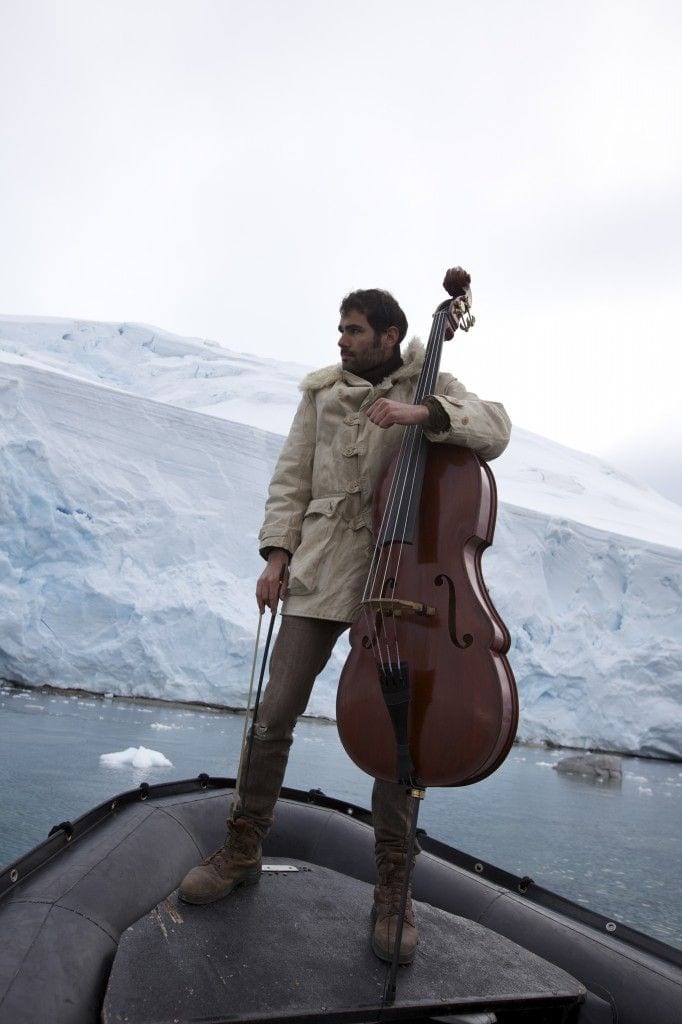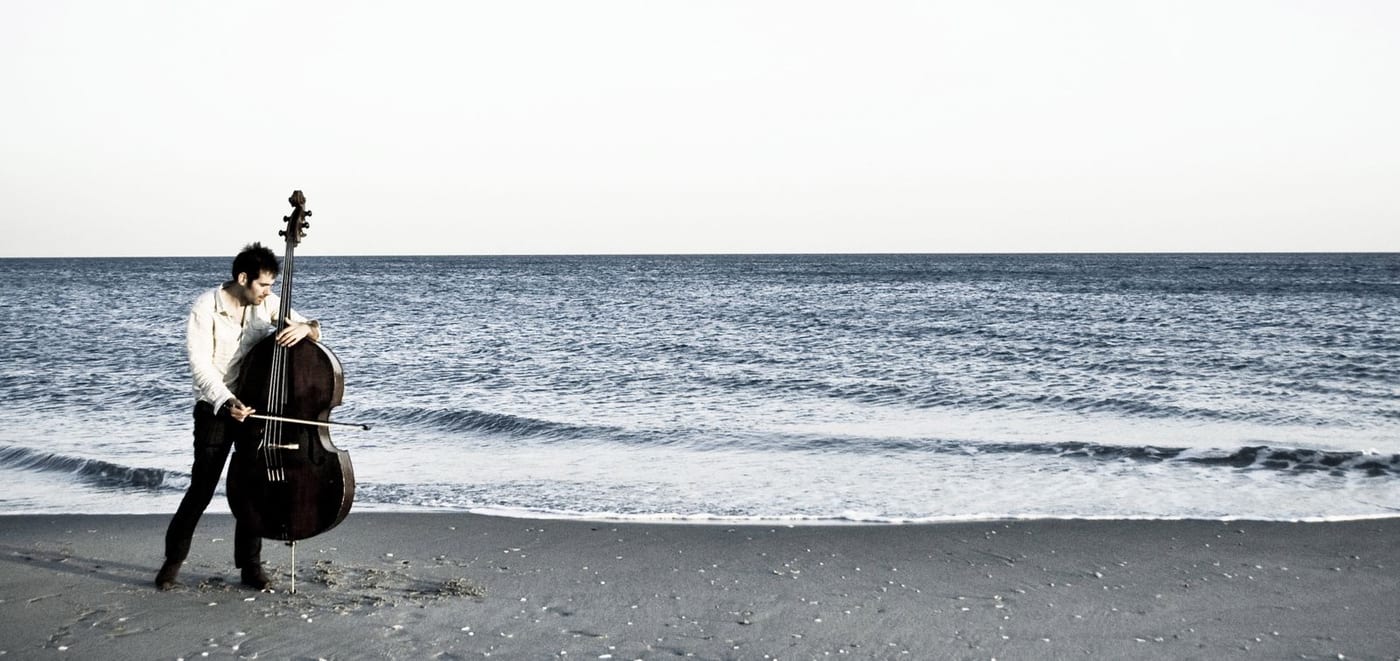
Garth Stevenson is a composer and double bassist raised in the mountains of Western Canada, known for carrying his instrument into forests, beaches, deserts and polar regions and recording solo pieces on site. His core catalogue runs from Alpine (2007) through Flying (2011) to Voyage (2016). Alongside it sits a run of screen work, and Ten Thousand Saints (Original Motion Picture Soundtrack) belongs to that second strand.
Released on 22 January 2016 as a 19-track compilation, it shows how the restraint of his solo records carries into film music. It is not the best first stop for a newcomer. Voyage is the most complete statement of his method. This soundtrack is better approached as a companion piece, a way to hear his patience applied to someone else's story.
The foundation of Stevenson's sound is unaccompanied double bass with minimal processing. The instrument's woody attack, bowed sustain and plucked textures sit close to how they sound in the room. Pacing is slow, arrangements are sparse, and a phrase may hold a long while before the next arrives. The mood is contemplative rather than dramatic.
No sung voice or lyrics are credited in the material available, so the music is wordless. I can't verify the personnel, instrumentation or recording locations for this particular soundtrack, and no collaborators are named in the available information. If you come to it expecting the full sonic signature of his wilderness albums, with wind, water and natural reverb entering through the performance, treat that as a hope to test with your own ears rather than a documented fact about this record.
What can be said is that his stated aesthetic favors patience and space over virtuosity. The bass is allowed to be quiet, and the silences carry as much weight as the notes.
Individual track titles and durations for this album are not in the information available to me, so I won't name specific pieces. Naming them would mean guessing, and a listening guide shouldn't do that.
Here is how to find your own signature moments across the 19 tracks:
- The opening cue. Open pieces tend to set the terms of a record. Listen for how long the first phrase is allowed to hold before anything answers it.
- The longest-held passage. Look for the stretch where bowed sustain dominates. This is where Stevenson's patience is most audible.
- The quietest track. Notice where the music thins nearly to silence. In his work, that restraint is the point rather than an absence.
Streaming the album at low volume and marking the three or four tracks that stop you is a more honest guide than any list I could supply.
This is not devotional music in the bhakti or kirtan sense. No named lineage, teacher or formal school is documented for Stevenson, and assigning him to one would be invention. The closest honest frame is contemplative listening, sitting between mindfulness practice and nature observation. His training is in music performance, and his backcountry hiking and environmental observation are the stated roots of the work. The project began as a personal experiment in solitude and attention.
Within ambient and acoustic meditation music, he stands apart from artists who layer field recordings or synthesize environmental sound in post-production. He performs in place and leaves the environment unprocessed. A film soundtrack changes the context, since the music serves a narrative, but the temperament of restraint remains recognizably his.
This album suits listeners who already know and value Stevenson's patient bass playing and want to hear it in a screen setting. It also suits people drawn to meditation and mindfulness, who often arrive through that side of his work and stay for the slowness. It lands best in a quiet life moment: a period of transition, a reflective evening, a need for stillness that does not demand attention.
It is a poor fit for anyone wanting rhythm, a melodic hook or the drive of high-tempo music. Conventional song structure is absent, and the pacing can feel formless at first. It is also a poor choice for a party, a fast workout or background noise in a loud room.
Listen alone, in the evening, with headphones. Headphones bring out the low register and the room sound most clearly, and the quieter passages can feel thin through laptop speakers. Start at low volume and resist the urge to turn it up when the music thins, because the thinning is intentional.
Play the album straight through at least once, without skipping, so the pacing can work on you. If you use it for meditation or yoga, audition the opening pieces first. Avoid using it under a teacher's spoken guidance without testing levels, since the quiet dynamics may compete with a voice.
Afterward, compare it with Voyage. Hearing the same restraint applied to a film and to a place is the most rewarding way to understand what Stevenson does, and where this soundtrack sits in it.