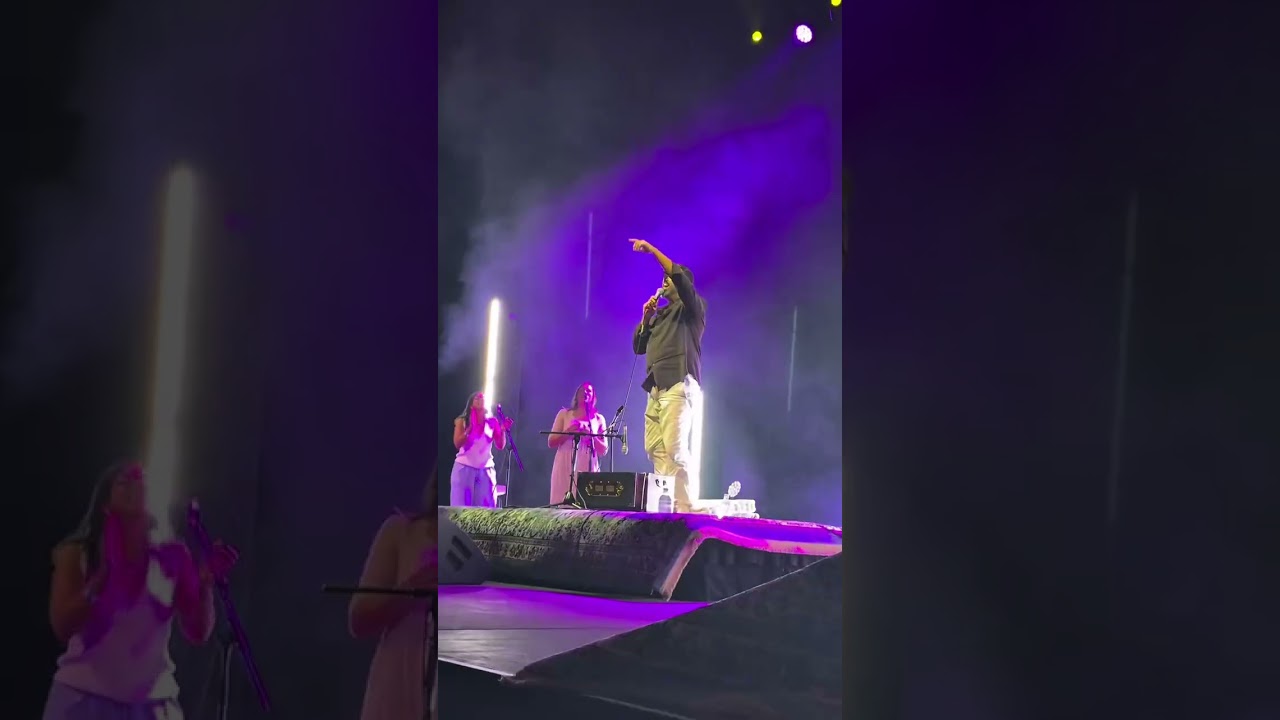
Comic-Con thrums with costume energy and pop-culture frenzy. Among the booths and vendor halls, a figure steps into clear space, takes a breath, and launches into the 1967 Spider-Man theme song—not as a joke, not as irony, but with complete vocal commitment and musical backing: "Spiderman Spiderman, does whatever a spider can, spins a web any size, catches thieves just like flies." The voice is clear. The energy is present. The joy is genuine. There is no performance of detachment, no sense of condescension toward the material or the audience. This is not a spiritual teacher stooping to pop culture. This is simply: a person, fully here, engaging with what's in front of him.
The performer's formal name—Bhāgavat Āshraya Dās—tells us something significant. Bhāgavat refers to the divine, to devotion, to that which is sacred. Āshraya means refuge or shelter—the place you go for protection and truth. Dās means servant in the spiritual sense of one devoted to something larger than oneself. This is a Sanskrit name, indicating lineage within Vedic or devotional Hindu traditions, where consciousness, sound, and presence have been worked with as spiritual technologies for millennia.
In these lineages, sound is not merely linguistic. Mantra—sacred sound—is understood as a vehicle for presence, a way of aligning consciousness with what's sacred. To chant a mantra is to bring your full being to sound, to let vibration reorganize awareness. To sing with presence, whether in Sanskrit or in English, whether in a temple or at Comic-Con, is the same act: meeting the moment fully, using sound as a technology for presence.
And yet here is someone from that world, trained in that understanding of presence and sacred sound, choosing to step into Comic-Con without apology, without the need to spiritualize or explain, and to sing a cartoon theme song.
It's worth examining what the Spider-Man theme actually communicates in its lyrics. Written by Paul Francis Webster and Danny Elfman, the song's values are explicit:
"Does whatever a spider can / Spins a web any size / Catches thieves just like flies"
This is about capability, about action, about engagement with the world. Not withdrawal. Not transcendence. But presence and response.
"Friendly neighborhood Spiderman / Wealth and fame he's ignored / Action is his reward"
This is service disconnected from ego reward. It's about showing up for the community, doing the work because it matters, not because it brings wealth or status. The phrase "action is his reward" captures something essential: the doing itself is the point. There is no separation between the work and its justification.
"In the chill of night at the scene of a crime / Like a streak of light / He arrives just in time"
This is about availability, about responsiveness, about meeting what needs to be met when it needs to be met. Whether Bader Soma consciously selected Spider-Man for these particular resonances or simply grabbed the most recognizable superhero song available, the alignment is interesting: a song about engaged action, community service, and meeting-what-arises is being performed by someone from traditions that emphasize exactly these things.
There's a persistent image in Western consciousness: the spiritual teacher as transcendent, removed from ordinary culture, dwelling in rarefied consciousness. The guru in robes, speaking in aphorisms, separate from the concerns of mainstream life. Even teachers who emphasize joy and accessibility often present through a certain gravity—the weight of someone who "knows something you don't."
This image has historical roots. When Buddhist, Hindu, and yoga practices first arrived in America in significant numbers during the mid-20th century, early Western students often mistook seriousness for depth. A teacher who laughed easily seemed less "advanced." The image of the ascetic, the renunciate, the one who had "transcended" the world became the template. Many contemporary teachers, even those trained in traditions that emphasize joy, inherited and adopted this model because it communicated spiritual authority in language the culture understood.
But something important gets lost in that translation. Laughter, playfulness, joy—these aren't obstacles to consciousness. They're expressions of it. A person who is fully present will naturally be joyful, not because they're performing happiness, but because joy is what's here when you stop defending against the moment. When you're fully available to what is, what emerges is often lightness.
Here's what's actually happening in the Comic-Con performance: A person is bringing full availability to what's in front of him. He's not ahead of the moment, planning what comes next. He's not behind it, dwelling on why he's at Comic-Con or whether this is worthy of his "real" practice. He's not off to the side, judging whether Spider-Man is frivolous. He's simply: here, now, fully present, bringing the same quality of being to this song that he would bring to a Sanskrit chant.
That quality—meeting whatever arises with full attention—is actually much closer to the genuine heart of contemplative practice than the solemn-guru archetype. In various wisdom traditions, this is called different things: mindfulness in Buddhist practice, sahaja (naturalness) in Advaita Vedanta, presence in contemporary language. But the meaning is consistent: you are not fragmented between what you think you should be doing and what you're actually doing. You're integrated.
A teacher embodying that quality—even (or especially) in something as seemingly trivial as a cartoon theme song—teaches more through example than through a thousand words of instruction. The unspoken communication is: presence doesn't discriminate. Your full being belongs here, now, with whatever is actually happening. Not in some imagined future when you're "more enlightened," but here, at Comic-Con, in this moment, singing Spider-Man.
There's often a misconception that spiritual advancement brings increasing seriousness—that as you evolve, you become more solemn, more removed, more stern in your wisdom. But genuine experience often suggests the opposite. People who have deeply integrated presence and non-contraction often become lighter, funnier, less defended.
Why? Because when you're not constantly protecting yourself, managing an image, or monitoring whether you're "spiritual enough," you can actually relax. And when you relax, joy surfaces naturally. Children are playful and spontaneous not because they've transcended ego, but because they haven't yet constructed the elaborate defense systems that make playfulness seem frivolous or risky. Advanced practitioners sometimes circle back to that same playfulness—but informed by understanding, by not needing anything from the moment, by complete freedom to meet what is.
Soma's Comic-Con performance demonstrates this: there's no sense that he's playing Spider-Man *instead of* doing serious spiritual work. Rather, there's apparently no split between "serious practice" and "having fun singing a theme song." Both are expressions of presence.
There's another dimension worth noticing. By stepping into Comic-Con with fullness, by refusing to separate himself from mainstream culture, by singing Spider-Man with the same commitment he might bring to sacred sound, Soma is making an implicit statement about accessibility. He's saying (without words): you don't have to leave the world to be present. You don't have to adopt a separate identity or learn a special language. Spiritual practice isn't something that happens only in ashrams or meditation centers. It's available here, now, in whatever is actually in front of you.
That's genuinely radical in a culture where spirituality is often sold as an escape—escape from ordinary life, from pop culture, from the body, from joy. The message is typically: leave this frivolous world, come to the spiritual realm. Soma's presence at Comic-Con, fully engaged, suggests something different. Maybe the spiritual path isn't about transcendence or escape, but about full participation. Not running away from Spider-Man and comic books, but meeting them with your whole being.
This accessibility is important because it removes the barrier between "spiritual people" and "ordinary people." It suggests that spirituality isn't a separate profession or identity, but a quality of presence you can bring to anything. That matters.
The description of the video is brief and worth taking seriously: "Having fun at Comiccon. My Spidey senses were tingling." There's no pretense. No need to extract spiritual meaning or justify the moment. No claim that this performance contains hidden wisdom. Just: here's what happened, it was fun, I was present for it. That straightforwardness is itself a teaching—the teaching that joy doesn't require explanation, that a moment can be complete and valuable for its own sake, that you don't need to spiritualize everything.
This matters. Because it models a way of being that doesn't demand constant meaning-making, that allows things to simply be what they are—joyful, present, unremarkable and perfect at once.
If this moment resonates, the invitation it offers is simple: notice where you separate yourself from life. Where do you judge that something is "too trivial" to bring your full being to? Where do you assume that presence requires seriousness? Where do you split your life into categories—"spiritual practice" over here, "real life" over there?
The underlying teaching isn't about Spider-Man or Comic-Con or even about spiritual teachers. It's about whether you're actually here or whether you're somewhere else—in your head, defending yourself, managing an image, waiting for life to become worthy of your full attention. The moment Spider-Man starts feels unworthy of your presence is the moment you've left the present.
Soma demonstrates something in three and a half minutes: what it looks like when a spiritual practitioner refuses to be separate from life. He doesn't teach a philosophy. He simply lives it. He shows up. He sings. He's fully here. And in that fullness, something true is communicated—wordlessly, available to anyone paying attention.
And if you're actually here, in your own life, whether at Comic-Con or washing dishes or having a conversation, you might as well bring everything you've got to it. Even a cartoon theme song deserves your full presence. Especially a cartoon theme song, because in fully meeting that moment, you're meeting presence itself. And that's not frivolous. That's the whole point.