BrightStar

Browse All Events

Discover conscious gatherings

events

Yoga
Meditation
Breathwork
Qigong
Tai Chi
Sacred Music
World Music
Medicine Music
Sound Healing
Ecstatic Dance
Popular Destinations
BaliSedonaLos AngelesCosta RicaNew YorkSan FranciscoAustinMiamiJoshua TreeTulum
View All CategoriesView All Destinations

Explore All Features

Powerful tools to grow your events

Platform Features

Smart Dynamic Pricing
Ticket Categories
Assigned Seating
Abandoned Cart Recovery
Visitor Recovery
Donations & Sliding Scale
Affiliate Engine
Ticket Scanner
Coupon Codes
Custom Questions
Ticket Sharing
Upsells & Add-ons
Analytics & Reporting
Email Sequences
Waitlist / Notify / Remind
People & Places
Artists & TeachersEvent OrganizersVenues & StudiosKnowledge BaseGlossaryInspiration
View All FeaturesAbout Us
PricingBlog
Language
Saved events
Browse All Events

events

YogaMeditationBreathworkQigongTai ChiSacred MusicWorld MusicMedicine Music

Popular Destinations

BaliSedonaLos AngelesCosta RicaNew YorkSan Francisco

People & Places

Artists & TeachersEvent OrganizersVenues & StudiosKnowledge BaseGlossaryInspiration

Platform Features

Smart Dynamic PricingTicket CategoriesAssigned SeatingAbandoned Cart RecoveryVisitor RecoveryDonations & Sliding ScaleAffiliate EngineTicket ScannerCoupon CodesCustom QuestionsTicket SharingUpsells & Add-onsAnalytics & ReportingEmail SequencesWaitlist / Notify / Remind
View All FeaturesAbout Us
PricingBlog
Log inFind EventsHost Events
  • Browse All Events
  • For Seekers
  • Yoga
  • Meditation
  • Breathwork
  • Qigong
  • Tai Chi
  • Sacred Music
  • World Music
  • Medicine Music
  • Sound Healing
  • Ecstatic Dance
  • Retreats
  • Workshops
  • All Categories →
  • Bali
  • Sedona
  • Los Angeles
  • Costa Rica
  • Tulum
  • Byron Bay
  • San Francisco
  • Austin
  • New York
  • San Diego
  • Denver
  • Seattle
  • Portland
  • Miami
  • All Cities →
  • Join the Movement
  • Why we list
  • Sell Globally
  • For Creators
  • For Teams
  • For Writers
  • For Teachers
  • For Kirtan Artists
  • For Studios
  • For Festivals
  • For Retreat Centers
  • For Nonprofits
  • Brand Ambassador
  • Free Ticketing
  • Elevate
  • Amplify
  • 500K+ Buyer Network
  • Abandoned Cart Recovery
  • Smart Dynamic Pricing
  • Ticket Categories
  • Recurring Events
  • Assigned Seating
  • Affiliate Engine
  • Waitlist / Notify
  • Ticket Scanner
  • Embed Widget
  • Event Syndication
  • Message Center
  • Integrations
  • Reports
  • All Features →
  • About
  • The Ecosystem
  • Blog
  • Glossary
  • Inspiration
  • Help Center
  • Contact
  • API Docs
  • Brand Assets
  • Careers
  • Press
  • Terms of Service
  • Privacy Policy

Events

  • Browse All Events
  • For Seekers
  • Yoga
  • Meditation
  • Breathwork
  • Qigong
  • Tai Chi
  • Sacred Music
  • World Music
  • Medicine Music
  • Sound Healing
  • Ecstatic Dance
  • Retreats
  • Workshops
  • All Categories →

Destinations

  • Bali
  • Sedona
  • Los Angeles
  • Costa Rica
  • Tulum
  • Byron Bay
  • San Francisco
  • Austin
  • New York
  • San Diego
  • Denver
  • Seattle
  • Portland
  • Miami
  • All Cities →

For Creators

  • Join the Movement
  • Why we list
  • Sell Globally
  • For Creators
  • For Teams
  • For Writers
  • For Teachers
  • For Kirtan Artists
  • For Studios
  • For Festivals
  • For Retreat Centers
  • For Nonprofits
  • Brand Ambassador
  • Free Ticketing
  • Elevate
  • Amplify

Features

  • 500K+ Buyer Network
  • Abandoned Cart Recovery
  • Smart Dynamic Pricing
  • Ticket Categories
  • Recurring Events
  • Assigned Seating
  • Affiliate Engine
  • Waitlist / Notify
  • Ticket Scanner
  • Embed Widget
  • Event Syndication
  • Message Center
  • Integrations
  • Reports
  • All Features →

Company

  • About
  • The Ecosystem
  • Blog
  • Glossary
  • Inspiration
  • Help Center
  • Contact
  • API Docs
  • Brand Assets
  • Careers
  • Press
  • Terms of Service
  • Privacy Policy
BrightStar
Get the app
Download on theApp StoreGet it onGoogle Play
© 2026 BrightStar. All rights reserved.
Inspiration

Why Sikhs Cover Their Heads: The Walking Representative

Nanak Naam
Nanak Naam
Oct 27, 2026
9 min read

From Nanak Naam

Watch · 7

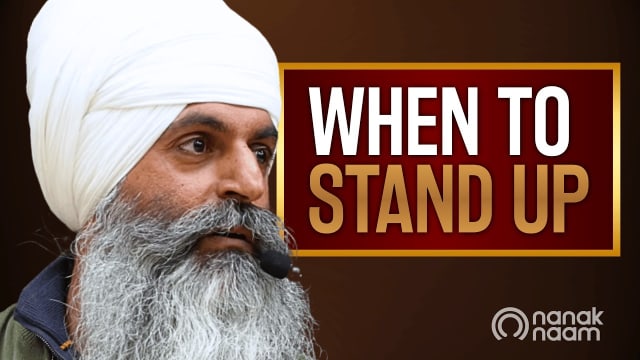
Anyone who has walked into a gurdwara knows the sequence: shoes come off, socks come off, and then comes the moment that trips up newcomers and regulars alike, the covering of the head. In a short video posted to the Nanak Naam channel in October 2026, a speaker raised in the Sikh tradition takes that moment seriously. He asks why the head is covered only inside the gurdwara when, in the words of the question he poses, God is said to be within us and everywhere we go. His answer is not a rulebook. It is a reflection on what a covered head says about the person wearing it, why enforcing the custom with a sharp tone defeats its purpose, and why the real meaning of the practice lives in the person rather than the place.

Read · 7 sections

What does it feel like to be told off for a slipping dupatta?

The clip opens on the friction rather than the theory. "We all go to Gurdwara and then we're told off to take off our socks and then cover our heads," the speaker says at the start (0:00). He sharpens the point almost immediately: "Especially around covering our heads, we're told off by granthis if it's even the dupatta slightly off" (0:05). The grievance is specific and familiar. A scarf that has shifted, a head that is uncovered for a moment, and an authority figure correcting you in front of others.

The question underneath that friction is the one a thoughtful visitor, or a young person born into the tradition, eventually asks: "I wanted to know the purpose of covering our head. If God's within us and around us or everywhere we go, why are we only covering heads in Gurdwara? Why not everywhere else?" (0:09–0:20). It is a fair question, and the speaker does not dodge it. He begins with a blunt dismissal of the way the rule is often policed: "They don't know what they're talking about" (0:22).

The sharpest part of that dismissal is a logical one. If failing to cover the head were a sin, the speaker says, "then you were born as a sinner" (0:30). That line matters. It rejects the idea that the custom is a test of moral standing. Whatever the covered head means, it cannot be a condition of being a fallen person who wears it wrongly. The speaker is separating a practice from a verdict.

Where does the custom come from, and does the speaker know?

Here the speaker is candid about limits. He places the practice inside a broader culture: "Ancient Indian culture was that a sign of respect was that you covered your head" (0:38). He then admits the gap: "That's just how the culture is. I don't know why. That's just how the culture developed" (0:45). This is a valuable kind of honesty. He does not claim a precise historical origin from the video, and he does not need to. His argument rests on what the practice does in a person's life, not on a claimed chain of documents.

That shift, from cultural inheritance to lived meaning, is the spine of the talk. The speaker's own story frames it. "I can tell you from my own personal experience from childhood having had the blessing of being brought up within the Sikh tradition, my head was always covered when I went out the house" (0:50). The covering was not a special event reserved for prayer. It was a daily fact of his childhood, and it shaped how he moved through the world long before he could explain it.

"I cannot tell you what a sense of responsibility it gives me knowing that you're carrying something far greater than just yourself when you're walking around."

Nanak Naam channel, video, October 2026 (0:64)

What did a covered head mean to a child at school?

The most revealing passage is about school, and it is where the idea of representation becomes concrete. The speaker recalls that he "knew from a very young age, whether I understood the wisdom or not, that you represented something bigger" (0:74). Understanding came later. The sense of obligation came first, and it was carried on the head.

He describes the pressure of peers in plain terms. His friends "would get up to all sorts of things in school," and he knew "I couldn't partake in those" (0:82–0:87). The reason he gives is not fear of punishment or a list of prohibitions. It is identity: "Cuz I represented something bigger. Something greater. And that was simply by having my head covered. I was a walking, talking representative" (0:93–0:102).

This is where the talk stops being about etiquette and becomes about conduct. A covered head functions as a public signal, a daily reminder to the wearer that other people read him as part of something. For a child, that signal can be a boundary. For an adult, it becomes a standard. The speaker frames the custom as a way of living that is visible, not a private devotion that ends at the door of the gurdwara.

What does the covered head actually stand for?

He states the meaning in the first person, with no hedging: "For me, it represents that I am part of something greater. I am a demonstration that there is a higher way to live" (0:105–0:114). He widens the frame to include everyone who wears the covering: "That you represent something greater, that there are better ways for human beings to live" (0:117–0:120). Then he returns to the personal: "That's why I wear it" (0:122).

The logic here is worth slowing down on. The covering is not presented as an ornament or as proof of belonging to a group that others must recognize. It is presented as a self-reminder and a demonstration. The wearer is doing something, and the doing is an argument about how a human being can carry themselves. Read this way, the question "why only in the gurdwara?" gets an unexpected answer. The practice is meant to travel. The gurdwara is simply where many people first learn to notice it.

Why does harsh correction undermine the practice?

The speaker's most pointed claim concerns tone. When someone scolds you for an uncovered head in a gurdwara, he argues, "that's not what they're doing. They're simply reinforcing a cultural norm. They don't necessarily even understand why they're doing it" (0:125–0:133). The enforcer is passing along a habit, not transmitting a meaning.

He then makes the argument from the other side: "If they knew why they were doing it, they would not do it with the harsh tone that they used. They would do it with love and compassion. They would explain to you what you represent" (0:136–0:143). The distinction is between correction that informs and correction that humiliates. The first helps a person grow into the meaning of the practice. The second teaches them only that the practice is something to fear.

To make this concrete, he offers an analogy that any musician or craftsperson will recognize: "It's like somebody who has a uniform and their sleeve is torn. You would explain to them, 'This represents something bigger. Make sure you tidy yourself up because you're a walking, talking representative of something much greater than yourself'" (0:146–0:157). The fix is a reminder of what the uniform stands for, delivered as a kindness. The speaker's point is that the same logic should govern a slipped dupatta.

And he is blunt about the cost. "But they don't use compassion. In fact, it is off-putting when they speak to you in that way. And you don't feel like going back there" (0:160–0:166). That final observation is the talk's real diagnosis. A custom meant to remind people of a higher way of living can, when enforced without warmth, push people away from the very place where they might learn it. "That's how you know that they don't know what they're talking about" (0:169).

Why does this video matter now?

The clip runs under three minutes, but it compresses a useful framework for anyone who wears a religious symbol, teaches one, or simply watches others be corrected for it. Ritual has two layers: the inherited form, which the speaker admits he cannot fully trace, and the living meaning, which each person must take up. Enforcement addresses the first layer and often ignores the second. The speaker's argument is that the second is where the practice gets its force.

The video is also a reminder that the reason behind a rule shapes the way it is taught. A reason stated with compassion invites people in. A reason delivered as a scolding makes them defensive, and eventually absent. That observation applies well beyond one gurdwara or one faith.

The channel has announced in-person gatherings for late November 2026, a Saturday in Gurgaon and a Sunday in New Delhi, billed as meditation and interactive question-and-answer sessions on Gurmat, with limited places available. Those details come from the video's description; the clip itself is the speaker's reflection on a single question, and it rewards watching in full.

Where to go from here

If the question of head-covering has been nagging at you, start with the clip itself and listen for the moment the speaker moves from "I don't know why" to "that's why I wear it." That shift is the lesson. Then ask a harder question of your own practice: which of your customs are you carrying as a walking representative, and does the way you explain them to others sound like love or like a scolding? The speaker's answer is clear. The meaning comes first, and the tone is how the meaning gets handed on.
Comments

Loading the conversation…

Transcript

[0:00] We all go to Gurdwara and then we're

[0:02] told off to take off our socks and then

[0:03] cover our heads.

[0:05] >> [music]

[0:05] >> Especially around covering our heads,

[0:07] we're told off by granthis if it's even

[0:09] the dupatta slightly off. I wanted to

[0:12] know the purpose of covering our head.

[0:14] If God's within us and around us or

[0:16] everywhere we go, why are we only

[0:18] covering heads in Gurdwara? Why not

[0:20] everywhere else?

[0:22] >> There's a very short answer.

[0:24] They don't know [music] what they're

[0:25] talking about.

[0:30] Because if not covering your head is a

[0:32] sin, then you were born as a sinner.

[0:35] Now, bear in mind that we come [music]

[0:36] from a from a culture.

[0:38] Ancient Indian culture was that a sign

[0:41] of respect

[0:43] was that you covered your head. That's

[0:45] just how the culture is. I don't know

[0:46] why.

[0:47] That's just how the culture developed.

[0:50] I can tell you from my own personal

[0:52] experience

[0:54] from childhood

[0:56] having had [music]

[0:57] the blessing of being brought up within

[0:59] the Sikh tradition

[1:00] my head was [music] always covered when

[1:02] I went out the house.

[1:04] And I cannot tell you what a sense of

[1:07] [music] responsibility it gives me

[1:09] knowing that you're carrying something

[1:10] far greater

[1:12] than just [music] yourself when you're

[1:13] walking around.

[1:14] I knew from a very young age, whether I

[1:17] understood the wisdom or not that you

[1:19] represented something bigger.

[1:22] And so when you're walking around with

[1:24] that, my friends would get up to to all

[1:26] sorts [music] of things in school.

[1:27] And I knew I couldn't partake in those.

[1:30] I knew I didn't want to participate in

[1:32] those.

[1:33] Cuz I represented [music] something

[1:34] bigger.

[1:35] Something greater.

[1:37] And that was simply by having my head

[1:39] covered. I was a walking, talking

[1:42] representative.

[1:45] So for me, it represents that I am part

[1:48] of something greater. I am a

[1:51] demonstration that there is a higher way

[1:54] to live.

[1:57] That you represent something greater.

[1:58] that there are better ways for human

[2:00] beings to [music] live.

[2:02] That's why I wear it.

[2:05] Now, when someone in the Gurdwara tells

[2:07] you off for not doing it, that's not

[2:09] what they're doing.

[2:10] They're simply reinforcing a cultural

[2:12] norm. They don't necessarily even

[2:13] understand why they're doing it.

[2:16] If they knew why they were doing it,

[2:18] they would not do it with the harsh tone

[2:19] that they used. They would do it with

[2:21] love and compassion.

[2:23] They would explain to you what you

[2:24] represent.

[2:26] It's like somebody who has a uniform and

[2:28] and their sleeve is [music] torn. You

[2:30] would explain to them, "This represents

[2:32] something bigger. Make sure you tidy

[2:34] yourself up because you're a walking,

[2:35] talking representative of something much

[2:37] greater than [music] yourself."

[2:40] But they don't use compassion. In fact,

[2:42] it is off-putting when they speak to you

[2:45] in that way.

[2:46] And you don't feel like going back

[2:47] there.

[2:49] That's how you know that they don't know

[2:50] what they're talking about.

Nanak Naam
ArtistNanak Naam

Nanak Naam is a UK charity, founded by SathPaal Singh in 2013, sharing Guru Nanak's teachings of Oneness through meditation, mindfulness, free courses, videos and music.

View profileWebsite
Explore Topics
Head-coveringGurdwara-etiquetteSikh-traditionSikh-identityGurmat

Got Questions?

Frequently Asked Questions

In this video, the speaker, who was raised in the Sikh tradition, says head-covering carries a cultural sign of respect that he cannot fully trace, but for him personally it means he represents something greater. He describes the covering as a daily reminder and demonstration that there is a higher way to live.
The speaker rejects that idea directly, arguing that if not covering the head were a sin, then everyone who did not cover would have been born a sinner. He separates the practice from any moral verdict about the person.
The speaker asks this same question and argues that the people who correct others are often just reinforcing a cultural norm without understanding its purpose. He says that if they knew the meaning, they would correct people with love and explain what the covering represents.
The speaker uses this phrase to describe how a visible covered head signals to others that you belong to something bigger than yourself. He says this awareness helped him decline behaviour his friends engaged in at school, because he felt he represented something greater.
The speaker suggests using a uniform analogy: rather than scolding someone with a torn sleeve, you explain what the uniform represents and why tidiness matters. Harsh tone is off-putting, he says, and can keep people from returning to the place where they could learn.
No, and he is open about it. He says that ancient Indian culture treated covering the head as a sign of respect, but when asked why, he says plainly, 'I don't know why. That's just how the culture developed.'

Continue Reading

More from Nanak Naam

View All
Speak Up or Stay Silent? A Guru Nanak Guide to Impact
Inspire

Speak Up or Stay Silent? A Guru Nanak Guide to Impact

Should you speak up or stay silent? SathPaal Singh's Guru Nanak-rooted test asks where impact lies, not who is right, from workplace clashes…

9 min read
Ik Onkar Beyond “One God”: Who Gets to Define the Words?
Inspire

Ik Onkar Beyond “One God”: Who Gets to Define the Words?

A two-minute Nanak Naam clip argues that Ik Onkar has been stuck with a "one god" gloss for 250 years. The speaker says the opening phrase d…

7 min read
Medicine Buddha Practice: Refuge When the Teacher Is Away
Inspire

Medicine Buddha Practice: Refuge When the Teacher Is Away

A community-led Medicine Buddha session opens with honest anxiety and closes with prayers for the world. Here is how its refuge-based struct…

9 min read
Calling on Loving Presence: A Guided Path From Fear to Trust
Inspire

Calling on Loving Presence: A Guided Path From Fear to Trust

Tara Brach's guided meditation on calling on loving presence: find the place of fear, listen for its longing, and let a source of care answe…

8 min read

Keep exploring

Continue your journey

More wisdom and gatherings from across the BrightStar directory.

More Articles

Browse the full library of teachings, interviews, and guides.

Back to all articles →

Teachers & Artists

Explore the lineages, musicians, and guides of the conscious world.

Explore artists →

Find an Event

Kirtan, retreats, sound baths, breathwork, festivals — happening soon.

Browse events →