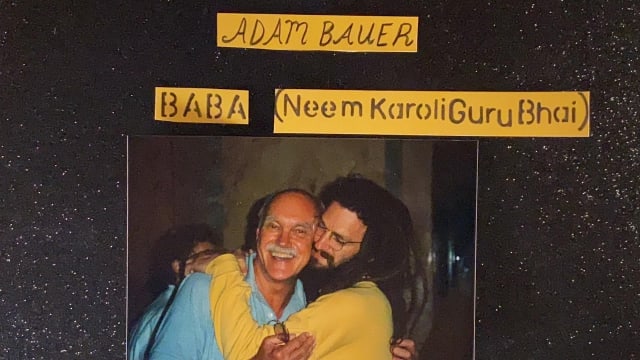
A kirtan posted on Adam Bauer's YouTube channel under the title "Jai Ma Mantra" runs less than two minutes, and it arrives with almost nothing around it: a title, a short description, and two invitations. One is to a pre-recorded online satsang on Wednesday, October 28, at 8 PM ET. The other is to an in-person chanting gathering the same evening in Escondido, California. This article is built from that posting, not from a transcript, because none was available. What follows explains the chant itself, what the posting does and does not tell us, and how a reader can take part.
Kirtan is call-and-response devotional singing, a practice in which a short phrase is sung, repeated and carried by the room until the repetition itself becomes the point. "Jai Ma" is the kind of phrase that suits it. "Jai" is generally rendered as "victory" or "hail," and "Ma" as "Mother," so the words are commonly read as an address to the Divine Mother. That gloss is standard usage in Sanskrit-derived devotional singing rather than something the posting spells out, so treat it as context for the title rather than a claim Adam Bauer makes in the clip.
The title calls the piece a "mantra," and that word matters. A mantra in this tradition is less a message than a vehicle: a short sound repeated until attention settles. In kirtan the repetition is shared. Voices overlap, the melody loops, and a listener who arrives tired or distracted is often pulled along without having to decide anything. That is why a chant of two words can fill a room for a long stretch.
Short clips do a particular job. A kirtan rarely lands on a page; it lands in the body, through repetition and breath. A two-minute excerpt works less as a full performance than as an invitation to sit down and chant along. Viewers who want the whole experience are pointed toward the live options, which is consistent with how the posting is framed: the clip is a doorway, and the gathering is the room.
The posting also makes clear how the offering is structured. The online satsang is described as "always free / open to donation, all are welcome." Nothing is locked behind a paywall, and the donation is voluntary. For a practice rooted in communal singing, that framing is the point: the chant belongs to whoever shows up.
The posting offers two routes, and both are simple to follow:
- The online satsang. Pre-recorded, scheduled for Wednesday, October 28, at 8 PM ET, and open to anyone. Details are listed at iamadambauer.com/weekly-satsang/.
- The Escondido gathering. Adam Bauer is listed as being in Escondido, CA that evening. Local listeners are invited to chant in person. Event listings are at iamadambauer.com/events/.
Because the posting is dated October 28 and the clip was published the same day, readers arriving later should check the event pages directly for any upcoming dates rather than assuming the evening session is still open.
Honesty about a thin source is part of reading it well. The posting does not describe Adam Bauer's background, lineage, or teaching history, and it contains no quotes from him beyond the chant itself. Anything beyond the title and the scheduling details would be speculation. The most useful thing a reader can do is listen, chant along, and judge the practice for themselves.
If the phrase has stayed with you, the simplest next step is to listen to the full clip, then try the chant without the recording: repeat "Jai Ma" slowly for a few minutes and notice what changes in breath and attention. For a larger experience, the weekly satsang and the event listings linked above are the places the posting points to. Kirtan is best learned by singing it, and this clip is a short, open invitation to begin.