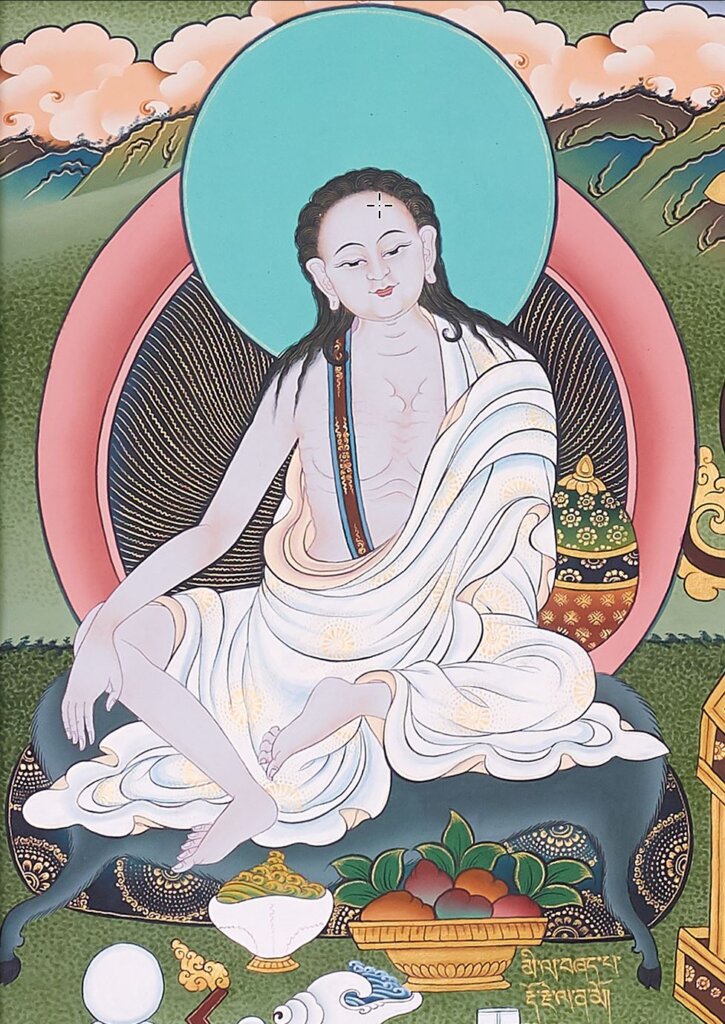
In the profound words of Milarepa, "Yet I was richer than any king," we encounter a striking assertion about the nature of wealth and fulfillment. This statement invites us to reconsider our understanding of richness, suggesting that true wealth lies not in material possessions or status but in the depth of one's inner life. Milarepa, a revered figure in Tibetan Buddhism, embodies this wisdom, having transformed his life from one of darkness and suffering into one of profound spiritual insight and liberation. His declaration resonates deeply in a world often preoccupied with external measures of success.
Milarepa's journey from a life of regret and remorse to one of enlightenment serves as a powerful reminder that the treasures we seek are often hidden within. In a society that equates wealth with power, influence, and material abundance, his words challenge us to explore the richness of our own inner landscapes. This exploration is not merely an intellectual exercise; it is a call to cultivate a sense of abundance that transcends the superficial trappings of wealth. By embracing the richness of our spiritual lives, we can discover a profound sense of contentment and joy that no king's fortune could ever provide.
The image / the metaphor
Milarepa's assertion evokes a vivid contrast between the opulence typically associated with kings and the intangible wealth of spiritual fulfillment. The imagery of kingship conjures visions of grand palaces, overflowing coffers, and the power to command armies, yet Milarepa's claim subverts this conventional understanding. The choice of the word "richer" implies a depth of experience and understanding that surpasses mere accumulation. It suggests a wealth that is not measured by gold or silver but by the richness of one's heart and mind, a treasure that is accessible to all, regardless of social standing.
In the speaker's tradition
Milarepa's teachings are deeply embedded in the Buddhist tradition, where concepts such as dharma and sunyata illuminate the path to true wealth. Dharma, or the teachings of the Buddha, guides practitioners toward understanding the nature of reality and the self, while sunyata, or emptiness, reveals the interconnectedness of all beings. In this context, Milarepa's assertion reflects the essence of spiritual richness, which is found in the realization of our true nature and the liberation from the attachments that bind us to suffering.
Moreover, Milarepa's life story resonates with the notion of kenosis, or self-emptying, a theme prevalent in many spiritual traditions. By relinquishing his former life of material pursuits and embracing a path of rigorous practice and devotion, Milarepa exemplifies the transformative power of letting go. His journey mirrors the teachings found in texts such as the Heart Sutra, which emphasizes the importance of transcending dualistic thinking and recognizing the inherent emptiness of all phenomena. In this light, Milarepa's richness becomes a testament to the profound joy that arises from spiritual awakening and the liberation of the heart.
Living the teaching
In our modern lives, the teaching of Milarepa can be applied in various contexts, particularly in moments of comparison and envy. Imagine a scenario where one feels inadequate in the face of a colleague's success or a friend's material wealth. In such instances, Milarepa's insight serves as a gentle reminder that true richness is not found in external accolades but in the cultivation of our inner lives. By redirecting our focus from what we lack to the abundance of love, compassion, and wisdom within us, we can find solace and fulfillment that transcends the fleeting nature of material success.
Additionally, this teaching can profoundly impact our relationships. Consider a moment of conflict with a loved one, where misunderstandings and hurt feelings cloud our perception. In such times, Milarepa's wisdom encourages us to seek the richness of understanding and empathy rather than clinging to grievances. By embracing the wealth of compassion and forgiveness, we can transform our interactions, fostering deeper connections that enrich our lives and the lives of those around us. Thus, the practice of recognizing our inner wealth becomes a powerful tool for navigating the complexities of human relationships.
A reflection
As we contemplate Milarepa's assertion, we are invited to reflect on our own understanding of wealth and fulfillment. What does it mean to be truly rich in our lives? Are we measuring our worth by external standards, or are we cultivating the treasures of the heart? In this moment of introspection, let us consider how we might shift our focus from the pursuit of material gain to the nurturing of our inner lives, allowing the richness of our spirit to shine forth in every aspect of our existence.
