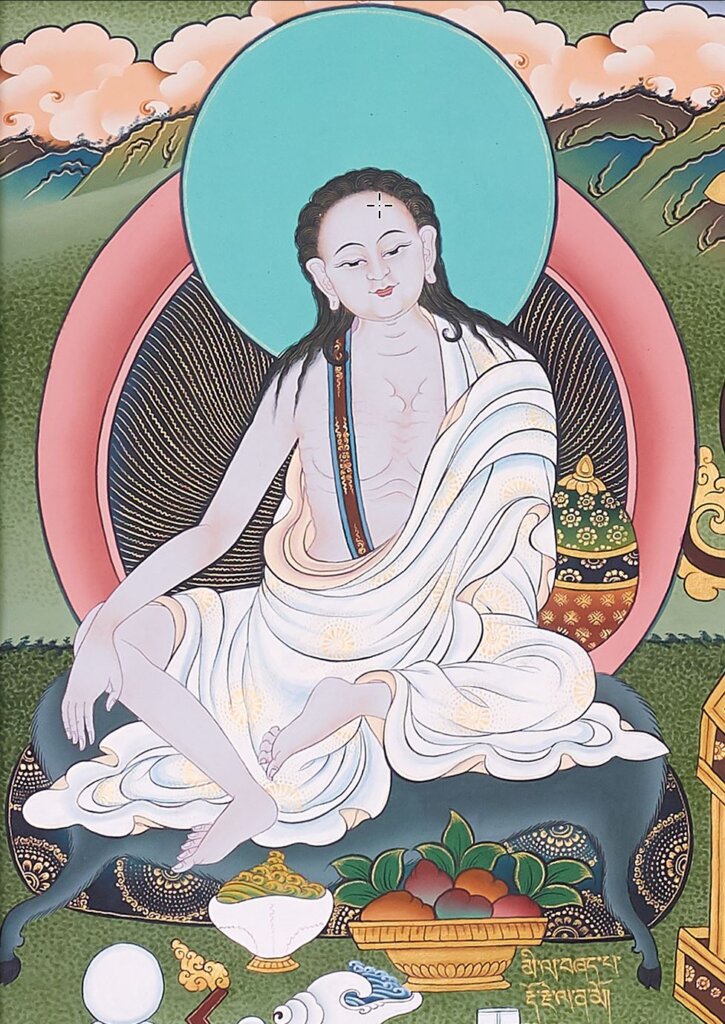
Milarepa's profound instruction, "Do not chase them, do not drive them away," invites us to cultivate a state of equanimity in the face of life's transient experiences. This quote speaks to the heart of our relationship with thoughts, emotions, and external circumstances, urging us to neither cling to what we desire nor reject what we fear. In a world that often encourages us to pursue our desires relentlessly or to flee from discomfort, Milarepa's wisdom offers a sanctuary of balance and peace.
At its core, this teaching challenges the dualistic tendencies of our minds, which often oscillate between attachment and aversion. It beckons us to recognize the impermanence of all things and to find a middle path that honors our experiences without becoming ensnared by them. By embracing this perspective, we can navigate the complexities of life with grace, allowing us to respond to situations with clarity rather than reactivity.
The image / the metaphor
The imagery in Milarepa's quote evokes a sense of gentle presence, suggesting a way of engaging with life that is neither forceful nor passive. The verbs "chase" and "drive away" imply a struggle, a frantic energy that often accompanies our desires and fears. By advising us against these actions, Milarepa encourages a more contemplative approach, one that invites us to observe our thoughts and feelings without judgment or urgency.
Diving deeper into this metaphor, we can see that the act of chasing represents our attempts to grasp at fleeting moments of happiness or satisfaction, while driving away signifies our desire to escape discomfort or pain. Both actions stem from a misunderstanding of the nature of reality, which is inherently fluid and ever-changing. By refraining from these extremes, we open ourselves to a more profound understanding of existence, one that allows us to experience life as it is, rather than how we wish it to be.
In the speaker's tradition
Milarepa, a revered figure in Tibetan Buddhism, embodies the principles of dharma, which emphasize the importance of understanding the nature of suffering and the path to liberation. His teachings resonate with the concept of sunyata, or emptiness, which suggests that all phenomena are devoid of inherent existence. This understanding encourages practitioners to let go of rigid attachments and to embrace the fluidity of life, aligning perfectly with Milarepa's exhortation to neither chase nor drive away.
In the context of Buddhist texts, we can draw parallels to the teachings found in the Heart Sutra, which articulates the essence of emptiness and the interdependence of all things. Just as the sutra invites us to see beyond the dualities of existence, Milarepa's quote serves as a reminder that our experiences are not fixed entities to be clung to or rejected, but rather waves in the ocean of consciousness that we can observe with equanimity.
Living the teaching
Consider a modern scenario where this teaching can be applied: a professional setback that leaves you feeling frustrated and anxious. In the face of disappointment, the instinct may be to chase after opportunities that seem to slip away or to drive away the feelings of inadequacy that arise. By embracing Milarepa's wisdom, you can instead acknowledge these emotions without judgment, allowing them to exist without the need to cling to or escape from them. This practice of acceptance can lead to a more grounded response, fostering resilience and clarity in navigating your career path.
In the realm of relationships, this teaching can also illuminate our interactions with loved ones. When faced with conflict, the urge to chase after reconciliation or to push away feelings of anger can create further discord. By embodying the essence of Milarepa's words, we can cultivate a space of openness, allowing emotions to surface without the pressure to resolve them immediately. This approach fosters deeper understanding and connection, as we learn to sit with discomfort and engage with one another from a place of compassion and presence.
A reflection
As we contemplate Milarepa's guidance, we are invited to reflect on our own tendencies to chase or drive away in our lives. What thoughts or emotions do we find ourselves clinging to, and which do we seek to escape? In this moment of reflection, consider how embracing a stance of equanimity might transform your experience. How might your life shift if you allowed yourself to simply be with what arises, without the need to chase after or push away?
