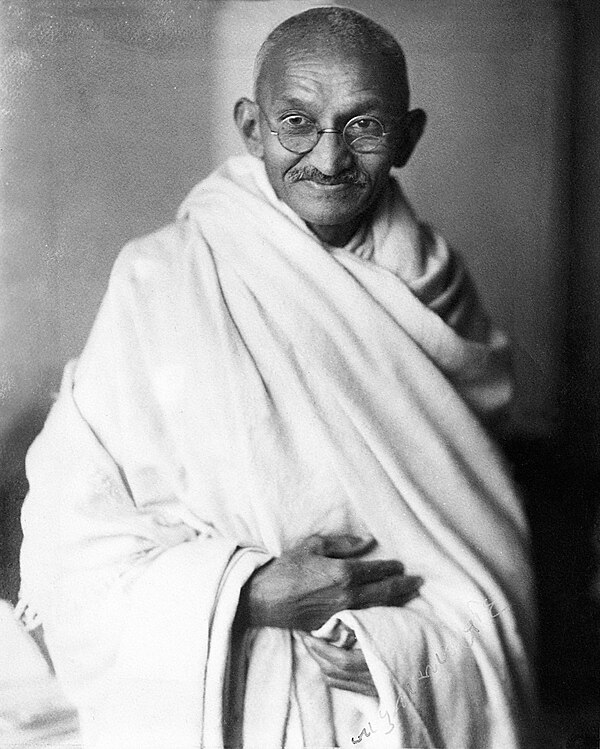
Mahatma Gandhi's assertion, "I believe in the fundamental truth of all great religions of the world," invites us to explore the essence of spirituality that transcends individual doctrines. This statement is not merely an expression of tolerance; it is a profound recognition of the shared values that bind humanity together. In a world often divided by religious differences, Gandhi's perspective serves as a beacon of hope, urging us to seek common ground and embrace the universal truths that lie at the heart of diverse faiths.
By emphasizing the "fundamental truth" inherent in all religions, Gandhi challenges us to look beyond the superficial distinctions that often separate us. His words resonate deeply in our contemporary society, where religious intolerance and conflict frequently dominate the discourse. In this light, Gandhi's belief becomes a call to action, inviting us to cultivate a deeper understanding of one another and to foster a sense of unity that honors the rich tapestry of human spirituality.
The image / the metaphor
The imagery in Gandhi's quote evokes a sense of interconnectedness, suggesting that the truths of various religions are like threads woven into a single fabric. The choice of the word "believe" indicates a personal conviction, one that invites others to engage in a journey of exploration rather than mere acceptance. This metaphor of weaving implies that while the threads may differ in color and texture, they ultimately contribute to a greater whole, symbolizing the unity of human experience.
Diving deeper into this metaphor, we can envision a vast landscape where different religions stand as mountains, each unique in its formation yet part of the same earth. The rivers that flow between them represent the shared values of compassion, love, and truth that nourish all spiritual paths. Gandhi's vision encourages us to appreciate the beauty in diversity while recognizing that the essence of spirituality is not confined to any single peak but is found in the valleys that connect them.
In the speaker's tradition
Moreover, Gandhi's perspective can be illuminated through the teachings of the Bhagavad Gita, where Lord Krishna imparts wisdom on the universality of truth. In Chapter 4, Verse 11, Krishna states, "Whatever path people take, I am the destination." This aligns seamlessly with Gandhi's belief, suggesting that all sincere spiritual pursuits ultimately lead to the same divine source. By recognizing this shared destination, we can cultivate a deeper appreciation for the myriad ways in which humanity seeks the sacred.
Living the teaching
In our modern world, Gandhi's teaching can be applied in various contexts, particularly in interfaith dialogues that seek to bridge gaps between different religious communities. For instance, consider a community event where individuals from diverse backgrounds come together to share their beliefs and practices. Such gatherings not only foster understanding but also create a space for collaboration on social issues, demonstrating that the fundamental truths of compassion and justice are universally recognized. Here, Gandhi's vision of unity becomes a practical reality, as participants learn to appreciate the richness of each other's traditions.
On a more personal level, this teaching can manifest in our relationships with those who hold differing beliefs. Imagine a conversation with a friend or family member who practices a faith distinct from your own. Instead of allowing differences to create division, one can approach the dialogue with curiosity and openness, seeking to understand the underlying values that inform their beliefs. In doing so, we embody Gandhi's principle of recognizing the fundamental truth in all religions, fostering a deeper connection that transcends mere tolerance and moves toward genuine understanding.
A reflection
As we contemplate Gandhi's profound assertion, we are invited to reflect on our own beliefs and the ways in which they intersect with those of others. What practices can we adopt to cultivate a deeper understanding of the fundamental truths that unite us? In this spirit of inquiry, let us consider how we might engage with the diverse tapestry of human spirituality in our daily lives, fostering a sense of unity that honors both our differences and our shared humanity.