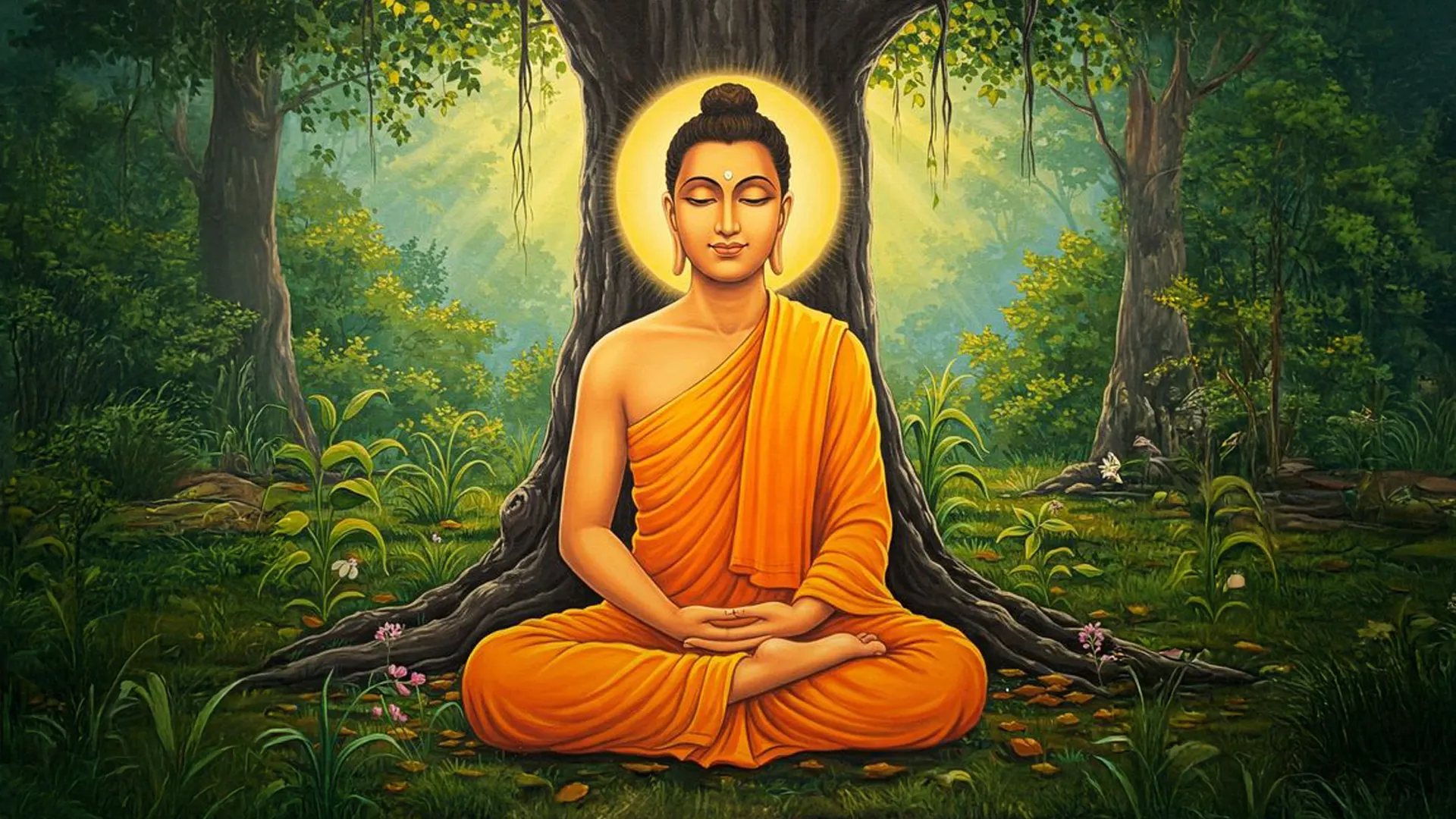
The Austerity of Patience: A Path to Liberation
In the words of the Buddha, "Patience and tolerance are the highest of austerities; the supreme is Nirvana." This profound statement invites us to reconsider our understanding of what it means to practice austerity. Rather than the renunciation of worldly pleasures or the performance of extreme rituals, the Buddha emphasizes the inner qualities of patience and tolerance as the most significant forms of spiritual discipline. In a world that often prioritizes immediate gratification and quick resolutions, this teaching serves as a reminder of the deeper, more enduring path toward liberation.
As we delve into this quote, we uncover layers of meaning that resonate with the human experience. Patience and tolerance are not merely passive states; they are active practices that require courage and commitment. In a society that often equates success with speed and efficiency, the Buddha's assertion challenges us to cultivate a different kind of strength—one that embraces the complexities of life with grace and understanding. This teaching is not just about enduring hardship; it is about transforming our relationship with suffering and learning to navigate the turbulent waters of existence with a calm and open heart.
The image / the metaphor
The imagery in the Buddha's quote evokes a sense of depth and resilience. Patience and tolerance are described as "the highest of austerities," suggesting that these qualities are not simply virtues but profound practices that lead to spiritual growth. The use of the word "austerities" traditionally conjures images of asceticism, yet here it is redefined to encompass the inner work of cultivating a peaceful mind. This shift in perspective invites us to see patience not as a passive waiting but as an active engagement with our thoughts and emotions, a conscious choice to respond with compassion rather than reactivity.
Diving deeper into the metaphor, we can understand patience as a form of strength that allows us to withstand the storms of life. It is akin to a tree that bends in the wind but does not break; it remains rooted in its place while adapting to external forces. Tolerance, similarly, is the ability to hold space for discomfort without succumbing to it. Together, these qualities create a fertile ground for the realization of Nirvana, the ultimate state of liberation and peace. The metaphor of a tree reminds us that true strength lies not in rigidity but in the ability to adapt and grow through adversity.
In the speaker's tradition
Within the rich tapestry of Buddhist philosophy, the concepts of patience and tolerance are deeply intertwined with the teachings of Dharma and the path to enlightenment. The Buddha's emphasis on these qualities aligns with the notion of "prajna," or wisdom, which arises from understanding the nature of suffering and the impermanence of all things. This wisdom is not merely intellectual but experiential, cultivated through the practice of mindfulness and compassion. In this way, patience and tolerance become essential tools for navigating the complexities of existence and moving toward the realization of "sunyata," or emptiness, which reveals the interconnectedness of all beings.
Moreover, the Dhammapada, from which this quote is drawn, serves as a foundational text that encapsulates the essence of the Buddha's teachings. In various verses, the text reiterates the importance of cultivating a peaceful mind and the transformative power of patience. For instance, one might recall the verse that states, "He who is able to control his mind is greater than he who conquers a thousand men in battle." This comparison highlights that the true battle lies within, and the cultivation of inner qualities such as patience and tolerance is the most profound form of victory.
Living the teaching
In our modern lives, the teaching of patience and tolerance can manifest in numerous ways. Consider a scenario where we find ourselves stuck in traffic, late for an important meeting. The initial reaction may be frustration or anger, but this moment presents an opportunity to practice patience. Instead of allowing the external circumstances to dictate our emotional state, we can choose to breathe deeply, acknowledge our feelings, and cultivate a sense of acceptance. This simple act of reframing our experience can transform a moment of irritation into a practice of mindfulness, allowing us to arrive at our destination with a clearer mind and a more open heart.
Another application of this teaching can be found in our relationships, particularly during conflicts. When disagreements arise, the instinct may be to react defensively or to seek immediate resolution. However, embodying patience and tolerance allows us to listen deeply and hold space for the other person's perspective. By doing so, we create an environment conducive to understanding and healing. This practice not only fosters deeper connections but also reflects the essence of the Buddha's teaching, guiding us toward a more compassionate and harmonious existence.
A reflection
As we contemplate the Buddha's profound assertion that "patience and tolerance are the highest of austerities," we are invited to reflect on our own lives. In what areas do we struggle with impatience or intolerance? How might embracing these qualities transform our experiences and relationships? By engaging with these questions, we open ourselves to the possibility of deeper understanding and liberation, allowing the teachings of the Buddha to resonate within us as we navigate the complexities of our human journey.