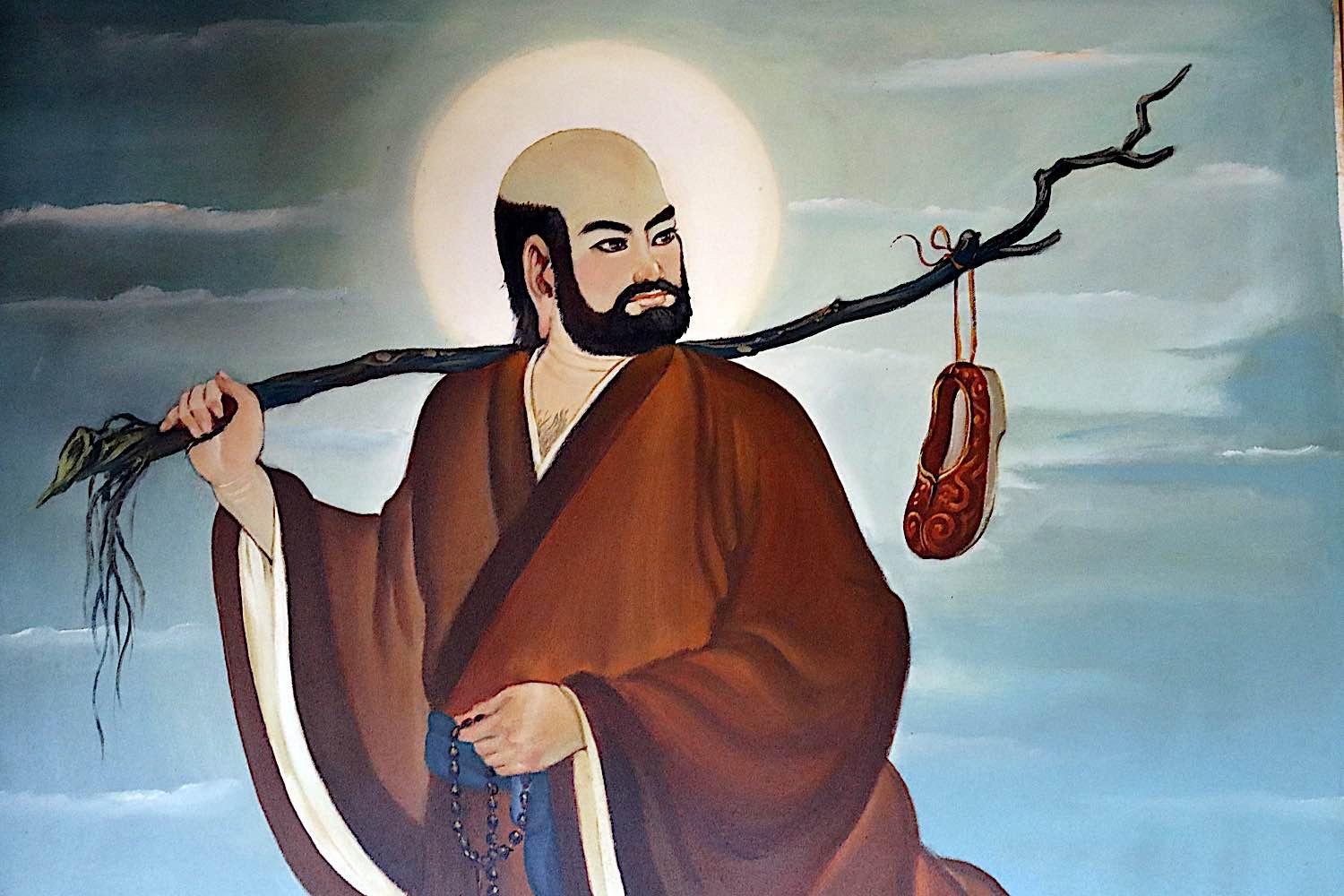
Awakening to Our True Nature
Bodhidharma's assertion, "Whoever sees his nature is a buddha; whoever doesn't is a mortal," invites us to explore the profound distinction between enlightenment and ignorance. In this succinct statement lies the essence of Zen wisdom, urging us to recognize our inherent nature, which is often obscured by the distractions and illusions of daily life. The stakes are high; understanding this truth can lead to liberation, while remaining unaware keeps us trapped in the cycle of suffering and mortality.
This quote encapsulates a pivotal teaching in Zen Buddhism, where the realization of one's true nature is synonymous with awakening. Bodhidharma, the legendary figure credited with bringing Zen to China, emphasizes that the path to enlightenment is not found in external rituals or dogmas but in the deep, introspective journey of self-discovery. The contrast between being a "buddha" and a "mortal" serves as a stark reminder of the potential that lies within each of us, waiting to be unveiled through mindful awareness and contemplation.
The image / the metaphor
The imagery in Bodhidharma's words evokes a sense of duality: the buddha, representing enlightenment, and the mortal, symbolizing ignorance. The verb "sees" suggests an active engagement with one's inner self, a conscious act of recognition that transcends mere intellectual understanding. This seeing is not a passive observation but a transformative experience that alters one's perception of reality. The term "nature" refers to the fundamental essence of being, which, when realized, reveals the interconnectedness of all existence.
In the speaker's tradition
Within the Zen tradition, Bodhidharma's teaching resonates with key concepts such as "dharma," which refers to the natural law or truth that governs existence. The notion of "kenosis," or self-emptying, parallels the idea of seeing one's nature, as it involves relinquishing attachments and preconceived notions to uncover the essence of being. Similarly, the concept of "sunyata," or emptiness, emphasizes that our perceived separateness is an illusion, and recognizing this can lead to profound insight and liberation.
In the context of Zen texts, the "Heart Sutra" offers a complementary perspective, stating that "form is emptiness, emptiness is form." This echoes Bodhidharma's assertion that our true nature is not bound by the transient aspects of life. The realization of one's nature, as articulated by Bodhidharma, aligns with the teachings found in various Buddhist scriptures, where the path to enlightenment is depicted as a journey inward, revealing the interconnectedness of all beings and the ultimate truth of existence.
Living the teaching
Consider a modern scenario where this teaching might resonate: a person grappling with the pressures of societal expectations, striving for success while feeling unfulfilled. In such a situation, the realization of one's true nature can serve as a guiding light. By taking a step back and engaging in self-reflection, this individual may discover that their worth is not defined by external achievements but by their inherent qualities, such as compassion, creativity, and authenticity. This shift in perspective can lead to a more meaningful and fulfilling life.
Another application of this teaching can be found in interpersonal relationships. Imagine a conflict arising between friends, where misunderstandings and ego-driven reactions cloud their connection. By recognizing their true nature, both individuals can approach the situation with empathy and openness, allowing for a deeper understanding of each other's perspectives. This practice of seeing beyond the surface can transform relationships, fostering a sense of unity and compassion that transcends the limitations of the ego.
A reflection
As we contemplate Bodhidharma's profound words, we are invited to ask ourselves: "What aspects of my nature remain hidden, and how might I begin to uncover them?" This question encourages a journey of introspection, inviting us to explore the layers of our identity and the beliefs that shape our perceptions. In this exploration, we may find the courage to embrace our true selves, leading to a life of authenticity and connection with the world around us.
