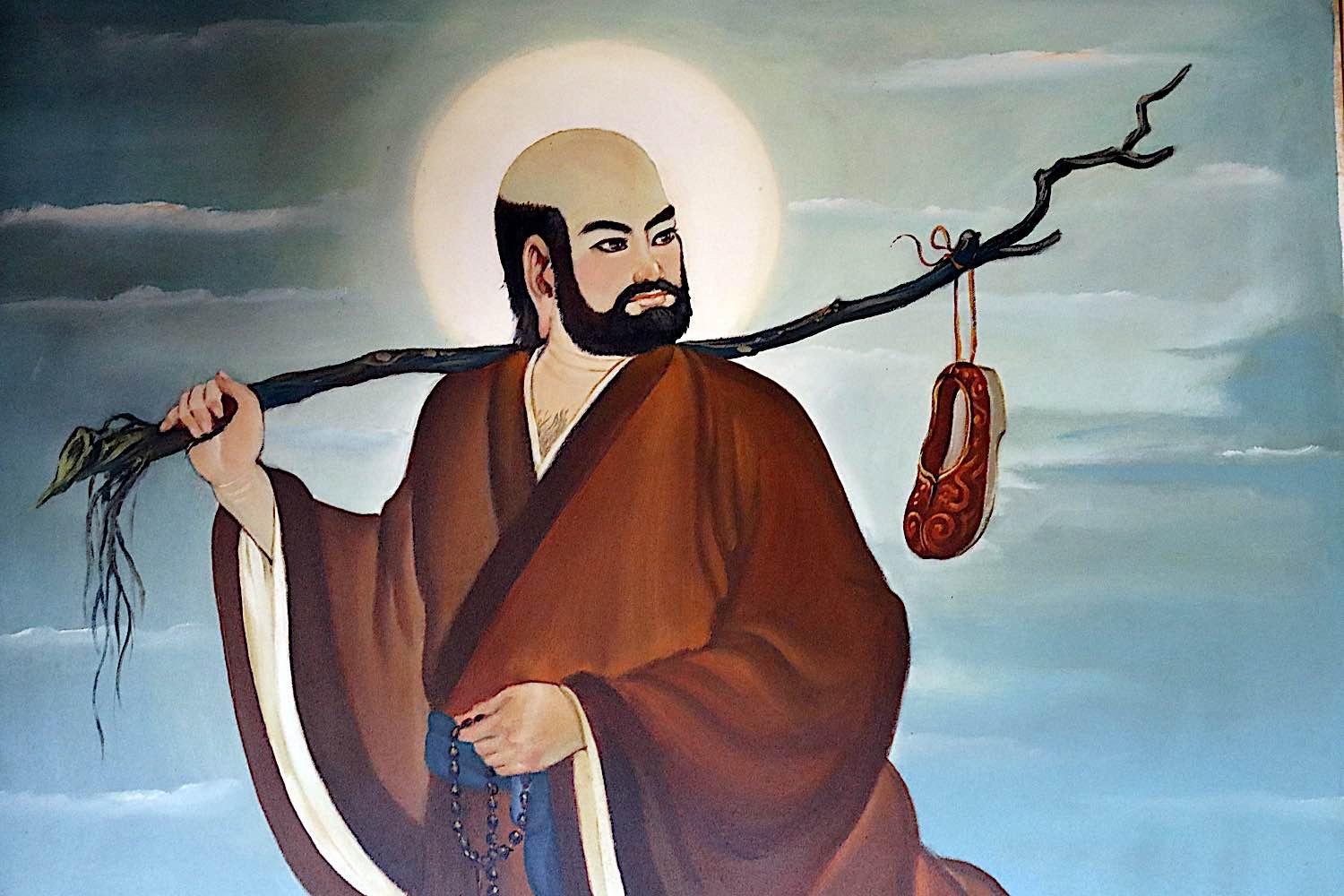
Two Paths to Enlightenment: Reason and Practice
Bodhidharma's assertion that "Many roads lead to the Path, but basically there are only two: reason and practice" invites us to reflect on the dual nature of our spiritual journey. In this statement, he emphasizes that while there may be numerous approaches to understanding and experiencing the essence of life, they fundamentally converge upon two essential avenues: the intellectual pursuit of reason and the experiential journey of practice. This distinction is crucial, as it underscores the balance between understanding and action in our quest for enlightenment.
In a world often dominated by distractions and superficial engagements, Bodhidharma's words remind us of the importance of grounding our spiritual endeavors in both contemplation and action. Reason, in this context, refers to the analytical and reflective aspects of our nature, while practice embodies the lived experience of our insights. Together, they form a holistic approach to spiritual growth, urging us to not only understand the teachings but to embody them in our daily lives. This duality is not merely a philosophical concept; it is a lived reality that shapes our interactions with ourselves and the world around us.
The image / the metaphor
The imagery in Bodhidharma's quote evokes a landscape of diverse paths, each representing different spiritual traditions, practices, and philosophies. The notion of "many roads" suggests a rich tapestry of human experience, where individuals may find their unique routes to understanding. However, the emphasis on "only two" paths—reason and practice—highlights a profound simplicity amidst complexity. It invites us to consider how we navigate our spiritual journeys, reminding us that regardless of the myriad of choices available, the essence of our quest can be distilled into these two fundamental approaches.
Diving deeper into this metaphor, we can envision reason as a guiding light, illuminating our understanding of the world and ourselves. It is through reason that we engage with the teachings of the past, dissecting and analyzing them to extract wisdom. Conversely, practice can be seen as the soil in which this understanding takes root, allowing us to cultivate our insights through lived experience. Together, they create a dynamic interplay, where reason informs practice, and practice deepens our understanding, ultimately leading us closer to the Path.
In the speaker's tradition
Bodhidharma, the legendary figure credited with bringing Zen Buddhism to China, stands at the intersection of reason and practice within the broader context of Buddhist philosophy. His teachings resonate with the concept of dharma, which encompasses the natural law and ethical duties that guide our actions. In Zen, the interplay between prajna (wisdom) and upaya (skillful means) reflects this duality, where intellectual understanding must be complemented by practical application. This balance is essential for achieving enlightenment, as it allows practitioners to navigate the complexities of existence with clarity and compassion.
Living the teaching
Consider a modern scenario where this teaching can be applied: a person grappling with the complexities of their career. They may find themselves overwhelmed by the demands of their job, seeking clarity and purpose. In this context, reason can serve as a tool for reflection—analyzing their motivations, values, and the impact of their work on their well-being. However, without the complementary practice of mindfulness or meditation, this intellectual understanding may remain abstract. By integrating both reason and practice, they can cultivate a deeper awareness of their situation, leading to more intentional choices and a greater sense of fulfillment.
Another application of Bodhidharma's teaching can be found in interpersonal relationships. Imagine a couple facing communication challenges. One partner may approach the situation with reason, analyzing their feelings and the dynamics at play. Yet, without the practice of open dialogue and active listening, this understanding may not translate into meaningful change. By engaging in both reason and practice—reflecting on their emotions while also committing to honest communication—they can foster a deeper connection and navigate their challenges with greater empathy and understanding. This illustrates how Bodhidharma's insights can manifest in our everyday lives, guiding us toward more harmonious relationships.
A reflection
As we contemplate Bodhidharma's profound statement, we are invited to consider how we balance reason and practice in our own lives. Are we leaning too heavily on intellectual understanding without grounding it in our daily experiences? Or perhaps we are engaged in practices that lack the clarity of insight? Reflecting on this duality can illuminate our spiritual paths and encourage us to cultivate a more integrated approach to our growth. In this spirit, I invite you to ponder: How can you harmonize reason and practice in your own journey toward understanding and enlightenment?
