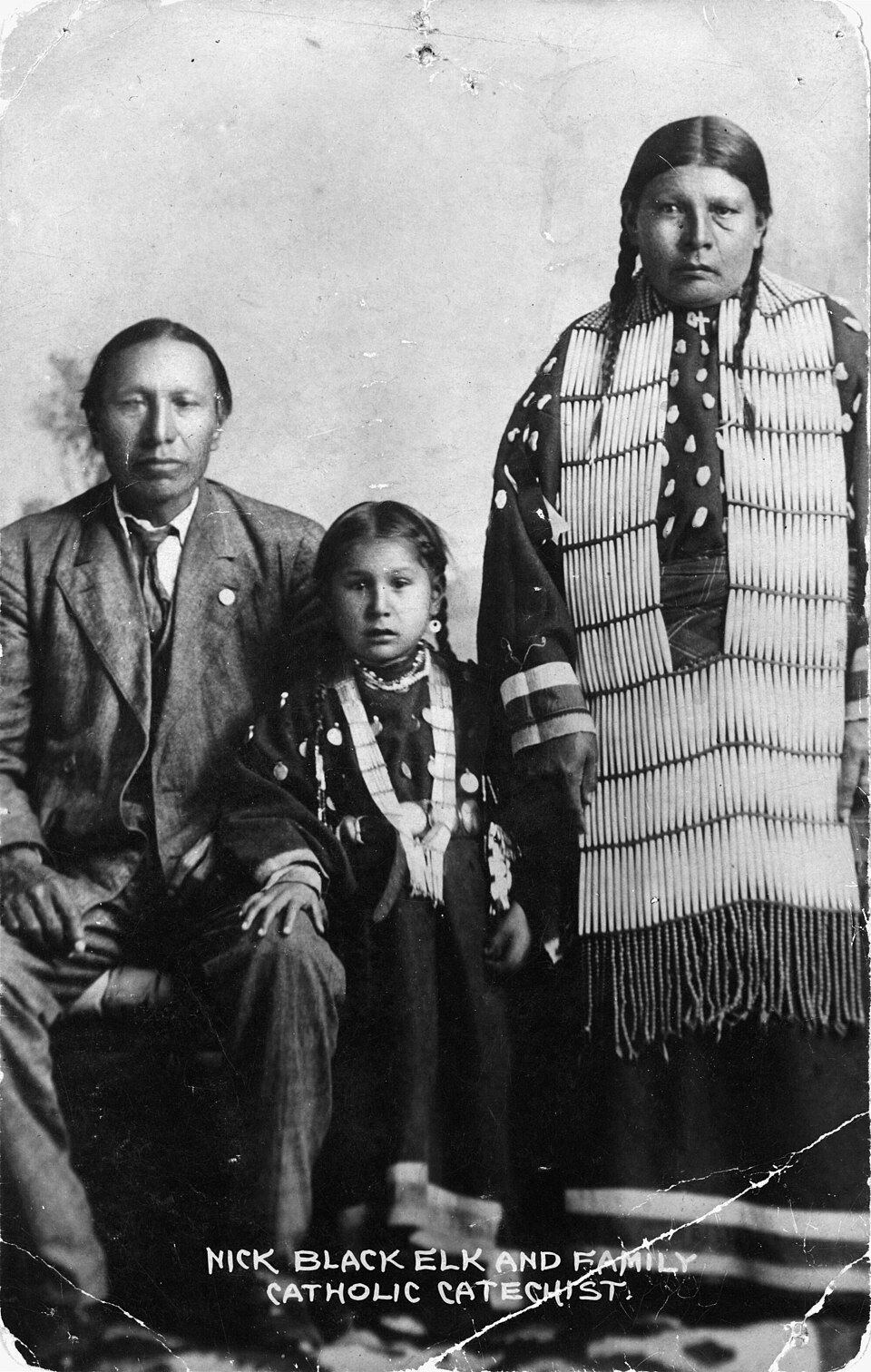
Black Elk
Oglala Lakota wičháša wakȟáŋ (holy man), Heyoka, second cousin of Crazy Horse, and witness to the central tragedies of nineteenth-century Plains Indian history — the Battle of the Little Bighorn (which he witnessed at age twelve), the imprisonment of Sitting Bull, the Ghost Dance movement, and the Wounded Knee Massacre of 1890. Born around 1863 on the Little Powder River, Black Elk received as a child the great vision that became the spiritual core of his life and that John G. Neihardt rendered into the 1932 book Black Elk Speaks — one of the foundational texts of the global engagement with indigenous spirituality, in print continuously for nearly a century and recognized today as among the great religious autobiographies of any tradition. The Sacred Pipe, written with Joseph Epes Brown in 1953, gives Black Elk's account of the seven sacred rites of the Lakota. He also became, late in life, a Catholic catechist named Nicholas Black Elk, holding both traditions without contradiction. He died on Pine Ridge Reservation in 1950.
quotes in library
Quotes by Black Elk
108 quotes“The sacred hoop of my people lay broken and scattered.”
“There is no center anymore, and the sacred tree is dead.”
“And yet, I am told, the dream may yet live.”
“Perhaps it lives in those who hear my words now.”
“Perhaps it will live in those who come after them.”
“This is my prayer.”
“Hetchetu aloh — and so it is.”
Explore More Teachers
Discover wisdom from 500+ spiritual teachers across all traditions.
Browse All Teachers