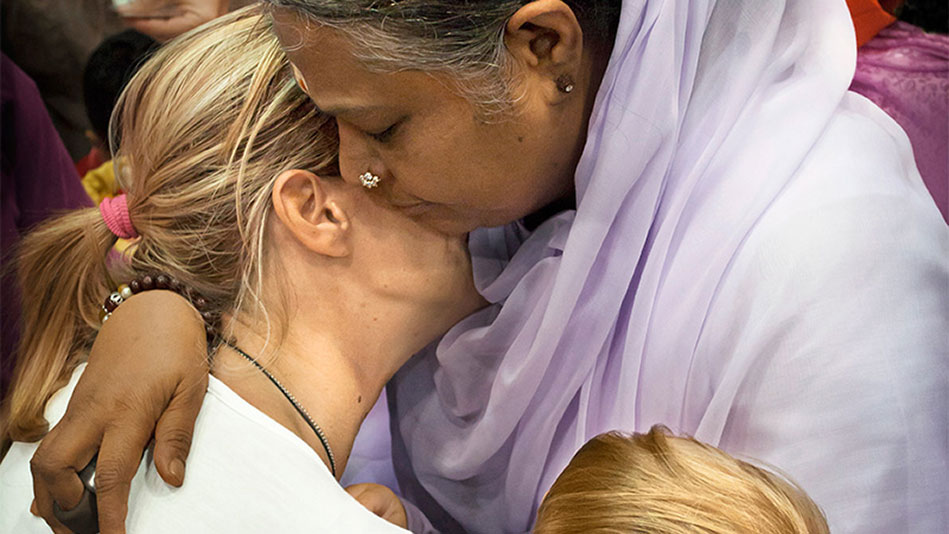
Amma's profound assertion, "To bow is not to lower oneself. It is to acknowledge the divine in another," invites us to reconsider the act of bowing, traditionally seen as a gesture of submission or humility. Instead, she reframes it as a sacred recognition of the divine essence that resides within every individual. This perspective not only elevates the act of bowing but also deepens our understanding of interpersonal relationships and the interconnectedness of all beings. In a world often marked by division and ego, this teaching serves as a powerful reminder of our shared divinity.
In a society that frequently equates humility with inferiority, Amma's words challenge us to embrace a more expansive view of self and others. Bowing becomes a spiritual practice, a means of acknowledging the inherent worth and divinity in those around us. This acknowledgment fosters compassion, empathy, and a sense of unity, encouraging us to transcend our individual egos and recognize the larger tapestry of existence. By embracing this teaching, we can cultivate a more harmonious world, one bow at a time.
The image / the metaphor
The imagery of bowing evokes a rich tapestry of meanings, steeped in cultural and spiritual significance. At its core, bowing is a physical act that embodies reverence and respect. The verb "to bow" suggests a movement that is both intentional and graceful, a lowering of the head or body that signifies acknowledgment. However, Amma's insight transforms this gesture from one of subservience to one of recognition, inviting us to see it as a bridge connecting us to the divine essence within others.
Diving deeper into the metaphor, bowing becomes a powerful symbol of humility and openness. It is an invitation to let go of our preconceived notions and judgments, allowing us to engage with others on a more profound level. In this light, bowing is not merely a physical act but a spiritual practice that encourages us to cultivate awareness of the divine spark in everyone we encounter. This shift in perspective can lead to transformative experiences, fostering a sense of belonging and interconnectedness that transcends the boundaries of the self.
In the speaker's tradition
Amma's teachings are rooted in the bhakti tradition, which emphasizes devotion and love for the divine. In this context, bowing serves as a manifestation of bhakti, where the devotee expresses reverence not only towards God but also towards fellow beings. This acknowledgment aligns with the concept of dharma, which calls for recognizing the inherent worth of all life forms. By bowing, we engage in a practice that embodies the principles of kenosis—self-emptying love—and sunyata, the realization of emptiness that allows for the fullness of connection with others.
In the Bhagavad Gita, we find echoes of this teaching in the idea of seeing the divine in all beings. Krishna advises Arjuna to act with equanimity, recognizing that the same divine essence pervades everyone, regardless of their social status or actions. This perspective not only enriches our understanding of bowing but also invites us to embody the qualities of compassion and humility that are central to the bhakti path. By acknowledging the divine in others, we align ourselves with the universal truth that we are all interconnected, woven together in the fabric of existence.
Living the teaching
Consider a modern scenario where this teaching can be applied: a busy workplace filled with diverse personalities and perspectives. In the midst of deadlines and stress, taking a moment to bow—figuratively or literally—can transform the atmosphere. When we acknowledge the contributions and worth of our colleagues, we foster an environment of respect and collaboration. This simple act of recognition can break down barriers, inviting open communication and a sense of community that enhances productivity and well-being.
In personal relationships, the act of bowing can manifest in moments of conflict or misunderstanding. Instead of allowing ego to dictate our responses, we can choose to acknowledge the divine in the other person, even when we disagree. This practice encourages us to listen deeply and respond with compassion, fostering healing and connection. By embracing Amma's teaching, we cultivate a space where love and understanding can flourish, transforming our interactions into opportunities for spiritual growth and deeper connection.
A reflection
As we contemplate Amma's profound words, we are invited to reflect on our own interactions with others. How often do we recognize the divine essence within those we encounter daily? In what ways can we practice bowing—both physically and metaphorically—to acknowledge the sacredness in others? This contemplation encourages us to deepen our connections, fostering a sense of unity that transcends the individual self and honors the divine presence in all.