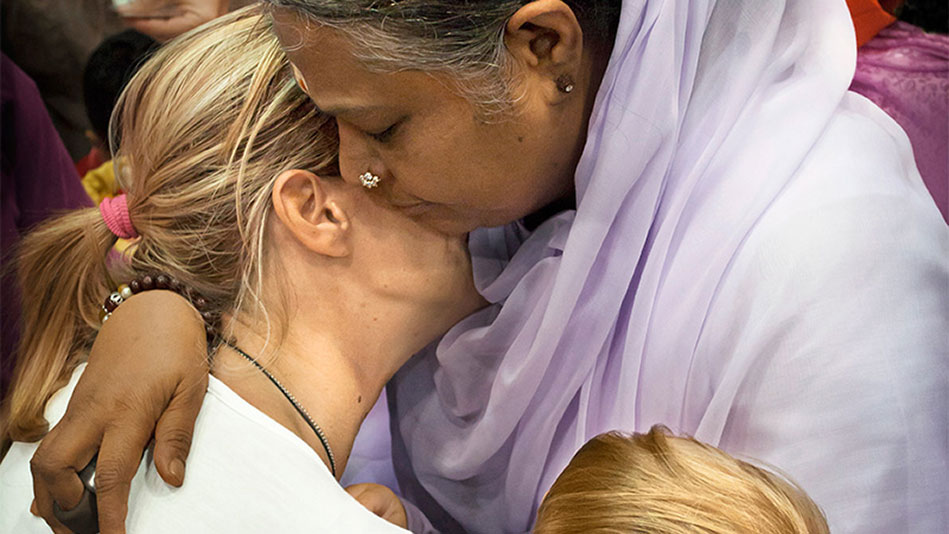
Nourishing the World with Love
Amma's poignant declaration, "The world is hungry. Feed it with love," invites us to consider the profound need for compassion and connection in our lives. In a world often marked by division and strife, this call to action resonates deeply, urging us to respond to the hunger for love that exists not only within ourselves but also in the hearts of those around us. The stakes are high; our ability to cultivate love can transform not just individual lives but also the collective experience of humanity.
This quote serves as a reminder that love is not merely an abstract concept but a tangible force that can nourish and sustain us. It challenges us to recognize the myriad ways in which we can offer love—through kindness, understanding, and presence. In a time when many feel isolated or disconnected, Amma's words inspire us to become active participants in the healing of our world, emphasizing that love is an essential ingredient for both personal and communal well-being.
The image / the metaphor
The imagery of hunger evokes a visceral sense of need, suggesting that love is as vital to our existence as food and water. When Amma speaks of the world being hungry, she taps into a universal experience—the longing for connection, acceptance, and understanding that transcends cultural and geographical boundaries. The verb "feed" implies action; it calls us to engage actively in the process of giving love, rather than waiting passively for it to be offered to us.
Diving deeper into this metaphor, we can see that feeding with love is not a one-time act but a continuous practice. Just as the body requires regular nourishment to thrive, so too does the spirit need love to flourish. This feeding can take many forms: a smile shared with a stranger, a listening ear for a friend in distress, or a moment of compassion for oneself. Each act of love contributes to a larger tapestry of connection, reminding us that our individual efforts can collectively create a more loving world.
In the speaker's tradition
Amma's teachings are deeply rooted in the tradition of bhakti, which emphasizes devotion and love as pathways to spiritual realization. In this context, love is not merely an emotion but a form of dharma—a duty to cultivate compassion and connection with all beings. The concept of kenosis, or self-emptying, resonates here; by letting go of our ego-driven desires, we create space for love to flow freely, both to and from ourselves. This selfless love, or prema, is what ultimately nourishes the world.
In the Bhagavad Gita, we find echoes of Amma's sentiment in the idea that selfless action, or karma yoga, leads to liberation. When we act out of love and compassion, we transcend our individual concerns and contribute to the greater good. This aligns with the teachings of other bhakti saints, such as Mirabai and Kabir, who also emphasized the importance of love as a transformative force in both personal and communal contexts.
Living the teaching
Consider a modern scenario where this teaching can take root: a community grappling with the aftermath of a natural disaster. In such moments, the hunger for love manifests as a need for support, understanding, and solidarity. Volunteers who come together to provide aid, comfort, and companionship embody Amma's call to feed the world with love. Their actions not only address immediate needs but also foster a sense of belonging and hope, illustrating how love can heal even the deepest wounds.
This teaching can also be applied in our personal relationships. Imagine a moment of conflict with a loved one, where misunderstandings have created emotional distance. By choosing to respond with love—through active listening, empathy, and forgiveness—we can bridge the gap and nourish the relationship. This practice of feeding love into our interactions transforms not only our connections but also our own inner landscape, allowing us to cultivate a more compassionate and understanding heart.
A reflection
As we contemplate Amma's profound words, we are invited to reflect on our own capacity to feed the world with love. What are the ways in which we can actively contribute to the nourishment of those around us? In moments of challenge or disconnection, how can we choose love as our response? Let these questions guide your thoughts and actions, encouraging you to explore the depths of love that reside within you and the transformative power it holds for the world.