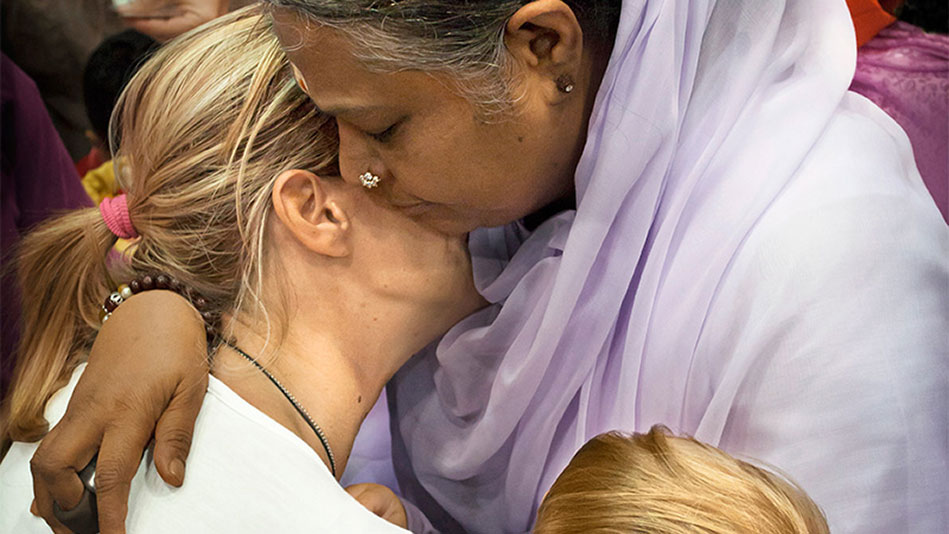
Embracing the Cosmic Family: A Journey into Unity
Amma's profound assertion that "the whole universe is one family" invites us to reconsider our understanding of connection and belonging. This statement transcends mere sentiment; it challenges us to recognize the intricate web of existence that binds all beings together. In a world often marked by division and isolation, this teaching serves as a powerful reminder of our shared humanity and the universal love that underpins all life. The stakes are high: embracing this perspective can lead to a more compassionate and harmonious existence, both individually and collectively.
Delving deeper into this idea, we find that Amma's words resonate with the essence of bhakti, a devotional path that emphasizes love and unity with the divine and all creation. This perspective invites us to cultivate a sense of kinship not only with those we know but also with strangers, nature, and the cosmos itself. By recognizing that we are all part of a larger family, we can foster empathy and understanding, ultimately leading to a more peaceful world. The call to see the universe as one family is not merely an ideal; it is a transformative practice that can reshape our interactions and perceptions.
The image / the metaphor
At the heart of Amma's quote lies a vivid metaphor that evokes the image of a vast, interconnected family. The term "universe" encompasses not just the physical cosmos but also the myriad relationships that exist within it. The word "family" suggests warmth, support, and love, evoking feelings of belonging and acceptance. By using these terms, Amma paints a picture of a reality where every individual, regardless of background or belief, is intrinsically linked to one another. This imagery invites us to feel the weight of our shared existence, urging us to act with kindness and compassion.
Moreover, the metaphor of family extends beyond mere biological ties; it encompasses a broader understanding of kinship that transcends borders and differences. In this context, family is not limited to those we know personally but includes all beings—human and non-human alike. This deeper exploration of the metaphor encourages us to cultivate a sense of responsibility towards one another, recognizing that our actions ripple through the fabric of the universe. The call to see ourselves as part of one family invites us to embrace a more inclusive and loving worldview.
In the speaker's tradition
Amma's teaching is deeply rooted in the bhakti tradition, which emphasizes devotion and love as pathways to spiritual realization. Central to this tradition is the concept of "sahaja," or naturalness, which encourages individuals to express their innate love and compassion towards all beings. This understanding aligns with the idea of "dharma," or righteous living, where one's actions are guided by a sense of interconnectedness and responsibility to others. In this light, recognizing the universe as one family becomes a spiritual practice that fosters unity and harmony.
Furthermore, this notion resonates with the teachings found in various texts within the bhakti tradition. For instance, the Bhagavad Gita speaks of "sarva bhuta hite ratah," which translates to being engaged in the welfare of all beings. This principle echoes Amma's sentiment, emphasizing that our spiritual journey is intertwined with the well-being of others. By embodying this teaching, we not only deepen our own spiritual practice but also contribute to the collective awakening of love and compassion in the world.
Living the teaching
In our modern lives, the teaching of seeing the universe as one family can manifest in various concrete scenarios. Consider a moment of conflict in a workplace where differing opinions lead to tension. By embracing Amma's perspective, individuals can approach the situation with empathy, recognizing that each person is navigating their own struggles and desires. This shift in perception can transform the dynamic, fostering collaboration and understanding rather than division. In this way, the teaching becomes a practical tool for navigating the complexities of human relationships.
Another application of this teaching can be found in our personal relationships, particularly during challenging moments. Imagine a disagreement with a loved one that escalates into hurtful exchanges. By remembering that we are all part of one family, we can cultivate patience and compassion, allowing us to respond with love rather than anger. This practice of viewing our loved ones as integral parts of the larger family of existence can help us navigate conflicts with grace, ultimately strengthening our bonds and fostering deeper connections.
A reflection
As we contemplate Amma's profound statement, we are invited to reflect on our own perceptions of connection and belonging. How can we cultivate a deeper sense of kinship with those around us, recognizing the shared humanity that binds us all? This contemplative question encourages us to explore the ways in which we can embody the teaching of universal family in our daily lives, fostering love and compassion in our interactions with others.