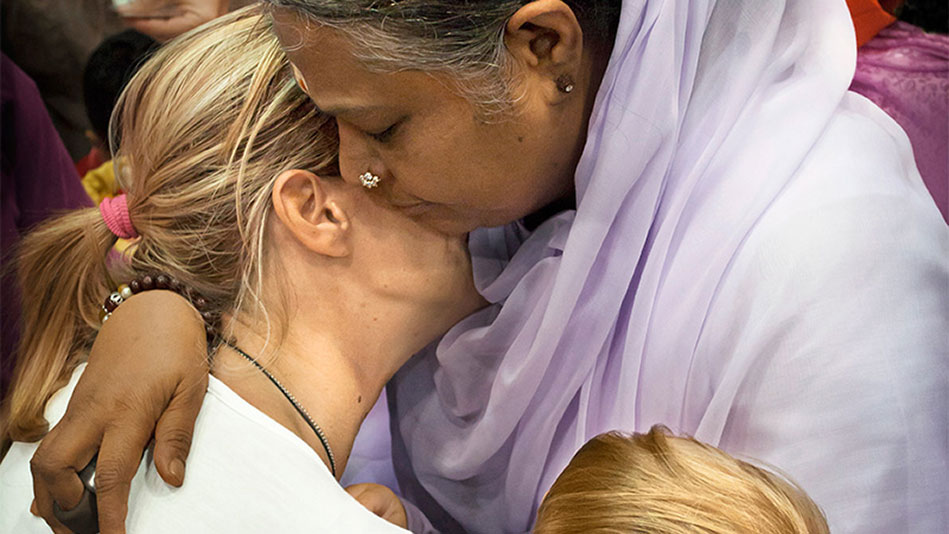
Amma's profound statement, "In the lap of the Mother, fear cannot stay," invites us to explore the sanctuary found in divine love and maternal care. This quote speaks to the transformative power of surrendering our fears to a nurturing presence, suggesting that in the embrace of unconditional love, fear loses its grip on our hearts. The stakes are high; in a world rife with anxiety and uncertainty, the ability to find solace and strength in such a relationship can be life-altering.
Delving deeper, we recognize that the "Mother" in this context symbolizes not just a physical figure but an archetype of divine compassion and protection. This maternal energy embodies the essence of bhakti, the devotional path that encourages us to cultivate a deep, personal relationship with the divine. By acknowledging our fears and placing them in the hands of this loving presence, we open ourselves to healing and empowerment, allowing us to navigate life's challenges with grace and courage.
The image / the metaphor
The imagery of being in the "lap of the Mother" evokes a sense of safety and warmth, a place where one can be vulnerable without fear of judgment or harm. The lap symbolizes a nurturing space, a refuge where one can rest and be comforted. The choice of the word "lap" suggests intimacy and closeness, emphasizing a relationship that is both personal and profound. In this sacred space, fear is not merely diminished; it is rendered powerless, unable to coexist with the overwhelming love that envelops us.
In the speaker's tradition
Amma's teachings are deeply rooted in the bhakti tradition, which emphasizes devotion and surrender to the divine. Central to this path is the concept of bhakti itself, which encourages practitioners to cultivate a loving relationship with God, often personified as a nurturing figure. This relationship fosters a sense of trust and security, allowing individuals to confront their fears and insecurities. The idea of kenosis, or self-emptying, also resonates here; by surrendering our fears to the divine, we create space for love and grace to fill our hearts.
In the Bhagavad Gita, a foundational text in the bhakti tradition, Lord Krishna reassures Arjuna, saying, "Do not be afraid; I am here." This sentiment echoes Amma's message, emphasizing that divine presence is a source of strength and comfort. The Gita teaches that by surrendering our burdens to the divine, we can find clarity and courage to face our challenges. In this light, Amma's quote serves as a reminder that fear can be transformed into faith when we embrace the love of the Mother.
Living the teaching
Consider a modern scenario where this teaching resonates: a person facing a significant life change, such as a job loss or a relationship ending. In such moments, fear can become overwhelming, leading to feelings of isolation and despair. By consciously seeking the comfort of the "Mother," whether through prayer, meditation, or simply reflecting on the love that surrounds them, this individual can find solace and strength. The act of surrendering their fears to a nurturing presence can transform their experience, allowing them to navigate the uncertainty with a renewed sense of hope.
Another application of this teaching can be found in interpersonal relationships. Imagine a conflict with a loved one that has led to feelings of anger and resentment. By invoking the image of the Mother, one can approach the situation with compassion rather than fear. This shift in perspective allows for open communication and healing, fostering a deeper connection. In daily practice, one might cultivate this awareness through rituals that honor the divine feminine, such as lighting a candle or offering gratitude, creating a space where fear cannot thrive.
A reflection
As we contemplate Amma's profound words, we are invited to reflect on our own relationship with fear. What fears do we carry that prevent us from fully embracing life? In what ways can we seek the comfort of the Mother to transform these fears into faith? By engaging with these questions, we can begin to uncover the layers of our own experiences and discover the transformative power of love and surrender.