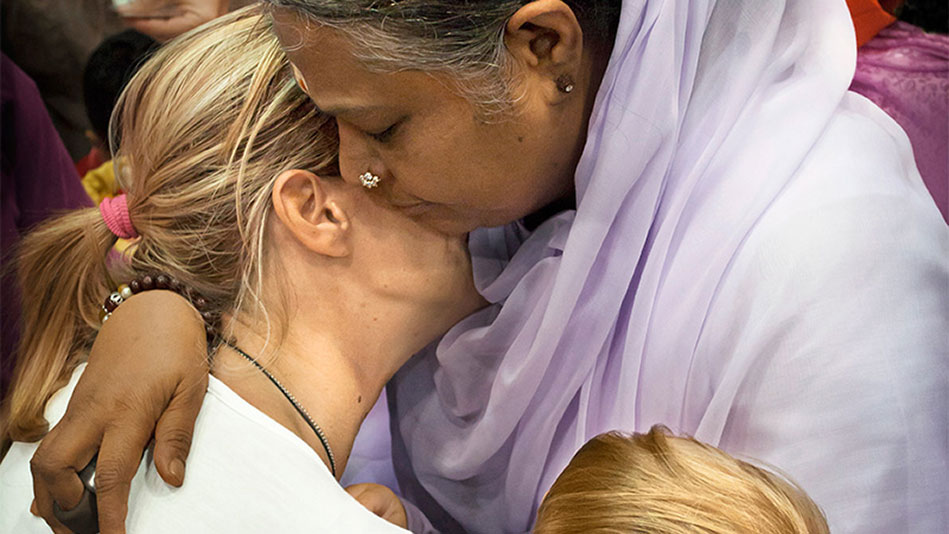
Amma's profound exhortation, "Children, be like the lotus. Live in the world but not of it," invites us to navigate the complexities of life with a sense of detachment and grace. This teaching underscores the importance of engaging with the world while maintaining an inner sanctum of peace and purity. In a society often driven by materialism and distraction, this message resonates deeply, urging us to cultivate a spiritual resilience that allows us to thrive amidst chaos.
To embody the essence of the lotus is to recognize the delicate balance between participation and detachment. The lotus, which blooms beautifully above the murky waters, symbolizes the potential for spiritual awakening even in challenging environments. This quote serves as a reminder that while we may be surrounded by the trials and tribulations of life, our true essence can remain untouched, allowing us to flourish in our spiritual journey.
The image / the metaphor
The imagery of the lotus is rich and evocative, conjuring a sense of beauty that arises from adversity. The lotus grows in muddy waters, yet it rises above, unfurling its petals to the sun. This vivid metaphor encapsulates the human experience; we are often immersed in the struggles and complexities of life, yet we possess the capacity to rise above them. The verbs "live" and "be" suggest an active engagement with the world while simultaneously embodying a state of being that transcends it.
Diving deeper into the metaphor, the lotus represents not just survival but flourishing. It teaches us that our spiritual essence can remain untainted by external circumstances. The act of living "in the world but not of it" implies a conscious choice to engage with life’s experiences without becoming entangled in them. This duality invites us to cultivate awareness, allowing us to witness our thoughts and emotions without becoming identified with them.
In the speaker's tradition
Amma's teachings are rooted in the bhakti tradition, which emphasizes devotion and love for the divine as a path to spiritual realization. The concept of detachment, or vairagya, is central to this tradition, encouraging practitioners to relinquish their attachments to the transient aspects of life. This detachment is not about renunciation but rather about cultivating a profound connection with the divine while remaining engaged in the world. In this context, the lotus serves as a powerful symbol of how one can embody devotion while navigating the complexities of existence.
In the Bhagavad Gita, a foundational text in the bhakti tradition, Lord Krishna advises Arjuna to perform his duty without attachment to the results. This teaching aligns beautifully with Amma's message, as it emphasizes the importance of action rooted in love and devotion, free from the burdens of expectation. By embracing this perspective, we can learn to engage with the world wholeheartedly while maintaining our spiritual integrity, much like the lotus that blooms amidst the mud.
Living the teaching
Consider a modern scenario where this teaching can be applied: a bustling workplace filled with deadlines, competition, and stress. In such an environment, one might feel overwhelmed by the pressures to conform and succeed. By embodying the essence of the lotus, an individual can approach their work with dedication and effort while remaining detached from the outcomes. This allows them to navigate challenges with grace, fostering a sense of inner peace that is not swayed by external circumstances.
In a personal relationship, the teaching of the lotus can also be transformative. Imagine a situation where misunderstandings arise, leading to tension and conflict. By practicing detachment, one can engage in open communication without becoming defensive or reactive. This approach fosters a space for healing and understanding, allowing both individuals to express their feelings while remaining anchored in their true selves, much like the lotus that remains unblemished by the waters in which it grows.
A reflection
As we contemplate Amma's wisdom, we are invited to reflect on our own relationship with the world around us. How can we embody the qualities of the lotus in our daily lives? In what ways can we engage with our experiences while maintaining a sense of inner peace and detachment? This inquiry encourages us to explore the delicate balance between participation and detachment, guiding us toward a more profound understanding of our spiritual journey.