BrightStar

Browse All Events

Discover conscious gatherings

events

Yoga
Meditation
Breathwork
Qigong
Tai Chi
Sacred Music
World Music
Medicine Music
Sound Healing
Ecstatic Dance
Popular Destinations
BaliSedonaLos AngelesCosta RicaNew YorkSan FranciscoAustinMiamiJoshua TreeTulum
View All CategoriesView All Destinations

Explore All Features

Powerful tools to grow your events

Platform Features

Smart Dynamic Pricing
Ticket Categories
Assigned Seating
Abandoned Cart Recovery
Visitor Recovery
Donations & Sliding Scale
Affiliate Engine
Ticket Scanner
Coupon Codes
Custom Questions
Ticket Sharing
Upsells & Add-ons
Analytics & Reporting
Email Sequences
Waitlist / Notify / Remind
People & Places
Artists & TeachersEvent OrganizersVenues & StudiosKnowledge BaseGlossaryInspiration
View All FeaturesAbout Us
PricingBlog
Browse All Events

events

YogaMeditationBreathworkQigongTai ChiSacred MusicWorld MusicMedicine Music

Popular Destinations

BaliSedonaLos AngelesCosta RicaNew YorkSan Francisco

People & Places

Artists & TeachersEvent OrganizersVenues & StudiosKnowledge BaseGlossaryInspiration

Platform Features

Smart Dynamic PricingTicket CategoriesAssigned SeatingAbandoned Cart RecoveryVisitor RecoveryDonations & Sliding ScaleAffiliate EngineTicket ScannerCoupon CodesCustom QuestionsTicket SharingUpsells & Add-onsAnalytics & ReportingEmail SequencesWaitlist / Notify / Remind
View All FeaturesAbout Us
PricingBlog
Log inFind EventsHost Events
Tibetan BuddhistOm Mani Padme Hum · Om Mani Padme Hum · Om Mani Padme Hum · Om Mani Padme Hum ·
  • Browse All Events
  • For Seekers
  • Yoga
  • Meditation
  • Breathwork
  • Qigong
  • Tai Chi
  • Sacred Music
  • Retreats
  • Workshops
  • All Categories →
  • Bali
  • Sedona
  • Los Angeles
  • Costa Rica
  • Tulum
  • Byron Bay
  • San Francisco
  • Austin
  • All Cities →
  • For Creators
  • For Writers
  • For Teachers
  • For Kirtan Artists
  • For Studios
  • For Festivals
  • For Retreat Centers
  • For Nonprofits
  • Brand Ambassador
  • Case Studies
  • 350K+ Buyer Network
  • Abandoned Cart Recovery
  • Smart Dynamic Pricing
  • Ticket Categories
  • Recurring Events
  • Assigned Seating
  • Affiliate Engine
  • Waitlist / Notify
  • Ticket Scanner
  • Embed Widget
  • All Features →
  • About
  • Blog
  • Glossary
  • Inspiration
  • Help Center
  • Contact
  • API Docs
  • Brand Assets
  • Careers
  • Press
  • Terms of Service
  • Privacy Policy

Events

  • Browse All Events
  • For Seekers
  • Yoga
  • Meditation
  • Breathwork
  • Qigong
  • Tai Chi
  • Sacred Music
  • Retreats
  • Workshops
  • All Categories →

Destinations

  • Bali
  • Sedona
  • Los Angeles
  • Costa Rica
  • Tulum
  • Byron Bay
  • San Francisco
  • Austin
  • All Cities →

For Creators

  • For Creators
  • For Writers
  • For Teachers
  • For Kirtan Artists
  • For Studios
  • For Festivals
  • For Retreat Centers
  • For Nonprofits
  • Brand Ambassador
  • Case Studies

Features

  • 350K+ Buyer Network
  • Abandoned Cart Recovery
  • Smart Dynamic Pricing
  • Ticket Categories
  • Recurring Events
  • Assigned Seating
  • Affiliate Engine
  • Waitlist / Notify
  • Ticket Scanner
  • Embed Widget
  • All Features →

Company

  • About
  • Blog
  • Glossary
  • Inspiration
  • Help Center
  • Contact
  • API Docs
  • Brand Assets
  • Careers
  • Press
  • Terms of Service
  • Privacy Policy
BrightStar
© 2026 BrightStar. All rights reserved.
Back to Omega Institute
Food & Meals

Eating at Omega Institute: The Food Experience
3 min readMay 2026at Omega Institute
Eating at Omega Institute: The Food Experience

Eating at Omega Institute: The Food Experience

The dining hall at Omega Institute in Rhinebeck, New York, reflects the same philosophy that guides everything else at this pioneering retreat center: nourishment should be inclusive, mindful, and rooted in wellness. Since 1977, Omega has fed thousands of seekers, students, and teachers with vegetarian fare that attempts to honor both tradition and individual needs—though the food itself tends to spark more practical appreciation than rapturous praise.

The Philosophy Behind the Plates

Omega's kitchen operates on primarily vegetarian principles, with vegan options at every meal. The approach draws loosely from Ayurvedic traditions—emphasizing seasonal ingredients, digestive ease, and balance—while remaining accessible to the uninitiated. You won't find meat here, a choice that aligns with the center's broader commitment to environmental sustainability and the ecumenical, non-harming ethos established by founder Pir Vilayat Inayat Khan. The food isn't strictly Ayurvedic in the classical sense, but it nods toward those principles: warming spices, whole grains, cooked vegetables, and an emphasis on variety throughout the day.

The kitchen staff sources locally when possible, with produce coming from Hudson Valley farms during growing season. The result is honest food—wholesome, occasionally inspired, rarely memorable, but consistently adequate for the purposes at hand. People don't come to Omega for culinary awakening, and the center doesn't pretend otherwise.

A Day of Meals

Breakfast arrives buffet-style: steel-cut oatmeal with toppings, scrambled tofu alongside scrambled eggs (for vegetarians who eat dairy), whole-grain toast, fresh fruit, yogurt, and granola. Coffee flows freely, both regular and decaf, alongside various teas. It's the kind of breakfast that fuels a morning yoga session or three-hour workshop without weighing you down.

Lunch is the heartiest meal. Expect a substantial grain-and-legume combination—perhaps brown rice with curried chickpeas—accompanied by roasted vegetables, fresh salad with multiple dressings, soup, and bread. There's usually a pasta option or hearty casserole. Dessert appears at lunch: cookies, fruit crisps, or simple cakes. Nothing fancy, but enough to satisfy the afternoon energy dip.

Dinner lightens up considerably. Salads, soups, lighter grain dishes, and often a themed evening—stir-fry night, Mediterranean night, Mexican-inspired bowls. The theory, loosely Ayurvedic, holds that eating lighter in the evening supports better sleep and digestion. Whether this satisfies someone accustomed to dinner as the main event varies by individual, though seconds are always available.

The Dining Hall Experience

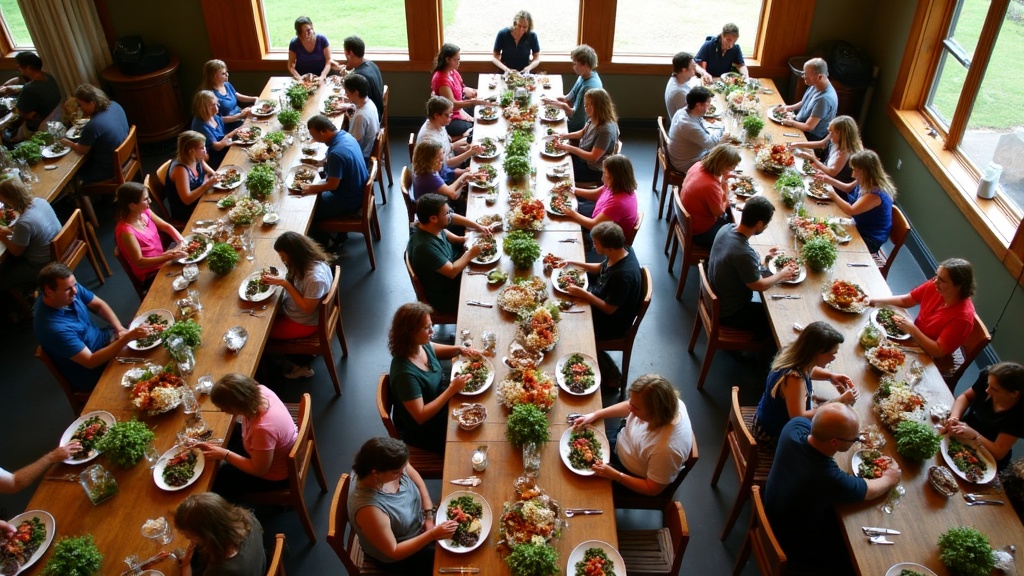
Meals happen in the Omega Café, a sprawling dining hall with large windows overlooking the grounds. The atmosphere is cafeteria-functional rather than aesthetically transporting—practical tables, efficient flow, indoor and outdoor seating when weather permits. People eat alone with books, gather in workshop groups, or fall into conversation with strangers. The space serves its purpose: getting several hundred people fed within defined windows, three times daily.

There's no enforced silence, no assigned seating, no ritual beyond the organic one of people coming together around food. It's communal without being precious about it.

Accommodations and Options

Omega takes dietary restrictions seriously, a necessity given its diverse clientele. Gluten-free options appear at every meal, clearly labeled. Vegan choices are abundant and integrated into the main offerings rather than treated as afterthoughts. Staff can accommodate nut allergies, soy sensitivities, and other common restrictions with advance notice.

Between-meal options remain limited. There's no coffee shop or snack bar, though tea and fruit are typically available. The advice given at check-in: bring your own snacks if you're particular. The nearest town supplies those who didn't plan ahead.

The Caffeine Question

Coffee is available at breakfast and lunch, but you won't find it flowing at dinner or late-night. This isn't strict prohibition—you can bring your own provisions—but the center gently encourages mindful consumption. It's a soft boundary, characteristic of Omega's approach: suggestions rather than rules, invitations rather than demands.

Special Programs

Occasional food-focused workshops appear in Omega's catalog—cooking classes, Ayurvedic nutrition courses, mindful eating retreats. These are distinct from standard meals, offering deeper dives for those specifically interested in food as practice.

The dining experience at Omega is fundamentally serviceable: it nourishes without distracting, supports the real work happening elsewhere on campus, and respects diverse bodies and beliefs. It won't be what you remember most about your time there, which is probably exactly the point.
More about Omega Institute

Best Time to Visit Omega Institute: A Seasonal Guide
Seasonal Guide

Best Time to Visit Omega Institute: A Seasonal Guide

From December through February, Omega essentially hibernates. The campus in Rhinebeck closes for the season, offering no residential program…

4 min read
Inside the Omega Institute Daily Schedule
Daily Rhythm

Inside the Omega Institute Daily Schedule

The bell rings at 6:45 a.m., though you've likely been awake since the first bird call. On Day 1, you'll jolt upright, disoriented by unfami…

3 min read
Best Programs at Omega Institute for Beginners
For Beginners

Best Programs at Omega Institute for Beginners

The fear is always the same: you'll be the only one who doesn't know the terminology, can't sit cross-legged for an hour, or hasn't read the…

4 min read
The History of Omega Institute
History

The History of Omega Institute

In 1977, when Elizabeth Lesser and Stephan Rechtschaffen founded what would become Omega Institute for Holistic Studies, the American cultur…

3 min read

Keep exploring

Continue your journey

More from Omega Institute and across the BrightStar directory.

Back to Omega Institute

Return to the full venue profile — events, artists, guides, and more.

Back to venue →

Discover More Venues

Browse retreat centers, festivals, and sacred spaces across the conscious world.

Explore venues →

Find an Event

Kirtan, retreats, sound baths, breathwork, festivals — happening soon.

Browse events →