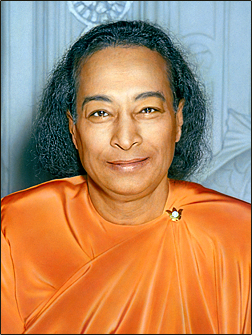
Paramahansa Yogananda's quote, "Seek the company of those who are seeking the truth; run from those who have found it," invites us to reflect on the nature of truth and the importance of humility in our spiritual journeys. In essence, Yogananda suggests that the pursuit of truth is a dynamic process, one that thrives in the company of fellow seekers rather than in the presence of those who claim to possess absolute knowledge. This distinction carries profound implications for our spiritual growth and understanding, urging us to remain open, curious, and engaged in the quest for deeper insights.
In a world often saturated with certainties and dogmas, Yogananda's words resonate as a gentle reminder of the value of inquiry and the transformative power of companionship on the spiritual path. The act of seeking is not merely about arriving at a destination; it is about the journey itself, characterized by exploration, questioning, and shared experiences. By surrounding ourselves with those who are also in pursuit of truth, we cultivate an environment rich in dialogue, reflection, and mutual support, which ultimately nurtures our own spiritual evolution.
The image / the metaphor
The imagery in Yogananda's quote evokes a sense of movement and directionality. The verbs "seek" and "run" suggest an active engagement with our surroundings and relationships. To seek implies a quest, an earnest desire to uncover deeper truths, while to run from those who have found it conveys a sense of urgency and caution. This duality highlights the importance of discernment in our spiritual lives, urging us to choose our companions wisely as we navigate the complexities of existence.
In the speaker's tradition
Paramahansa Yogananda's teachings are deeply rooted in the rich tradition of Hindu philosophy, where concepts such as dharma, bhakti, and prajna play pivotal roles in understanding the nature of truth. Dharma, the moral order of the universe, encourages individuals to act in accordance with their true nature, while bhakti emphasizes devotion and love in the pursuit of the divine. In this context, seeking the company of fellow truth-seekers aligns with the principles of community and shared purpose, fostering an environment conducive to spiritual growth.
Moreover, Yogananda's emphasis on seeking resonates with the Buddhist concept of sunyata, or emptiness, which invites practitioners to let go of fixed notions and attachments. This openness to the fluidity of truth is echoed in the teachings of the Upanishads, where the quest for knowledge is portrayed as a sacred journey. In the Chandogya Upanishad, for instance, the seeker is encouraged to engage in dialogue and inquiry, reinforcing the idea that truth is best discovered through collective exploration rather than solitary certainty.
Living the teaching
Consider a modern scenario where this teaching finds relevance: a group of friends gathers to discuss their spiritual experiences and insights. Each person shares their unique perspectives, questions, and uncertainties, creating a rich tapestry of dialogue that fosters growth and understanding. In this setting, the act of seeking together becomes a source of inspiration, as each individual contributes to the collective journey toward truth. The atmosphere is one of curiosity and openness, where no one claims to have all the answers, but rather, everyone is committed to exploring the depths of their experiences.
In a different context, imagine a challenging moment in a relationship where misunderstandings arise. Instead of insisting on being right or holding onto fixed beliefs, both partners can embrace the spirit of seeking by engaging in open conversations about their feelings and perspectives. This approach not only deepens their connection but also allows them to navigate the complexities of their relationship with humility and grace. By prioritizing the journey of understanding over the need for certainty, they embody Yogananda's teaching in a profoundly personal way.
A reflection
As we contemplate Yogananda's profound words, we are invited to consider the nature of our own spiritual journeys. Are we surrounding ourselves with those who inspire us to seek, question, and grow? In what ways can we cultivate a spirit of inquiry in our lives, both within ourselves and in our relationships with others? These questions serve as a gentle nudge to reflect on our paths and the company we keep, reminding us that the journey of seeking is as vital as the truths we hope to uncover.


