The Sacred Act of Remembering: Embracing the Naam
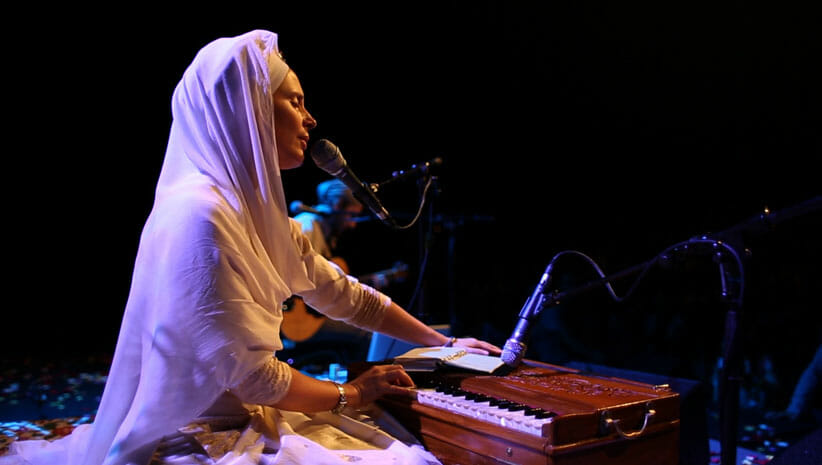
In the words of Snatam Kaur, "To sing the Naam is to remember the One." This profound statement encapsulates the essence of spiritual practice within Sikhism, where the act of singing or reciting the Naam—often understood as the divine name or essence—serves as a pathway to reconnect with the singular source of all existence. The stakes of this teaching are high; in a world filled with distractions and disconnection, the call to remember the One invites us to cultivate a deeper awareness of our spiritual nature and the interconnectedness of all life.
Moreover, this quote speaks to the transformative power of remembrance. In Sikhism, the Naam is not merely a word or a sound; it is a living presence that resonates within us and around us. To engage with the Naam is to awaken to a reality that transcends the mundane, allowing us to experience a profound sense of unity and belonging. This remembrance is not a passive act but an active engagement with the divine, a practice that can lead to spiritual awakening and inner peace.
The image / the metaphor
At its core, the quote evokes a rich tapestry of imagery and action. The verb "sing" suggests a joyful, expressive engagement with the Naam, while "remember" implies a conscious effort to bring to mind the divine presence that permeates all aspects of life. This duality of action—both vocal and mental—creates a felt sense of connection, as if the act of singing itself becomes a bridge to the divine. The imagery conjured here is one of harmony and resonance, where the voice and the heart align in a sacred dance of remembrance.
Diving deeper into the metaphor, we can see that singing the Naam is akin to tuning an instrument. Just as a musician must attune their instrument to produce beautiful music, so too must we align our hearts and minds with the divine frequency of the Naam. This metaphor invites us to consider our own inner state; are we in tune with the essence of the One? The act of singing becomes a transformative practice, allowing us to harmonize our lives with the greater symphony of existence.
In the speaker's tradition
Snatam Kaur's teachings are deeply rooted in the Sikh tradition, which emphasizes the importance of Naam in spiritual practice. The concept of Naam is intertwined with the idea of dharma, or righteous living, as it guides practitioners toward a life of truth and compassion. In Sikhism, the remembrance of the One is not merely an intellectual exercise; it is a heartfelt devotion, akin to bhakti, where love for the divine manifests in every action and thought. This devotion is a form of kenosis, a self-emptying that allows the divine presence to fill our lives.
In the Guru Granth Sahib, the central scripture of Sikhism, the significance of Naam is echoed throughout its verses. For instance, in the Mool Mantar, the foundational statement of Sikh belief, the divine is described as the One who is eternal, all-pervading, and beyond form. This text serves as a reminder that the act of remembering the One through the Naam is not just a personal endeavor but a collective journey toward understanding our place within the cosmos. The teachings encourage us to see the divine in all beings, fostering a sense of unity and interconnectedness.
Living the teaching
Consider a modern scenario where the teaching of singing the Naam can be applied: imagine a busy professional navigating the chaos of daily life. In the midst of deadlines and responsibilities, one might feel overwhelmed and disconnected. By taking a moment to pause and engage with the Naam—perhaps through a simple chant or a moment of silent reflection—this individual can reconnect with their inner self and the divine presence that surrounds them. This practice not only alleviates stress but also cultivates a sense of peace and purpose, reminding them of the greater tapestry of life in which they are woven.
In relationships, the act of remembering the One through the Naam can transform interactions. Picture a moment of conflict between partners, where misunderstandings and emotions run high. By invoking the Naam, each person can shift their focus from the ego-driven desire to be right to a shared remembrance of their connection to the divine. This shift in perspective fosters compassion and understanding, allowing for healing and reconciliation. In daily practice, whether through meditation, singing, or mindful breathing, the remembrance of the One can become a guiding light, illuminating the path toward deeper connection and love.
A reflection
As we contemplate the profound teaching encapsulated in Snatam Kaur's words, we are invited to ask ourselves: How can I actively engage with the Naam in my daily life to deepen my connection with the One? This question encourages us to explore the various ways we can incorporate the practice of remembrance into our routines, relationships, and inner landscapes. In doing so, we open ourselves to the possibility of transformation and a more profound understanding of our place within the divine tapestry of existence.