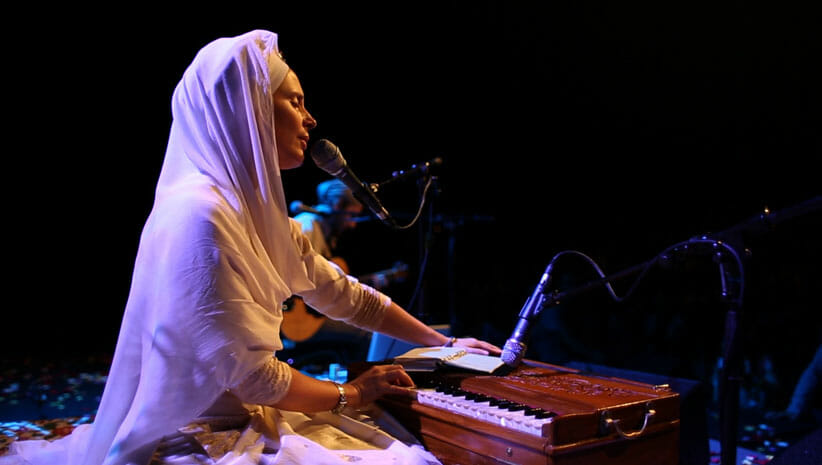
Snatam Kaur's assertion that "In every Mool Mantra, the universe sings with you" invites us to explore the profound connection between our inner spiritual practices and the vast cosmos that surrounds us. This quote suggests that the sacred sounds we utter are not mere words; they are vibrations that resonate with the very fabric of existence. Understanding this relationship can deepen our spiritual journey, revealing the interconnectedness of all beings and the universe itself.
At its core, this statement emphasizes the power of mantra as a tool for unity and expression. When we engage with the Mool Mantra, we are not just reciting a sequence of syllables; we are participating in a cosmic dialogue. This realization can transform our understanding of spirituality from a solitary endeavor into a shared experience, where our voices join the symphony of the universe, echoing the divine essence that permeates all creation.
The image / the metaphor
The imagery in Kaur's quote evokes a sense of harmony and collaboration between the individual and the universe. The phrase "the universe sings with you" suggests a dynamic interplay, where our personal expressions of spirituality resonate with the greater cosmic order. The use of the verb "sings" implies joy and celebration, indicating that our spiritual practices are not only personal but also contribute to a larger, collective experience of existence.
Diving deeper into the metaphor, we can see that the Mool Mantra serves as a bridge between the self and the cosmos. Just as a song can evoke emotions and memories, the Mool Mantra connects us to the universal truths that transcend time and space. This connection invites us to consider our role within the grand tapestry of life, where each note we sing contributes to the overall harmony of the universe.
In the speaker's tradition
Snatam Kaur's perspective is deeply rooted in Sikhism, a tradition that emphasizes the oneness of all creation and the importance of spiritual practice. The Mool Mantra, which encapsulates the essence of Sikh teachings, serves as a foundational text that articulates the nature of the divine and our relationship to it. Concepts such as bhakti, or devotion, and dharma, or righteous living, are integral to understanding how our individual expressions can resonate with the universe.
In the Guru Granth Sahib, the sacred scripture of Sikhism, we find numerous references to the interconnectedness of all beings. For instance, the idea of "Ik Onkar," or "One Creator," reinforces the notion that we are all part of a singular divine reality. This understanding aligns beautifully with Kaur's assertion, as it invites us to recognize that our spiritual practices, particularly through mantra, are not isolated acts but rather contributions to the universal song of existence.
Living the teaching
Consider a modern scenario where an individual feels overwhelmed by the chaos of daily life. In such moments, the practice of reciting the Mool Mantra can serve as a grounding force, reminding them that they are part of something much larger. As they chant, they may begin to feel the vibrations of their voice harmonizing with the universe, transforming their sense of isolation into a feeling of connection and belonging.
In relationships, this teaching can manifest as a reminder to communicate openly and authentically. When we approach our interactions with the understanding that our words carry weight and significance, we can foster deeper connections with others. By embodying the essence of the Mool Mantra in our conversations, we invite a sense of unity and understanding, allowing our relationships to flourish in the shared song of life.
A reflection
As we contemplate Snatam Kaur's profound statement, we might ask ourselves: "In what ways do I contribute to the universal song through my thoughts, words, and actions?" This question invites us to reflect on our daily practices and interactions, encouraging us to seek harmony and connection in all that we do. By embracing this inquiry, we can deepen our understanding of our place within the cosmos and the impact of our spiritual expressions on the world around us.