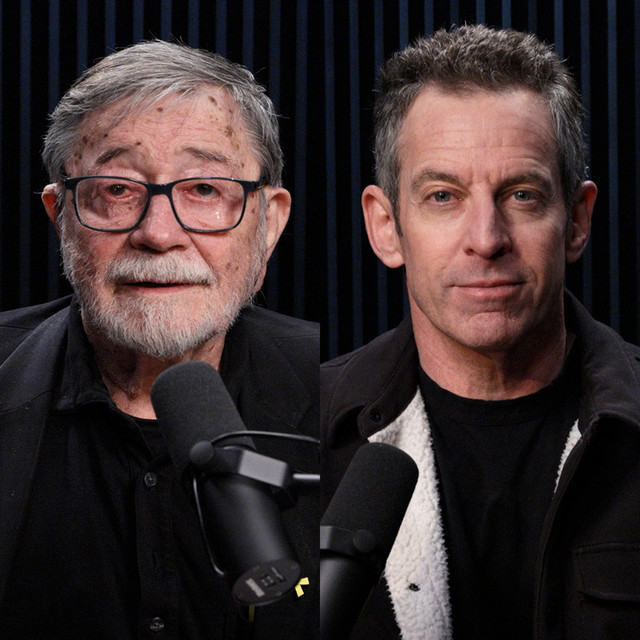
In his profound assertion, "Awareness is not produced by the brain. It is what the brain reveals," Sam Harris invites us to reconsider the nature of consciousness and its relationship with the physical organ that houses our thoughts. This statement challenges the conventional understanding that equates awareness with neurological processes. Instead, Harris suggests that awareness transcends mere brain activity, positioning the brain as a conduit through which a deeper, more intrinsic awareness is unveiled. This distinction is crucial, as it reframes our understanding of self and existence, urging us to explore the essence of awareness itself.
By emphasizing that awareness is not a product of the brain, Harris opens a doorway to a more expansive view of consciousness, one that resonates deeply within the secular Buddhist tradition. This perspective encourages us to engage with our experiences without being confined by the limitations of our cognitive structures. The implications of this teaching are profound, as they invite us to cultivate a sense of presence that is not merely reactive but deeply attuned to the subtleties of our inner and outer worlds. In doing so, we can begin to appreciate the richness of our lived experience, revealing layers of understanding that often remain obscured.
The image / the metaphor
At the heart of Harris's quote lies a striking metaphor: the brain as a revealing instrument rather than a creator of awareness. This imagery evokes the sense of a mirror reflecting the vastness of consciousness rather than generating it. The verbs chosen—"produced" and "reveals"—carry significant weight; they suggest a dynamic interplay between the brain and awareness, where the former serves as a facilitator of the latter. This perspective invites us to see awareness as an inherent quality of existence, one that is always present but often overlooked in the hustle of daily life.
Diving deeper into this metaphor, we can envision awareness as a vast ocean, with the brain functioning as a lens that focuses the light of consciousness. Just as a lens can clarify or distort an image, our cognitive processes can shape our perception of reality. However, the essence of the ocean—its depth, its currents, its life—remains unchanged regardless of how we choose to view it. This understanding encourages us to cultivate a mindful awareness that transcends the limitations of our thoughts, allowing us to connect with the deeper currents of existence that flow beneath the surface.
In the speaker's tradition
Sam Harris's insights are deeply rooted in the secular Buddhist tradition, which emphasizes the importance of direct experience and the nature of consciousness. Concepts such as sunyata, or emptiness, resonate with Harris's assertion that awareness is not a product of the brain but rather a fundamental aspect of our being. In this context, awareness is seen as a clear, unobstructed perception of reality, free from the distortions of ego and attachment. This aligns with the Buddhist practice of mindfulness, which encourages us to observe our thoughts and feelings without identification, revealing the underlying awareness that exists beyond them.
In his work, Harris often draws upon the teachings of the Buddha, particularly the notion of prajna, or wisdom. This wisdom is not merely intellectual but experiential, arising from a deep understanding of the nature of consciousness and existence. In his book "Waking Up," Harris invites readers to explore this wisdom through meditation and introspection, emphasizing that true awareness is not something to be manufactured but rather something to be uncovered. This aligns with the teachings found in various Buddhist texts, where the path to enlightenment is often described as a process of revealing the true nature of the mind.
Living the teaching
Consider a modern scenario where this teaching can be applied: a busy professional navigating the demands of work and personal life. In the midst of deadlines and responsibilities, one might feel overwhelmed, often mistaking the frantic pace of thought for true awareness. By recognizing that awareness is not generated by the brain's incessant chatter but rather revealed in moments of stillness, this individual can cultivate a practice of mindfulness. Taking a few moments to pause, breathe, and observe the thoughts that arise can illuminate the deeper awareness that exists beneath the surface, transforming stress into clarity.
In relationships, this teaching can manifest in profound ways. Imagine a moment of conflict between partners, where emotions run high and communication breaks down. By applying Harris's insight, one partner might choose to step back and observe their feelings without becoming entangled in them. This act of awareness—recognizing that emotions are transient and not definitive of one's identity—can lead to a more compassionate response. By revealing the underlying awareness that connects them, both partners can navigate the conflict with greater understanding and empathy, fostering a deeper connection.
A reflection
As we contemplate Harris's assertion that "awareness is not produced by the brain," we are invited to explore the nature of our own awareness. What does it mean to you to recognize that your thoughts and feelings are not the entirety of your being? In moments of stillness, how can you uncover the deeper currents of awareness that lie beneath the surface of your daily experiences? This inquiry invites us to engage with our consciousness in a more profound way, revealing the richness of existence that often goes unnoticed.