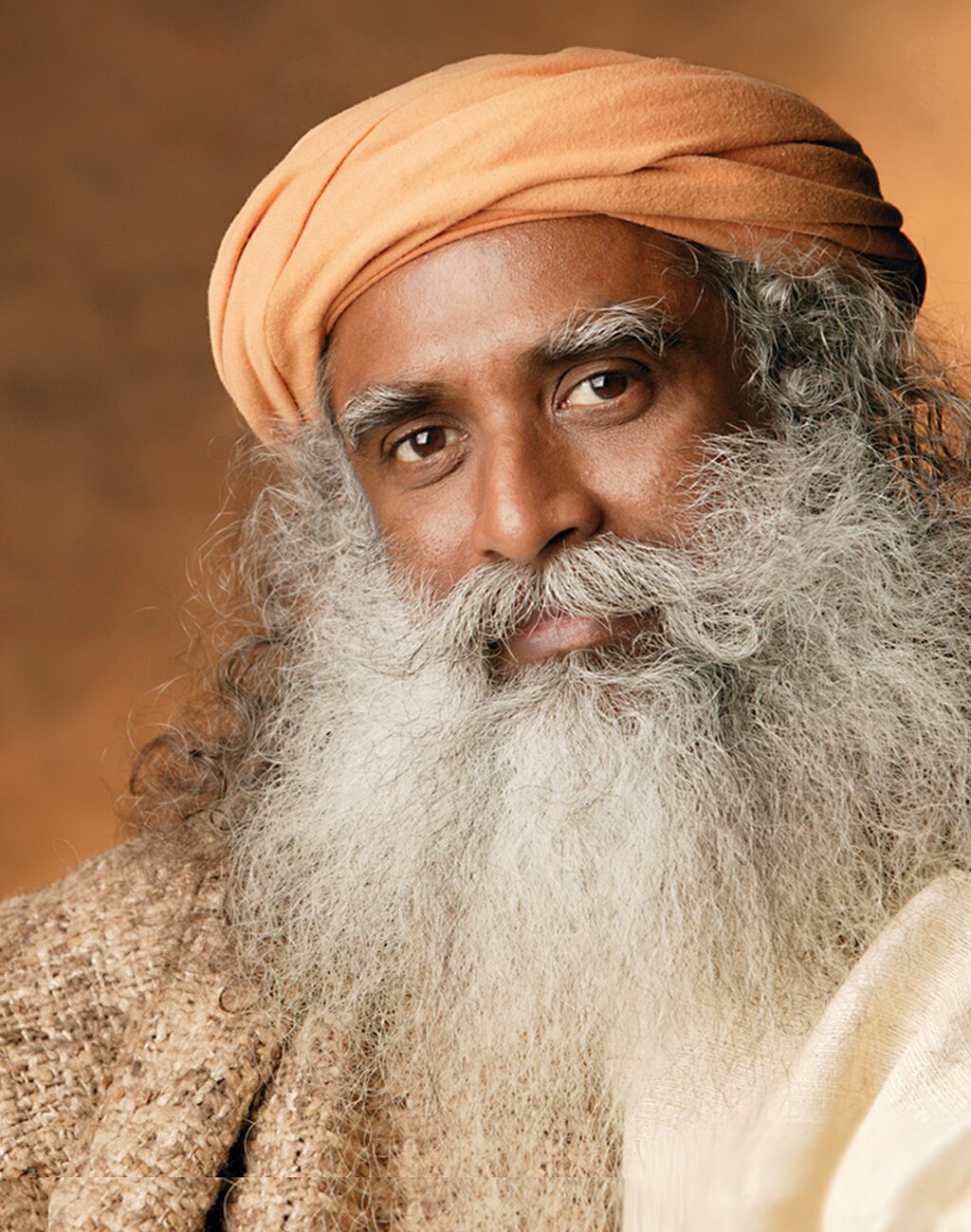
Sadhguru succinctly encapsulates a profound truth when he states, "Karma is what you do. Karma is your action." This declaration invites us to reflect on the nature of our actions and their implications in the tapestry of our lives. In a world often preoccupied with outcomes and intentions, this quote serves as a reminder that our true essence is revealed through our actions. It emphasizes the importance of being present and mindful in every moment, as our actions shape not only our individual destinies but also the collective experience of humanity.
Delving deeper, we find that Sadhguru's words challenge us to reconsider the relationship between thought, intention, and action. In the context of yoga and spiritual practice, karma is not merely a concept of cause and effect; it is a dynamic interplay of energy and consciousness. Each action we take reverberates through the universe, creating ripples that can influence both our lives and the lives of others. Thus, understanding karma becomes essential for anyone seeking to live a life of purpose and authenticity.
The image / the metaphor
The imagery in Sadhguru's quote is strikingly straightforward yet deeply evocative. By stating that "karma is what you do," he emphasizes the tangible nature of our actions. The verb "do" suggests an active engagement with the world, a call to embody our values and beliefs through concrete behaviors. This notion of action is not passive; it is a vibrant expression of our inner selves, a manifestation of our intentions and desires. The simplicity of the phrase belies the complexity of its implications, inviting us to explore the layers of meaning inherent in our daily choices.
Going further, the metaphor of karma as action invites us to consider the broader implications of our choices. Each action is like a seed planted in the fertile soil of existence, with the potential to grow into something beautiful or destructive. This metaphor encourages us to reflect on the quality of our actions and the intentions behind them. Are we acting out of love, compassion, and awareness, or are we driven by fear, anger, or ignorance? In this way, Sadhguru's words serve as a mirror, reflecting our inner state and urging us to cultivate mindfulness in our actions.
In the speaker's tradition
Within the rich tapestry of yoga philosophy, Sadhguru's insights on karma resonate deeply with the concepts of dharma and the interconnectedness of all beings. Dharma, often understood as one's duty or righteous path, emphasizes the importance of aligning our actions with our higher purpose. In this context, karma becomes a tool for self-realization, guiding us toward actions that are not only beneficial for ourselves but also for the greater good. This alignment fosters a sense of responsibility and interconnectedness, reminding us that our actions have far-reaching consequences.
Moreover, the teachings of karma can be found in various ancient texts, such as the Bhagavad Gita, where Lord Krishna elucidates the importance of selfless action. In Chapter 3, Verse 16, Krishna speaks of the eternal cycle of action and consequence, emphasizing that righteous action leads to liberation. This echoes Sadhguru's assertion that our actions define our reality, inviting us to engage with the world consciously and with intention. By understanding karma in this light, we can navigate our lives with greater clarity and purpose.
Living the teaching
Consider a modern scenario where the teaching of karma manifests vividly: a workplace environment filled with competition and stress. In such a setting, one might feel compelled to act out of self-interest, perhaps undermining colleagues to get ahead. However, by embracing Sadhguru's teaching, an individual can choose to act with integrity and collaboration, recognizing that their actions contribute to a collective atmosphere. This shift not only enhances personal well-being but also fosters a culture of support and mutual growth, illustrating how conscious action can transform environments.
Another application of this teaching can be found in personal relationships. Imagine a moment of conflict with a loved one, where emotions run high and misunderstandings abound. In that instance, the choice to respond with patience and empathy, rather than anger or defensiveness, embodies the essence of karma as action. By consciously choosing to act from a place of love and understanding, we can heal rifts and deepen connections. This practice of mindful action not only enriches our relationships but also cultivates a sense of peace within ourselves.
A reflection
As we contemplate Sadhguru's profound assertion that "karma is what you do," we are invited to reflect on the nature of our own actions. Are we living in alignment with our values and intentions? In what ways can we cultivate greater mindfulness in our daily choices? These questions serve as a guiding light, encouraging us to explore the depths of our actions and their impact on ourselves and the world around us. By engaging with this inquiry, we can begin to understand the transformative power of conscious action in our lives.