Embracing the Infinite: The Path to Boundary-less Consciousness
In the profound words of Sadhguru, "Boundary-less consciousness is the meaning of liberation." This statement invites us to explore the depths of our own consciousness, suggesting that true freedom lies not in external circumstances but in the expansive nature of our awareness. Liberation, in this context, transcends the mere absence of constraints; it beckons us to dissolve the boundaries that separate us from the world and from one another. Understanding this concept is crucial for anyone seeking a deeper sense of purpose and connection in their lives.
As we delve into the essence of this quote, we begin to recognize that the notion of boundary-less consciousness is not merely an abstract idea but a lived experience. It challenges us to confront the limitations we impose upon ourselves, often rooted in fear, identity, and societal conditioning. By embracing a consciousness that knows no bounds, we open ourselves to a more profound understanding of existence, one that is interwoven with the fabric of life itself. This exploration is not just philosophical; it has the potential to transform our everyday experiences and relationships.
The image / the metaphor
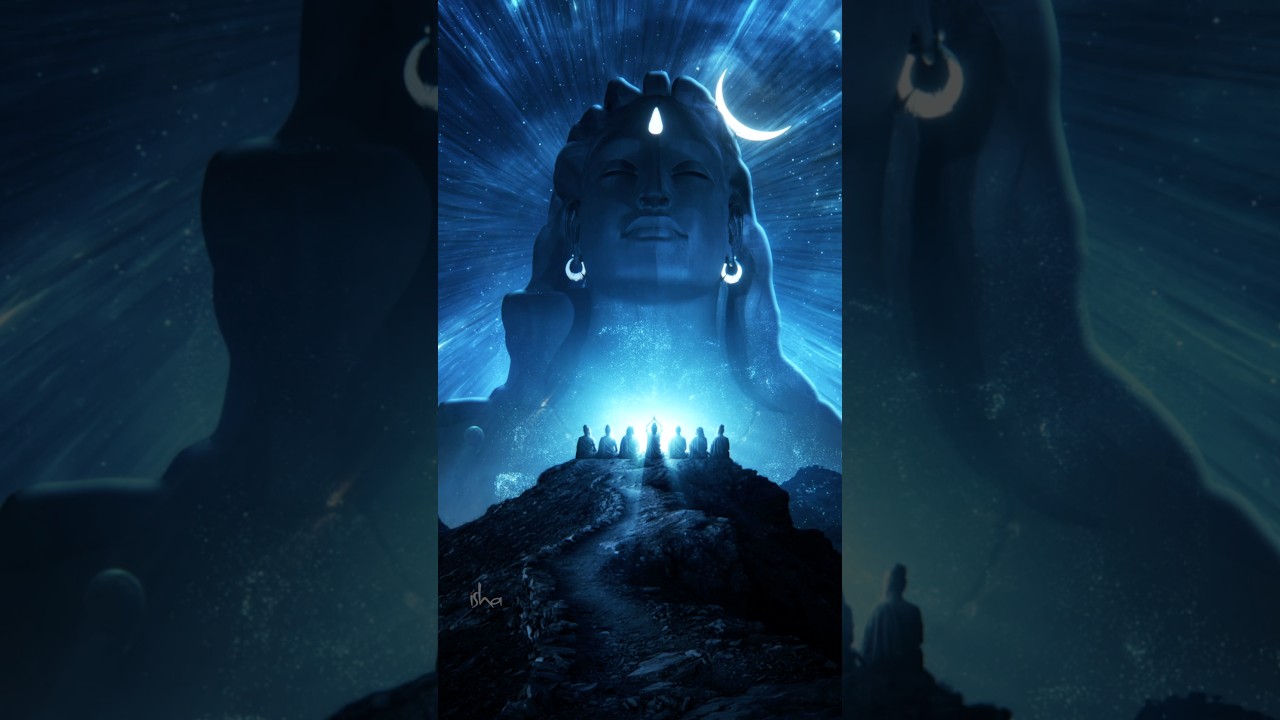
At its core, the phrase "boundary-less consciousness" evokes a vivid image of an expansive sky, limitless and open, contrasting sharply with the confines of a closed room. The verbs "is" and "meaning" suggest a state of being that is intrinsic to our nature, rather than something we must achieve. This imagery invites us to feel the vastness of our own potential, encouraging us to break free from the self-imposed walls that restrict our growth and understanding. The felt sense of this boundary-less state is one of liberation, where the weight of expectation and limitation falls away, revealing a lighter, more fluid existence.
Diving deeper into the metaphor, we can see that boundary-less consciousness represents a profound shift in perspective. It is not merely about the absence of boundaries but about the recognition that our true essence is interconnected with all that exists. This realization can be likened to the experience of water flowing freely in a river, unconfined by the banks that shape its course. In this state, we become aware of the unity of all life, allowing us to transcend the dualities of self and other, joy and sorrow, love and fear. The metaphor invites us to embrace a holistic view of existence, where the boundaries that divide us dissolve into the oneness of being.
In the speaker's tradition
Sadhguru's teachings are deeply rooted in the ancient tradition of yoga, which emphasizes the importance of self-realization and the dissolution of the ego. Concepts such as dharma, or one's rightful path, and prajna, or wisdom, are integral to understanding the journey toward boundary-less consciousness. In this context, liberation is not merely an escape from suffering but a profound awakening to the interconnectedness of all beings. The practice of yoga serves as a vehicle for this transformation, guiding practitioners to experience the unity that lies beyond the illusion of separateness.
In the yogic texts, particularly the Upanishads, we find echoes of this idea in the concept of sunyata, or emptiness. This emptiness is not a void but a state of pure potentiality, where the boundaries of individual identity dissolve, revealing the underlying essence of existence. The teachings of bhakti, or devotion, further illuminate this path, suggesting that surrendering to a higher consciousness allows us to experience the boundless nature of love and connection. Through these teachings, Sadhguru invites us to embark on a journey of self-discovery, where liberation is found in the embrace of our true nature.
Living the teaching
Consider a modern scenario where the teaching of boundary-less consciousness can be applied: a workplace filled with competition and individual ambition. In such an environment, it is easy to become entrenched in a mindset of scarcity, where colleagues are seen as rivals rather than collaborators. By embracing the idea of boundary-less consciousness, one can shift their perspective, recognizing that true success is not measured by personal gain but by the collective growth of the team. This shift fosters a sense of unity, encouraging collaboration and creativity, ultimately leading to a more fulfilling work experience.
Another application of this teaching can be found in personal relationships, particularly during moments of conflict. When faced with disagreements, it is common to become entrenched in our own viewpoints, creating barriers that hinder understanding. By practicing boundary-less consciousness, we can approach these situations with empathy and openness, allowing us to see beyond our individual perspectives. This practice not only deepens our connections with others but also cultivates a sense of compassion that transcends the limitations of ego, fostering a more harmonious existence.
A reflection
As we contemplate Sadhguru's assertion that "boundary-less consciousness is the meaning of liberation," we are invited to reflect on our own lives. What boundaries have we constructed that limit our experience of connection and freedom? In what ways can we begin to dissolve these barriers, allowing ourselves to embrace the boundless nature of our consciousness? This inquiry encourages us to explore the depths of our being, inviting us to step into a more expansive and liberated way of living.