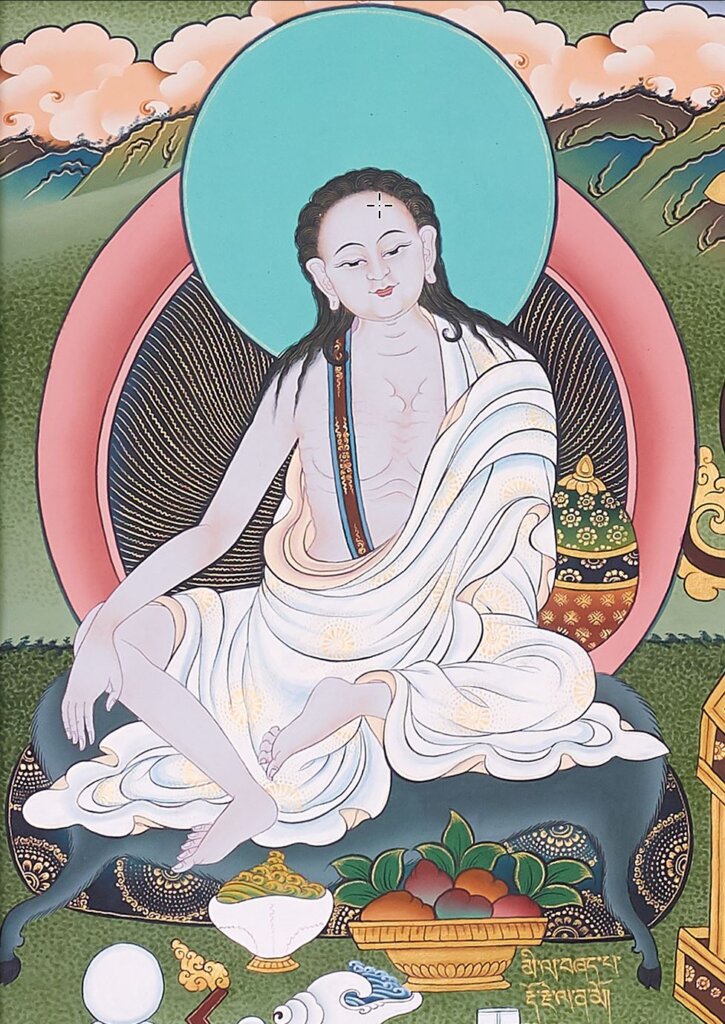
Milarepa's poignant inquiry, "When conditions disperse, where is the 'I' to be found?" invites us to explore the very essence of our identity. This question challenges the notion of a fixed self, urging us to examine the transient nature of our existence. In a world where everything is in constant flux, the quest for a stable 'I' becomes not just a philosophical exercise but a profound spiritual inquiry. Understanding this concept is crucial, as it can lead to liberation from the suffering that arises from clinging to an illusory self.
As we delve deeper into this inquiry, we are confronted with the reality that our identities are often constructed from external conditions—our relationships, achievements, and societal roles. When these conditions shift or dissolve, we are left to ponder the question of who we truly are. This exploration is not merely an intellectual pursuit; it is a transformative journey that can lead us to a deeper understanding of our interconnectedness and the impermanence of all things. By engaging with Milarepa's words, we are invited to let go of our attachments and embrace the fluidity of existence.
The image / the metaphor
Milarepa's quote evokes a vivid imagery of dispersion, suggesting a scattering of elements that once seemed cohesive. The verb "disperse" implies a breaking apart, a dissolution of what we might have considered solid and unchanging. This imagery resonates with the experience of watching a cloud dissolve into the sky or a flame flicker out, leaving behind only the memory of its presence. The question posed is not merely rhetorical; it compels us to confront the reality of our own existence and the fragility of our self-concept.
Delving deeper into the metaphor, we can see that the 'I' represents our constructed identity, which is often built upon transient experiences and perceptions. When conditions disperse, we are left with the raw essence of being, stripped of the labels and definitions we cling to. This moment of emptiness can be both disorienting and liberating, as it invites us to recognize that our true nature may lie beyond the confines of the self we have created. In this sense, Milarepa's words serve as a catalyst for awakening, urging us to explore the vastness that exists beyond our limited self-perceptions.
In the speaker's tradition
Milarepa, a revered figure in Tibetan Buddhism, embodies the principles of non-self and impermanence that are central to Buddhist philosophy. His teachings resonate with the concept of 'anatta' or non-self, which posits that the self is an illusion created by the interplay of various conditions. This understanding aligns with the notion of 'sunyata' or emptiness, which suggests that all phenomena lack inherent existence and are interdependent. By recognizing the absence of a permanent self, we can cultivate a sense of freedom and compassion, transcending the limitations imposed by our ego.
In the context of Milarepa's life, we see a powerful narrative of transformation and liberation. His journey from a life of vengeance to one of profound spiritual realization illustrates the potential for awakening that lies within each of us. The 'Songs of Milarepa' serve as a testament to this journey, encapsulating the essence of his teachings. In one of his songs, he reflects on the nature of suffering and the path to enlightenment, emphasizing that true liberation arises from the recognition of our interconnectedness and the impermanence of all things.
Living the teaching
Consider a modern scenario where this teaching might resonate: a person facing a significant life change, such as a job loss or the end of a relationship. In such moments, the conditions that once defined their identity begin to disperse, leaving them grappling with a sense of loss and confusion. Milarepa's inquiry prompts them to reflect on the nature of their identity—was it truly anchored in their job title or relationship status? By embracing the impermanence of these conditions, they can begin to explore a more authentic sense of self, one that is not contingent upon external validation.
Another application of this teaching can be found in interpersonal relationships. Imagine a conflict arising between friends, where each person clings to their perspective, believing it to be the absolute truth. In the heat of the moment, the sense of self becomes rigid, and the connection falters. However, if one were to embody Milarepa's wisdom, they might recognize that their identity is not solely defined by their opinions or grievances. By allowing the conditions of the argument to disperse and approaching the situation with openness and compassion, they can foster a deeper understanding and connection, transcending the limitations of the ego.
A reflection
As we contemplate Milarepa's profound question, we are invited to engage in a personal inquiry: When the conditions of my life shift, who am I without them? This reflection encourages us to explore the essence of our being beyond the labels and roles we often cling to. In embracing the fluidity of existence, we can cultivate a deeper sense of peace and connection with the world around us. What might it look like to live from a place of openness, free from the constraints of a fixed identity?
