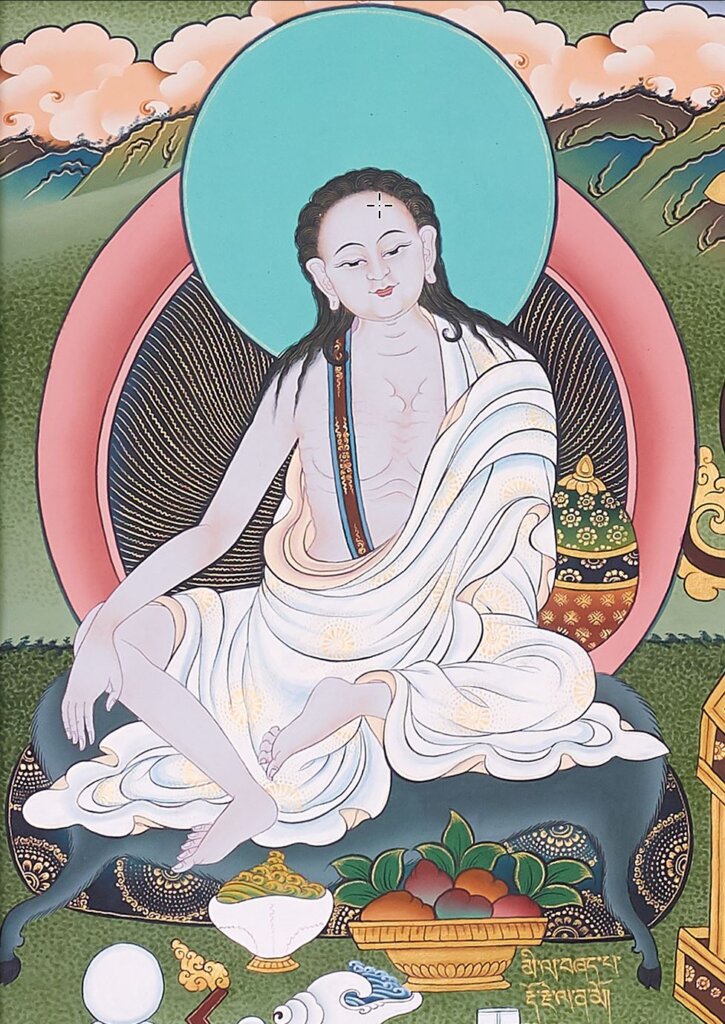
The Rising Wealth of Dharma
Milarepa's profound assertion, "Treasures of dharma make it rise," invites us to explore the transformative power of spiritual teachings. In this succinct phrase, he encapsulates the essence of dharma as a source of wealth that elevates our existence. This notion is not merely about material gain but rather about the richness of understanding and wisdom that arises from engaging with the dharma. The stakes are high; in a world often preoccupied with superficial pursuits, recognizing the true treasures of spiritual practice can lead to profound personal and collective awakening.
As we delve deeper into this quote, we uncover layers of meaning that resonate with the core of Buddhist philosophy. The term "rise" suggests a movement towards enlightenment, a lifting of the spirit that transcends the mundane. It implies that the treasures of dharma are not static possessions but dynamic forces that propel us forward on our spiritual journey. This understanding challenges us to reconsider our definitions of wealth and success, urging us to seek the deeper, more enduring riches that lie within the teachings of the Buddha and the experiences of enlightened beings like Milarepa.
The image / the metaphor
The imagery in Milarepa's quote evokes a sense of elevation and abundance. The word "treasures" conjures visions of precious gems, hidden riches that are often sought after but not easily found. In this context, dharma represents the invaluable insights and practices that can lead to spiritual awakening. The verb "make it rise" suggests an active process, indicating that the treasures of dharma are not merely discovered but cultivated and nurtured within us. This dynamic interplay between treasure and elevation speaks to the transformative potential of engaging with spiritual teachings.
Diving deeper into the metaphor, we can see that the "rise" signifies not only personal growth but also a collective upliftment. The treasures of dharma are meant to be shared, creating a ripple effect that can elevate entire communities. This interconnectedness highlights the importance of practicing compassion and wisdom, as our individual journeys contribute to the greater tapestry of existence. In this light, Milarepa's words become a call to action, urging us to seek out and share the treasures of dharma in our lives and in the world around us.
In the speaker's tradition
Milarepa, a revered figure in Tibetan Buddhism, embodies the principles of dharma through his life and teachings. The concept of dharma encompasses the natural law of the universe, the teachings of the Buddha, and the path to enlightenment. In this tradition, dharma is viewed as a guiding force that leads practitioners away from suffering and towards liberation. This aligns with the idea of kenosis, or self-emptying, where one must let go of ego and attachment to truly embrace the wealth of spiritual insight. The treasures of dharma, therefore, are not possessions to hoard but gifts to be shared and experienced in the context of community and compassion.
In the context of Milarepa's life, we can draw parallels to the teachings found in the "Songs of Milarepa," where he recounts his own journey from darkness to light. His songs often reflect themes of suffering, redemption, and the transformative power of dharma. For instance, in one of his songs, he speaks of the importance of recognizing the impermanence of life and the need to cultivate wisdom and compassion. This resonates with the idea that the treasures of dharma are not just for personal gain but are meant to uplift others, creating a shared journey towards enlightenment.
Living the teaching
Consider a modern scenario where the teaching of Milarepa's quote can be applied: a workplace environment fraught with competition and stress. In such a setting, individuals often chase after promotions and accolades, equating success with material wealth and recognition. However, if one were to embrace the treasures of dharma, they might shift their focus towards cultivating a supportive and collaborative atmosphere. By sharing knowledge, offering assistance, and fostering a sense of community, individuals can experience a rise in collective morale and productivity, illustrating how the treasures of dharma can transform not only personal experiences but also the environment around us.
Another application of this teaching can be found in personal relationships. Imagine a moment of conflict with a loved one, where misunderstandings and hurt feelings create a rift. By turning to the treasures of dharma—practices such as mindfulness, compassion, and open communication—individuals can navigate these challenges with grace. Instead of allowing the conflict to escalate, one might choose to listen deeply and respond with empathy, thereby rising above the immediate turmoil. This approach not only heals the relationship but also enriches the individuals involved, demonstrating the profound impact of dharma in everyday life.
A reflection
As we contemplate Milarepa's words, we are invited to reflect on the nature of our own treasures. What are the dharmic insights and practices that elevate our lives? In a world that often prioritizes material wealth, how can we cultivate and share the deeper riches of wisdom and compassion? Let us consider this contemplative question: In what ways can we actively seek and embody the treasures of dharma in our daily lives, allowing them to rise and transform not only ourselves but also those around us?
