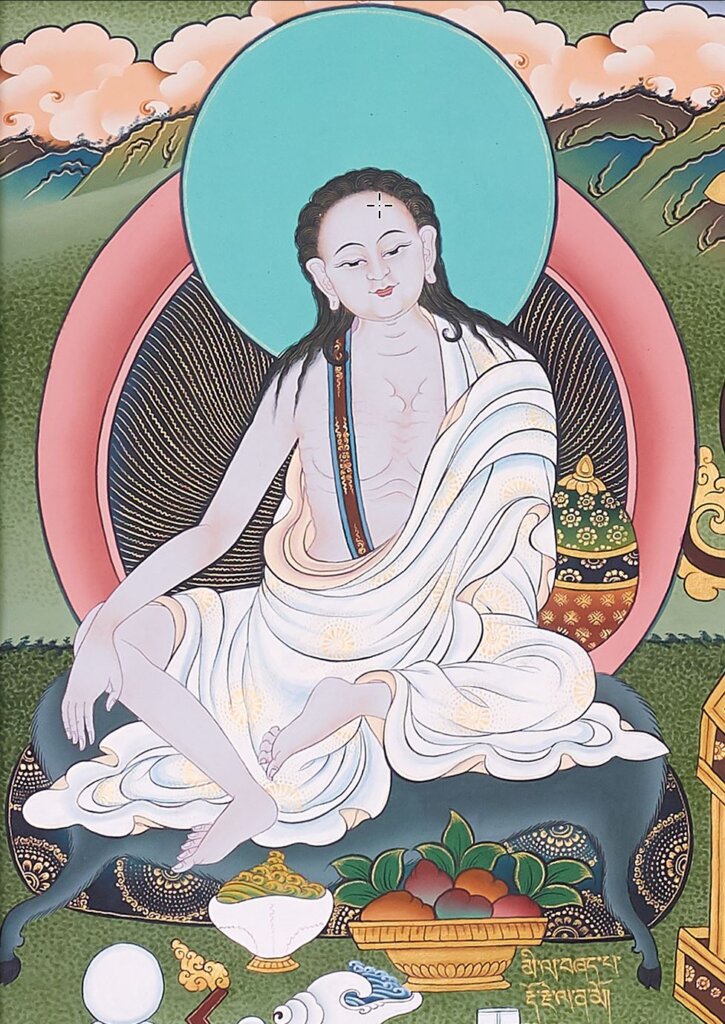
Milarepa's evocative phrase, "There the mind settles like a clear lake," invites us to envision a state of profound tranquility where the tumult of thoughts and emotions recedes, allowing clarity and peace to emerge. This imagery not only speaks to the essence of meditation but also highlights the transformative power of stillness in our lives. In a world often characterized by chaos and distraction, the ability to cultivate such serenity is not merely desirable; it is essential for our spiritual and emotional well-being.
To settle the mind like a clear lake is to engage in a practice that transcends mere relaxation; it is an invitation to explore the depths of our consciousness. This metaphor suggests that, just as a lake reflects the sky when undisturbed, our minds can mirror the clarity of our true nature when we allow them to settle. In this stillness, we may find insights and wisdom that are otherwise obscured by the ripples of daily life. Understanding this quote requires us to delve into the nature of our thoughts and the potential for stillness that lies within each of us.
The image / the metaphor
The imagery of a clear lake serves as a powerful metaphor for the mind's potential state of tranquility. A lake, when undisturbed, reflects the world around it with stunning clarity, capturing the beauty of the sky, the trees, and the mountains. Similarly, when the mind is still, it can reflect the deeper truths of existence without the distortions created by anxiety, fear, or distraction. The choice of the verb "settles" implies a gentle, intentional process, suggesting that achieving this state of clarity requires patience and practice, much like the gradual calming of water after a storm.
In the speaker's tradition
Milarepa, a revered figure in Tibetan Buddhism, embodies the principles of dharma and the pursuit of enlightenment through rigorous practice and deep introspection. His teachings often emphasize the importance of cultivating a still mind as a prerequisite for realizing the nature of reality, which aligns with the concept of sunyata, or emptiness. In this context, the stillness of the mind allows us to perceive the interconnectedness of all things, dissolving the barriers of self and other that often cloud our understanding.
In the "Songs of Milarepa," we find numerous references to the importance of meditation and the cultivation of inner peace. One can draw parallels between Milarepa's teachings and the Buddhist concept of prajna, or wisdom, which arises from a clear and undistracted mind. Just as a clear lake reveals the depths beneath its surface, a still mind unveils the profound insights that lie within our own consciousness, guiding us toward liberation from suffering.
Living the teaching
Consider a modern scenario where the teaching of Milarepa resonates deeply: a busy professional navigating the demands of work and personal life. In the midst of deadlines and responsibilities, one may feel overwhelmed, with thoughts swirling like leaves caught in a tempest. By intentionally setting aside time for meditation or quiet reflection, this individual can cultivate a sense of stillness, allowing their mind to settle like a clear lake. In this space, clarity emerges, enabling them to approach challenges with renewed perspective and calmness.
Another application of this teaching can be found in interpersonal relationships. During moments of conflict or misunderstanding, emotions can cloud judgment, leading to reactive behaviors that exacerbate the situation. By embracing the practice of stillness, one can pause, breathe, and allow their mind to settle before responding. This mindful approach fosters deeper understanding and compassion, transforming potential discord into opportunities for connection and growth.
A reflection
As we contemplate Milarepa's profound insight, we are invited to reflect on our own relationship with stillness. In what ways can we cultivate a clearer mind amidst the noise of our daily lives? Consider the practices that resonate with you—whether through meditation, nature walks, or moments of solitude—and how they might help you settle your mind like a clear lake. This inquiry opens the door to deeper self-awareness and the possibility of experiencing life with greater clarity and peace.
