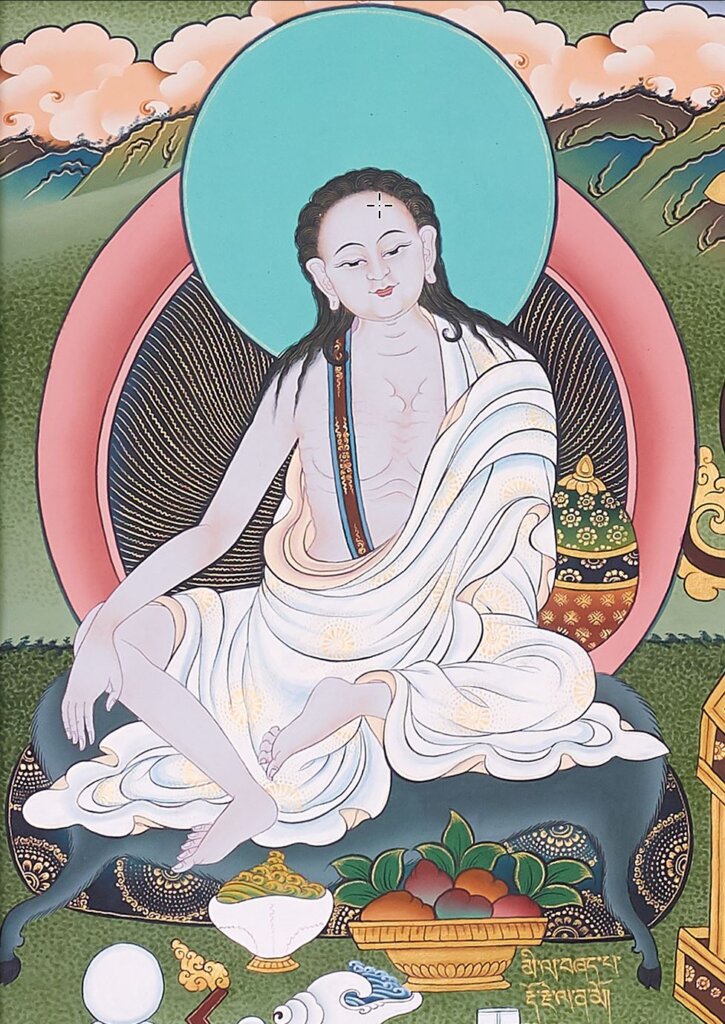
Milarepa's poignant assertion, "Recognize this, and you are home," invites us to explore the profound depths of self-awareness and realization. At its core, this statement suggests that true contentment and belonging are found not in external circumstances but within the recognition of our own nature. This insight is crucial in a world often characterized by distraction and disconnection, where the search for home can feel elusive and fraught with difficulty.
In a deeper sense, Milarepa's words beckon us to consider the nature of our existence and the essence of what it means to be 'home.' This home is not a physical place but a state of being, a recognition of our inherent nature and interconnectedness with all that is. By understanding this, we can cultivate a sense of peace and belonging that transcends the transient nature of our external lives, allowing us to navigate the complexities of existence with grace and clarity.
The image / the metaphor
The imagery in Milarepa's quote evokes a sense of warmth and safety, akin to returning to a cherished place after a long journey. The verb "recognize" is particularly significant; it implies an active engagement with our inner landscape, a conscious acknowledgment of our true selves. This recognition is not merely an intellectual exercise but a heartfelt realization that brings us back to a state of wholeness, suggesting that home is always within reach if we choose to look inward.
Diving deeper into the metaphor, the concept of 'home' represents a sanctuary of the soul, a refuge from the chaos of the outside world. It symbolizes a place where we can fully embrace our authentic selves, free from the masks we often wear in society. This homecoming is an invitation to shed the layers of conditioning and expectation, allowing us to reconnect with our essence and the profound stillness that resides within.
In the speaker's tradition
Milarepa, a revered figure in Tibetan Buddhism, embodies the principles of dharma and the transformative power of realization. His journey from a life of suffering to one of enlightenment illustrates the concept of kenosis, or self-emptying, where one relinquishes attachments and desires to discover the true self. This process of recognizing our inherent nature aligns with the Buddhist understanding of sunyata, or emptiness, which teaches that our perceptions of self and other are often illusions that obscure our true interconnectedness.
In the context of Milarepa's teachings, we can draw parallels to the notion of prajna, or wisdom, which arises from direct experience and insight. His songs, rich with poetic wisdom, serve as a guide for practitioners seeking to navigate the path of awakening. The essence of his message resonates with the teachings found in texts such as the Heart Sutra, which emphasizes the importance of recognizing the emptiness of all phenomena as a pathway to liberation and understanding.
Living the teaching
Consider a modern scenario where this teaching resonates: a person grappling with feelings of isolation in a bustling city. Despite the vibrant surroundings, they feel disconnected and adrift, searching for a sense of belonging. By reflecting on Milarepa's words, they may come to realize that their true home is not found in the external validation of others but in the acceptance of their own being. This recognition can lead to a profound shift in perspective, allowing them to cultivate a sense of peace and connection that transcends their immediate circumstances.
In relationships, the teaching can manifest in moments of conflict or misunderstanding. When faced with a disagreement, one might remember Milarepa's call to recognize the deeper truth of their shared humanity. By stepping back and acknowledging the essence of both themselves and the other, they can foster empathy and understanding, creating a space where love and connection can flourish. This practice of recognition not only deepens relationships but also reinforces the sense of home within, allowing for a more harmonious existence.
A reflection
As we contemplate Milarepa's profound insight, we are invited to ask ourselves: What does it mean for me to recognize my true self, and how can this recognition lead me to a deeper sense of home? This question encourages us to engage in a contemplative exploration of our inner lives, prompting us to seek the stillness and clarity that reside within. In this journey of self-discovery, we may find that the home we seek has always been present, waiting for us to recognize it.
