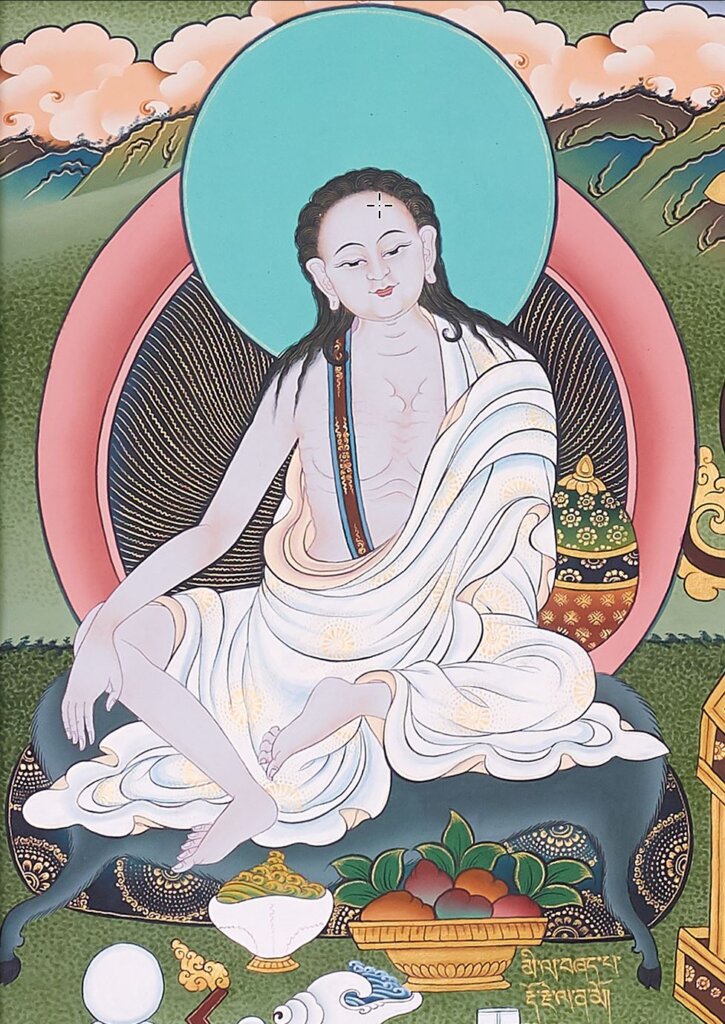
Milarepa's profound assertion, "Knowing this, one must from the very first renounce acquisition and heaping up," invites us to reflect deeply on the nature of desire and attachment. In a world that often equates success with accumulation—be it material possessions, accolades, or even relationships—this teaching urges a radical shift in perspective. The stakes are high; our happiness and peace of mind may hinge on our ability to recognize the futility of endless striving for more. To embrace this wisdom is to embark on a journey toward liberation, one that challenges the very foundations of our conditioned existence.
At its core, Milarepa's message is not merely about the act of giving up physical possessions; it is a call to examine the deeper motivations that drive our desires. The act of acquisition can often lead to a cycle of craving and dissatisfaction, where the pursuit of more becomes a never-ending chase. By renouncing this tendency, we open ourselves to a more profound understanding of contentment and fulfillment, rooted not in external validation but in the richness of our inner lives. This teaching resonates with the essence of Buddhist practice, where the path to enlightenment is paved with the relinquishment of attachments that bind us to suffering.
The image / the metaphor
Milarepa's words evoke a vivid imagery of relinquishment, where the act of renouncing acquisition is likened to shedding heavy burdens that weigh us down. The verbs "renounce" and "heaping up" suggest a deliberate choice to let go of the incessant desire to accumulate, which can feel like a relentless tide threatening to engulf us. This imagery resonates with the experience of liberation, as one imagines casting off chains that have long constrained the spirit. The felt sense of this renunciation is not one of loss but rather of profound freedom, as if one is stepping into a vast, open space where true potential can flourish.
Diving deeper into the metaphor, we can see that the act of renouncing acquisition is not simply about material possessions; it extends to emotional and psychological attachments as well. The "heaping up" can symbolize the clutter of our minds, filled with worries, regrets, and desires that distract us from the present moment. By letting go of these mental burdens, we create space for clarity and insight, allowing us to engage with life more authentically. This metaphor invites us to consider what we are truly accumulating in our lives and whether it serves our highest good or merely perpetuates a cycle of dissatisfaction.
In the speaker's tradition
Milarepa, a revered figure in Tibetan Buddhism, embodies the principles of renunciation and transformation. His life story illustrates the profound shift from a life of material pursuit to one of spiritual awakening, encapsulating the essence of dharma—the path of truth and righteousness. In this context, renunciation is not an act of deprivation but a necessary step toward realizing sunyata, or emptiness, which teaches us that our attachments are ultimately illusory. This understanding aligns with the concept of prajna, or wisdom, which arises when we see through the veils of ignorance that cloud our perception.
In the "Songs of Milarepa," we find echoes of this teaching throughout his verses, where he often reflects on the transient nature of life and the futility of clinging to worldly possessions. His poetry serves as a reminder that true wealth lies not in what we possess but in the depth of our understanding and compassion. This sentiment resonates with the teachings of other Buddhist texts, such as the "Dhammapada," which emphasizes the importance of letting go of attachments to achieve inner peace and enlightenment. Milarepa's insights are timeless, inviting us to explore the transformative power of renunciation in our own lives.
Living the teaching
Consider a modern scenario where this teaching might resonate: a professional caught in the relentless pursuit of career advancement. Each promotion or accolade brings a fleeting sense of satisfaction, quickly overshadowed by the desire for the next achievement. In this context, Milarepa's call to renounce acquisition becomes a poignant reminder to pause and reflect on what truly brings fulfillment. By shifting focus from external validation to internal contentment, one might discover a deeper sense of purpose that transcends the superficial markers of success.
In relationships, the teaching of renunciation can also find profound application. Imagine a partnership where one partner is constantly seeking validation through material gifts or social status, while the other yearns for genuine connection and understanding. Here, the act of renouncing the need for external validation can lead to a more authentic and fulfilling relationship. By prioritizing emotional intimacy over material accumulation, both partners can cultivate a deeper bond rooted in love and mutual respect. This practice of letting go invites us to engage with one another in a way that honors our shared humanity, rather than the superficial trappings of societal expectations.
A reflection
As we contemplate Milarepa's wisdom, we are invited to ask ourselves: What attachments am I holding onto that may be hindering my growth and happiness? This question encourages a deep introspection, urging us to examine the aspects of our lives that we cling to out of fear or habit. In this inquiry, we may uncover the layers of desire that obscure our true selves, leading us toward a path of liberation and authentic living. By embracing the practice of renunciation, we can begin to cultivate a life rich in meaning, free from the burdens of unnecessary acquisition.
