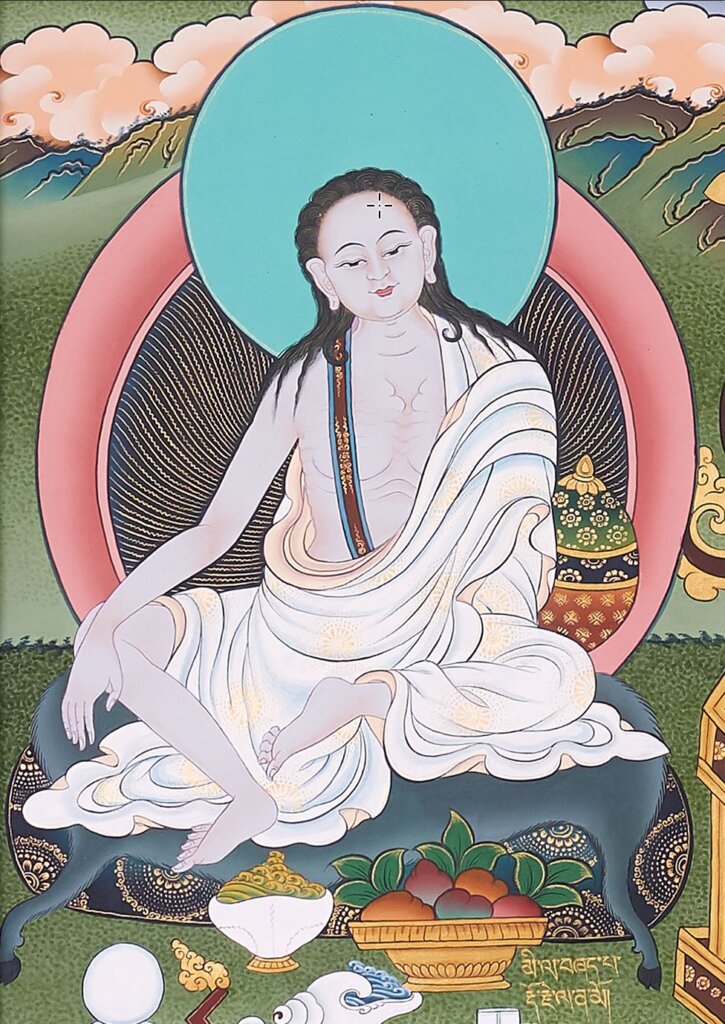
Milarepa's assertion that "Joy is the natural state of one who has no demand on the world" invites us to reconsider our relationship with happiness and fulfillment. In a world often driven by expectations and desires, this quote serves as a profound reminder that true joy arises not from external circumstances but from an internal state of being. The stakes are high; understanding this principle can lead to a transformative shift in how we experience life, moving from a place of striving to one of serene acceptance.
To delve deeper, we must recognize that the essence of joy described by Milarepa is not contingent upon the fulfillment of desires or the attainment of worldly success. Instead, it suggests a radical liberation from the burdens of expectation and attachment. This perspective challenges the conventional narrative that equates happiness with achievement, urging us to explore the possibility that joy is inherently available to us when we release our demands on the world and embrace the present moment.
The image / the metaphor
At its core, Milarepa's quote paints a vivid picture of joy as a natural state, akin to a clear sky unclouded by the storms of desire. The phrase "no demand on the world" evokes a sense of freedom, suggesting that joy flourishes in the absence of attachment and expectation. The imagery here is striking; it conjures a sense of lightness and ease, where joy is not something to be chased or earned but rather a state of being that is always accessible, waiting to be recognized.
Delving deeper into the metaphor, we can see that the "natural state" implies an intrinsic quality of our existence. Just as a flower blooms in the right conditions, so too does joy emerge when we cultivate an environment free from the weight of demands. This metaphor invites us to reflect on the ways we might inadvertently stifle our own joy through the imposition of expectations, both on ourselves and others. In this light, joy becomes a spontaneous expression of our true nature, rather than a reward for meeting certain criteria.
In the speaker's tradition
Milarepa, a revered figure in Tibetan Buddhism, embodies the principles of dharma and the path of liberation. His teachings often emphasize the importance of letting go of attachments and desires, aligning closely with the concept of sunyata, or emptiness. In this context, joy is not merely an emotional state but a profound realization of our interconnectedness and the impermanence of all things. By relinquishing our demands, we align ourselves with the flow of life, experiencing joy as a natural byproduct of our spiritual practice.
In the context of Milarepa's life, we can draw parallels to the practice of kenosis, or self-emptying, which is central to many spiritual traditions. Just as Milarepa underwent immense trials and tribulations to attain enlightenment, he ultimately discovered that true joy lies in the relinquishment of the self and its incessant demands. This is echoed in the teachings of the Heart Sutra, which states, "Form is emptiness, emptiness is form," reminding us that our perceptions of joy and suffering are often shaped by our attachments and expectations.
Living the teaching
Consider a modern scenario where this teaching might resonate: a professional striving for success in a competitive workplace. The relentless pursuit of promotions, accolades, and recognition can create a cycle of stress and dissatisfaction. However, if one were to embrace Milarepa's wisdom, they might find that stepping back from these demands allows for a more profound sense of fulfillment. By focusing on the joy of the work itself, rather than the outcomes, one can cultivate a sense of peace and satisfaction that transcends external validation.
In the realm of relationships, this teaching can also have transformative effects. Imagine a partnership where one person constantly seeks approval or validation from the other, creating tension and dissatisfaction. By applying the principle of demandless joy, both individuals can learn to appreciate each other without the weight of expectations. This shift fosters a deeper connection, allowing love to flourish in its purest form, free from the constraints of neediness or obligation.
A reflection
As we contemplate Milarepa's profound insight, we are invited to ask ourselves: What demands do I place on the world that hinder my experience of joy? This question encourages a deep exploration of our attachments and expectations, prompting us to consider how we might cultivate a more demandless approach to life. In this inquiry, we may discover the pathways to a joy that is not contingent upon external circumstances but is instead rooted in the acceptance of the present moment.
