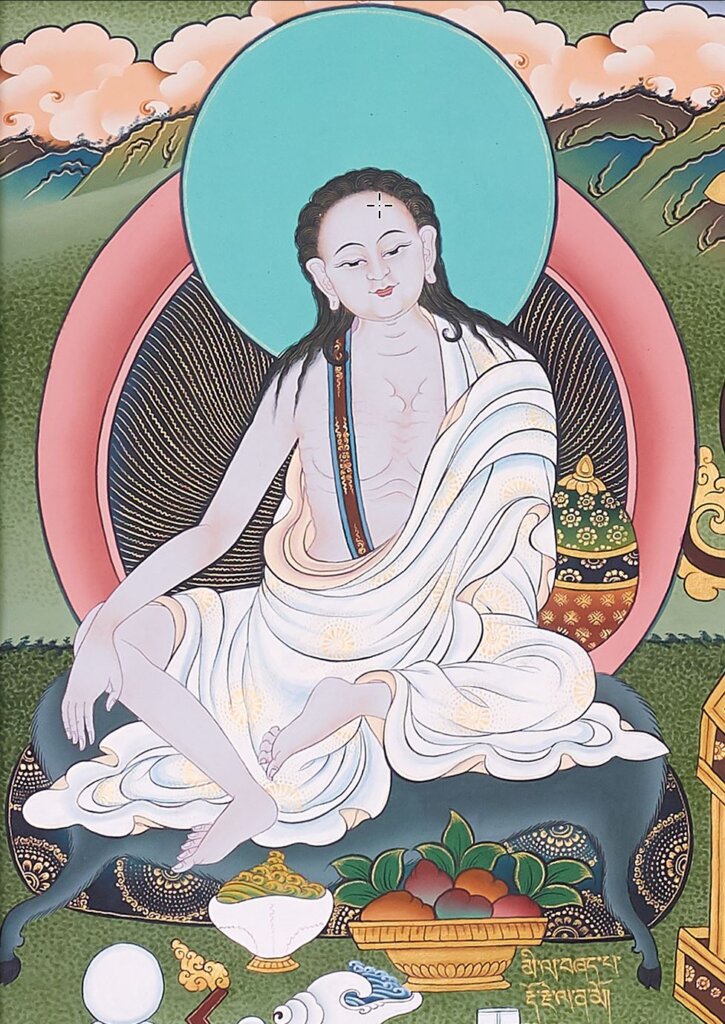
Awakening to Our True Nature: A Journey of Compassion
Milarepa's profound invitation to "Help them recognize their own awakened nature" serves as a gentle yet powerful reminder of our inherent potential for enlightenment. This call to action transcends mere assistance; it beckons us to engage deeply with the essence of others, guiding them toward the realization of their true selves. In a world often clouded by confusion and suffering, this recognition becomes not just a personal journey but a collective awakening, urging us to cultivate compassion and understanding in our interactions.
At its core, this quote encapsulates the essence of spiritual mentorship and the interconnectedness of all beings. To help others recognize their awakened nature is to acknowledge that within each individual lies a spark of the divine, a potential for profound transformation. This endeavor is not merely altruistic; it is an invitation to participate in the unfolding of a shared human experience, where the recognition of one’s true nature can ripple outward, fostering a community rooted in compassion and wisdom.
The image / the metaphor
The imagery within Milarepa's words evokes a sense of awakening, akin to the gentle unfolding of a flower at dawn. The verbs "help" and "recognize" suggest an active engagement, where one person extends a hand to another, illuminating the path toward self-discovery. This act of recognition is not about imposing beliefs or doctrines; rather, it is about creating a space where individuals can see themselves clearly, free from the distortions of ego and societal expectations.
Diving deeper into the metaphor, we can envision this process as akin to a mirror reflecting the true essence of a person. Just as a mirror reveals our physical appearance, the compassionate presence of another can reflect our inner luminosity. This recognition is transformative; it allows individuals to shed layers of self-doubt and fear, revealing the awakened nature that has always been present, waiting to be acknowledged and embraced.
In the speaker's tradition
Milarepa, a revered figure in Tibetan Buddhism, embodies the principles of compassion and wisdom that are central to the tradition. His teachings resonate with the concept of dharma, which emphasizes the path of righteousness and the understanding of one’s true nature. In this context, helping others recognize their awakened nature aligns with the practice of bodhicitta, the altruistic intention to attain enlightenment for the benefit of all beings. This selfless aspiration is a cornerstone of Mahayana Buddhism, where the liberation of oneself is intricately linked to the liberation of others.
Furthermore, Milarepa’s teachings echo the notion of sunyata, or emptiness, which posits that our perceived separateness is an illusion. By guiding others to recognize their awakened nature, we assist them in seeing beyond the confines of their ego, understanding that their essence is interconnected with all existence. This realization fosters a profound sense of compassion, as one begins to see that the struggles and joys of others are reflections of their own journey toward awakening.
Living the teaching
Consider a modern scenario where a friend is grappling with feelings of inadequacy and self-doubt. In this moment, we have the opportunity to embody Milarepa's teaching by offering support that encourages them to see their inherent worth. By listening deeply and reflecting their strengths back to them, we help illuminate the path toward their own recognition of awakened nature. This act of compassion not only uplifts them but also reinforces our shared humanity, reminding us that we all face similar struggles on our journeys.
In a different context, imagine a challenging moment in a relationship where misunderstandings have created distance. By approaching this situation with the intention to help each other recognize your true natures, both parties can engage in a dialogue that transcends blame and defensiveness. This practice of compassionate communication allows for healing and reconnection, as each person learns to see beyond their own perspectives and acknowledges the shared essence that binds them together.
A reflection
As we contemplate Milarepa's invitation, we might ask ourselves: In what ways can I help others recognize their own awakened nature? This question invites us to reflect on our relationships and interactions, encouraging us to cultivate a deeper awareness of how we can support those around us in their journeys of self-discovery. By embodying compassion and understanding, we not only assist others but also deepen our own connection to the awakened nature that resides within us all.
