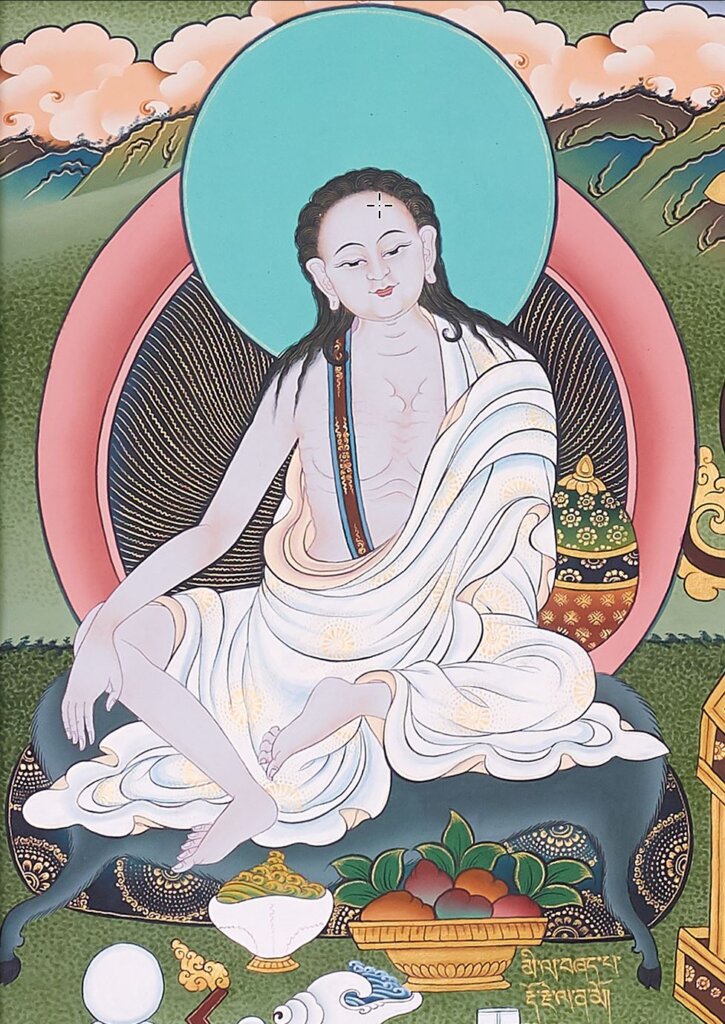
Milarepa's profound assertion, "And the buddha-nature shines through," invites us to contemplate the inherent potential within each being. This statement suggests that beneath the layers of our conditioned existence lies a luminous essence, a fundamental nature that is pure and unblemished. Recognizing this truth is not merely an intellectual exercise; it is a transformative realization that can alter our perception of ourselves and the world around us. The stakes are high, as this understanding can lead to liberation from suffering and the awakening of compassion.
To delve deeper, we must consider the implications of buddha-nature as a universal quality that transcends individual identity. It is not confined to the historical figure of the Buddha but is a potential that resides within all sentient beings. This realization calls for a shift from the distractions of our daily lives to a state of stillness where we can access this inner light. In a world often clouded by confusion and despair, the notion that our true nature is radiant and pure offers a beacon of hope and a path toward deeper understanding.
The image / the metaphor
The imagery of "shining through" evokes a sense of light breaking through darkness, suggesting a natural and effortless emergence of our true selves. The verb "shines" implies vitality and brilliance, indicating that buddha-nature is not something to be acquired but rather something to be revealed. This metaphor of light is prevalent in many spiritual traditions, symbolizing clarity, wisdom, and the divine essence that exists within us all. It invites us to envision our journey not as a struggle to attain enlightenment but as a process of uncovering what is already present.
In the speaker's tradition
Milarepa, a revered figure in Tibetan Buddhism, embodies the essence of buddha-nature through his life and teachings. His journey from a life of suffering and vengeance to one of profound compassion and enlightenment illustrates the transformative power of recognizing this inherent quality. In the context of Buddhism, buddha-nature is often linked to concepts such as sunyata (emptiness) and prajna (wisdom), which emphasize the interconnectedness of all beings and the potential for awakening that lies within. This understanding aligns with the dharma, the teachings that guide practitioners toward liberation.
In the Tibetan Buddhist text "The Heart Sutra," the notion of emptiness is articulated as a means to understand the nature of reality and our place within it. The sutra states, "Form is emptiness, emptiness is form," highlighting the idea that our perceived separateness is an illusion. By recognizing the emptiness of our constructs, we can access the buddha-nature that resides within, allowing it to shine through the veils of ignorance and attachment. This profound insight is central to Milarepa's teachings and serves as a guiding principle for those on the path of awakening.
Living the teaching
Consider a modern scenario where this teaching resonates: a person grappling with self-doubt and feelings of inadequacy in their professional life. In moments of stress, they may feel disconnected from their true self, overshadowed by societal expectations and personal fears. By reflecting on Milarepa's words, they can begin to recognize that their buddha-nature is not defined by external achievements or failures. Instead, they can cultivate a sense of stillness and self-acceptance, allowing their inherent qualities of wisdom and compassion to shine through, even amidst challenges.
In the realm of relationships, this teaching can manifest during conflicts or misunderstandings. When faced with a disagreement, one might initially react with defensiveness or anger, obscuring their true nature. However, by pausing to remember that both parties share the same buddha-nature, they can approach the situation with empathy and openness. This shift in perspective allows for healing and connection, transforming the interaction into an opportunity for mutual growth and understanding. In both scenarios, the practice of mindfulness and self-reflection becomes essential in nurturing the conditions for buddha-nature to emerge.
A reflection
As we contemplate Milarepa's assertion, we are invited to ask ourselves: What practices can I engage in to uncover and nurture my own buddha-nature? This question encourages a deep exploration of our daily habits, relationships, and inner dialogues. By fostering an environment of stillness and compassion, we can begin to witness the radiant essence that lies within us and others, illuminating our path toward greater understanding and connection.
