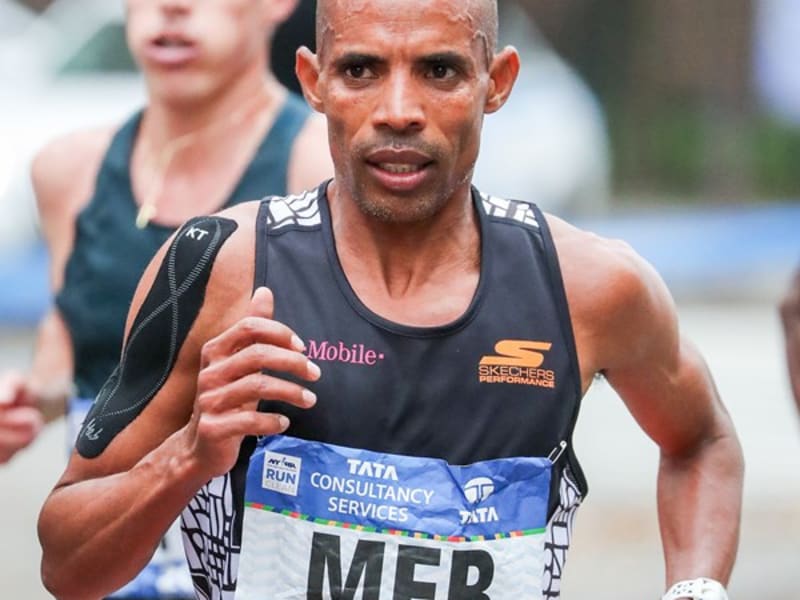
"I run for those who can't." This poignant declaration by Meb Keflezighi encapsulates a profound sense of purpose that transcends the physical act of running. It speaks to the heart of human connection, empathy, and the legacy we leave behind. In a world often characterized by individualism, Meb's words remind us of the collective spirit that binds us together, urging us to consider those who face insurmountable challenges. This quote resonates deeply, especially in the context of the 2014 Boston Marathon, a race marked by resilience and unity in the face of adversity.
As we delve into the essence of this statement, we uncover layers of meaning that extend beyond the realm of athletics. Meb's commitment to running for others invites us to reflect on our own motivations and the impact we have on those around us. It challenges us to think about how our actions can serve as a beacon of hope for those who are unable to pursue their dreams or face obstacles that seem insurmountable. In this light, Meb's words become a call to action, urging us to embody compassion and solidarity in our daily lives.
The image / the metaphor
The imagery in Meb's quote is striking and evocative. The act of running, typically associated with personal achievement and competition, is transformed into a powerful metaphor for service and advocacy. The verb "run" suggests movement, urgency, and a forward momentum that is not solely for oneself but for the benefit of others. This shift in focus from self to community creates a felt sense of responsibility, as if each stride taken is a tribute to those who cannot run, whether due to physical limitations, societal barriers, or personal struggles.
Diving deeper into the metaphor, we can see that Meb's statement embodies a philosophy of interconnectedness. Running becomes a conduit for expressing solidarity, where each mile covered is a testament to the strength of the human spirit. This perspective invites us to consider how our journeys, both literal and metaphorical, can be enriched by the stories and struggles of others. In this way, Meb's running is not just a personal endeavor; it is a shared experience that honors the resilience of those who face challenges beyond their control.
In the speaker's tradition
Meb Keflezighi's journey as a marathon runner is deeply rooted in the tradition of perseverance and community. His experience reflects the concept of dharma, which emphasizes the importance of duty and service to others. In the context of running, this translates into a commitment not only to personal excellence but also to uplifting those who are marginalized or unable to pursue their passions. Meb's ethos resonates with the idea of kenosis, the self-emptying love that seeks to serve others, highlighting the profound connection between personal achievement and collective well-being.
Moreover, Meb's words can be likened to the teachings found in various spiritual texts that emphasize compassion and selflessness. For instance, in the Buddhist tradition, the concept of sunyata, or emptiness, encourages individuals to recognize the interconnectedness of all beings. This understanding fosters a sense of responsibility to act for the benefit of others. Meb's commitment to running for those who cannot is a living embodiment of this principle, illustrating how personal endeavors can be infused with a sense of purpose that extends beyond the self.
Living the teaching
In our modern world, the teaching encapsulated in Meb's quote can manifest in various ways. Consider a scenario where an individual participates in a charity run, dedicating their efforts to raise funds for a cause that supports those with disabilities. This act of running becomes a powerful statement of solidarity, transforming a personal challenge into a collective effort to uplift others. By embodying Meb's spirit, participants not only honor their own journeys but also amplify the voices of those who may not have the opportunity to run for themselves.
Additionally, this teaching can be applied in our relationships and daily interactions. Imagine a moment of conflict with a loved one, where the instinct may be to prioritize one's own feelings and needs. By embracing the essence of Meb's quote, one might choose to approach the situation with empathy, considering the struggles and perspectives of the other person. This shift in mindset fosters deeper connections and understanding, allowing us to run alongside each other in the marathon of life, rather than against one another.
A reflection
As we contemplate Meb Keflezighi's powerful words, we are invited to reflect on our own motivations and the ways we can serve others in our daily lives. How can we embody the spirit of running for those who cannot, whether through acts of kindness, advocacy, or simply by being present for those in need? This contemplative question encourages us to explore the legacy we wish to leave behind and the impact we can have on the lives of others, reminding us that our journeys are intertwined in the beautiful tapestry of humanity.