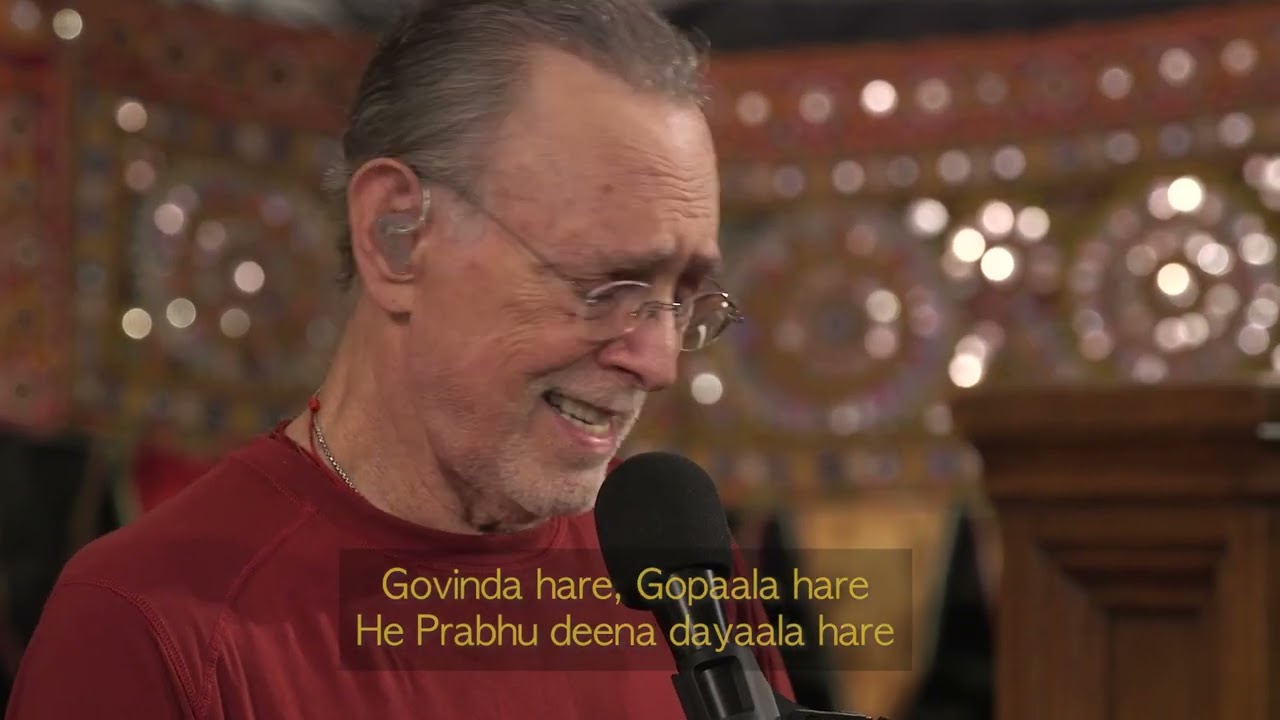
The Essence of Being: Chanting as Liberation
In the profound simplicity of Krishna Das's words, "You don't have to be anything. Just chant," we find an invitation to release the burdens of identity and expectation. This statement resonates deeply in a world that often equates worth with achievement and status. By suggesting that we need not strive to become something more, Krishna Das points us toward a path of authenticity and presence, emphasizing the transformative power of chanting as a means to connect with our true essence.
Chanting, in this context, serves as both a practice and a state of being, allowing us to transcend the complexities of our lives. It is a reminder that our inherent value is not contingent upon external validation or accomplishments. Instead, the act of chanting becomes a portal through which we can access a deeper understanding of ourselves and the universe. In this exploration, we are invited to embrace our essence, stripped of the layers of societal expectations and self-imposed limitations.
The image / the metaphor
The imagery in Krishna Das's quote is strikingly evocative. The phrase "you don't have to be anything" conjures a sense of liberation, as if we are being gently urged to shed the weight of our identities. The verb "chant" is active yet meditative, suggesting that this practice is not merely a passive act but a dynamic engagement with the self and the divine. It evokes a sense of rhythm and flow, inviting us to immerse ourselves in the sound and vibration of the sacred.
Diving deeper into the metaphor, chanting becomes a bridge between the mundane and the transcendent. It is a call to return to the simplicity of being, where the complexities of life fade away in the face of devotion. In this light, chanting is not just an act of vocalization; it is a profound expression of love and surrender. It invites us to experience the fullness of existence without the need for embellishment or pretense, allowing us to resonate with the essence of who we truly are.
In the speaker's tradition
Krishna Das, rooted in the bhakti tradition, embodies the principles of devotion and surrender. Bhakti, which translates to "devotion" or "love," emphasizes a personal relationship with the divine, often expressed through practices such as chanting and singing. This tradition teaches that through devotion, we can experience a state of kenosis, or self-emptying, where the ego dissolves, allowing for a deeper connection with the divine presence. The act of chanting becomes a vehicle for this surrender, facilitating a journey toward self-realization and unity with the cosmos.
In the context of bhakti, we can draw parallels to the concept of sunyata, or emptiness, found in Buddhist philosophy. Both traditions recognize the importance of letting go of the self to experience a profound connection with the universe. In the Bhagavad Gita, Krishna speaks of the importance of surrendering one's actions to the divine, echoing the sentiment of Krishna Das's quote. The Gita teaches that by relinquishing our attachment to outcomes and simply engaging in our practice—be it chanting or any other form of devotion—we can find peace and fulfillment.
Living the teaching
Consider a modern scenario where the pressures of daily life weigh heavily on an individual. Perhaps a person feels overwhelmed by the demands of work, family, and societal expectations, leading to a sense of disconnection from their true self. In this context, Krishna Das's teaching offers a powerful antidote: the practice of chanting can serve as a grounding force, allowing the individual to step back from the chaos and reconnect with their essence. By dedicating time to chant, they can cultivate a sense of presence and clarity, reminding themselves that they do not need to be anything other than who they are in that moment.
In relationships, this teaching can manifest as a gentle reminder to embrace authenticity. Imagine a couple navigating a difficult conversation, where the weight of expectations and misunderstandings threatens to create distance. By incorporating chanting into their practice, they can create a shared space of vulnerability and openness, allowing them to express their true feelings without the need for pretense. In this way, chanting becomes a tool for fostering deeper connections, inviting both partners to simply "be" with one another, free from the burdens of expectation.
A reflection
As we contemplate Krishna Das's invitation to "just chant," we are encouraged to reflect on our own lives and the identities we carry. What would it mean to release the need to be anything other than our authentic selves? In moments of stress or self-doubt, how might the practice of chanting serve as a reminder of our inherent worth? Let this contemplation guide you as you explore the depths of your being, inviting you to embrace the simplicity and beauty of existence.