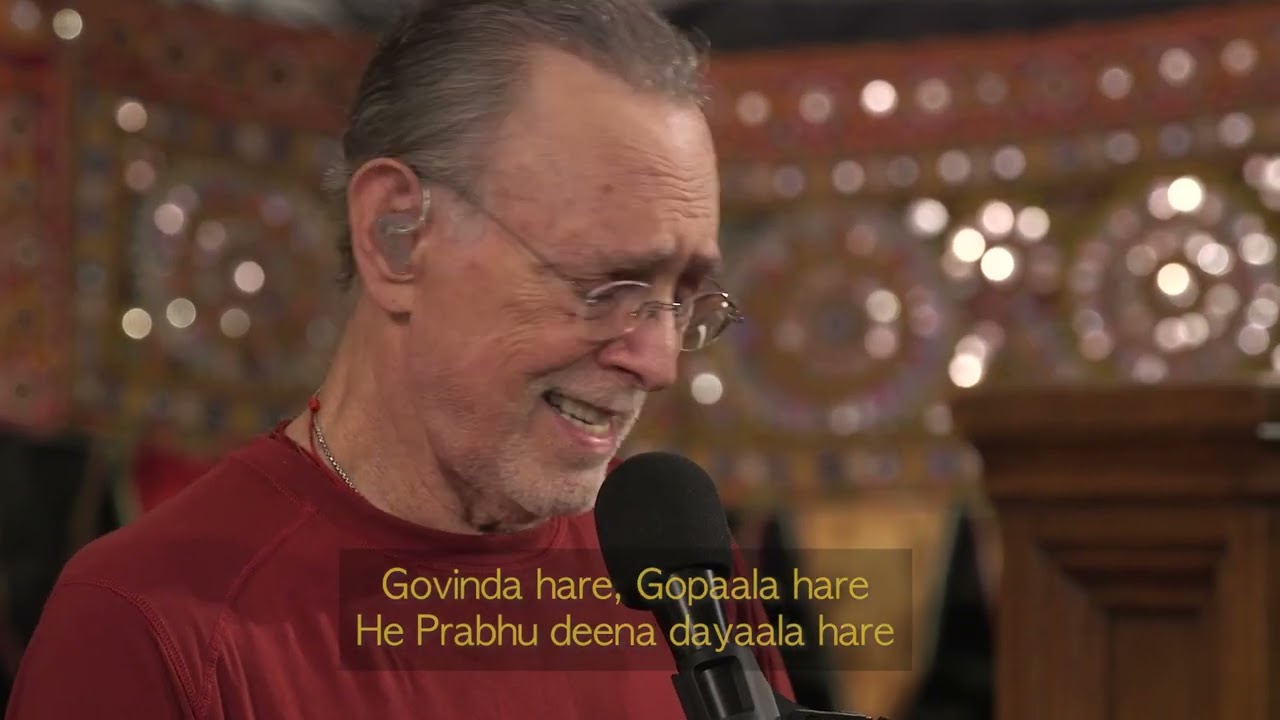
In the words of Krishna Das, "To chant is to fall in love, again and again." This poetic expression invites us to consider the profound connection between the act of chanting and the experience of love. It suggests that each time we engage in this sacred practice, we are not merely repeating words or sounds; we are entering into a dynamic relationship with the divine, a relationship that renews itself with every utterance. This notion holds significant implications for our spiritual journeys, as it emphasizes the transformative power of love and devotion in our lives.
Chanting, in this context, becomes a vehicle for experiencing love in its purest form. It is an invitation to immerse ourselves in the present moment, to surrender to the rhythm of our breath, and to connect with something greater than ourselves. This cyclical nature of falling in love—again and again—reminds us that love is not a finite resource but an ever-expanding force that can be accessed through our devotion. In a world often marked by disconnection and distraction, this teaching serves as a gentle reminder of the beauty and depth that can be found in the simple act of chanting.
The image / the metaphor
The imagery in Krishna Das's quote evokes a sense of intimacy and vulnerability. To "fall in love" suggests a surrendering of the self, a willingness to open one's heart to the experience of connection. The verb "chant" implies an active engagement, a rhythmic expression that resonates with the pulse of life itself. This interplay between action and emotion captures the essence of bhakti, where devotion is not merely a passive state but an active, dynamic relationship with the divine.
In the speaker's tradition
Krishna Das, rooted in the tradition of bhakti, emphasizes the importance of love and devotion in the spiritual path. Bhakti, often described as the path of love, encourages practitioners to cultivate a deep, personal relationship with the divine. This tradition teaches that through acts of devotion—such as chanting, prayer, and service—we can experience a profound sense of connection and belonging. Concepts like dharma, or righteous duty, and kenosis, the self-emptying love exemplified by divine figures, resonate deeply within this framework, highlighting the transformative potential of surrendering to love.
In the Bhagavad Gita, a foundational text of bhakti philosophy, Lord Krishna speaks of the importance of devotion and surrender. He encourages Arjuna to embrace his dharma while remaining anchored in love and devotion to the divine. This teaching parallels Krishna Das's assertion that chanting is an act of falling in love, as both emphasize the necessity of cultivating a heartfelt connection with the divine in order to navigate the complexities of life. The Gita reminds us that love is not merely an emotion but a guiding force that can illuminate our paths.
Living the teaching
Consider a modern scenario where this teaching might resonate: a busy professional feeling overwhelmed by the demands of daily life. In the midst of deadlines and responsibilities, the act of chanting can serve as a refuge, a moment to pause and reconnect with the essence of love. By incorporating chanting into their routine, this individual can cultivate a sense of renewal, allowing the repetitive sounds to wash over them and create a space for reflection and gratitude. This practice not only alleviates stress but also fosters a deeper connection to their own heart and the world around them.
In the context of relationships, the teaching of falling in love through chanting can be particularly powerful. Imagine a couple facing challenges in their communication. By engaging in a shared practice of chanting, they can create a sacred space that invites vulnerability and openness. The act of chanting together becomes a ritual that allows them to express their love and devotion to one another, fostering a deeper understanding and connection. In this way, the practice of chanting serves as a reminder that love is not static but a living, breathing force that requires nurturing and attention.
A reflection
As we contemplate Krishna Das's profound words, we are invited to consider how we might integrate the practice of chanting into our own lives. What does it mean for us to fall in love, again and again, through the act of devotion? In what ways can we cultivate a deeper connection to ourselves, to others, and to the divine through the simple yet profound act of chanting? These questions invite us to explore the transformative power of love and the renewal that can arise from our commitment to a practice that connects us to the heart of existence.