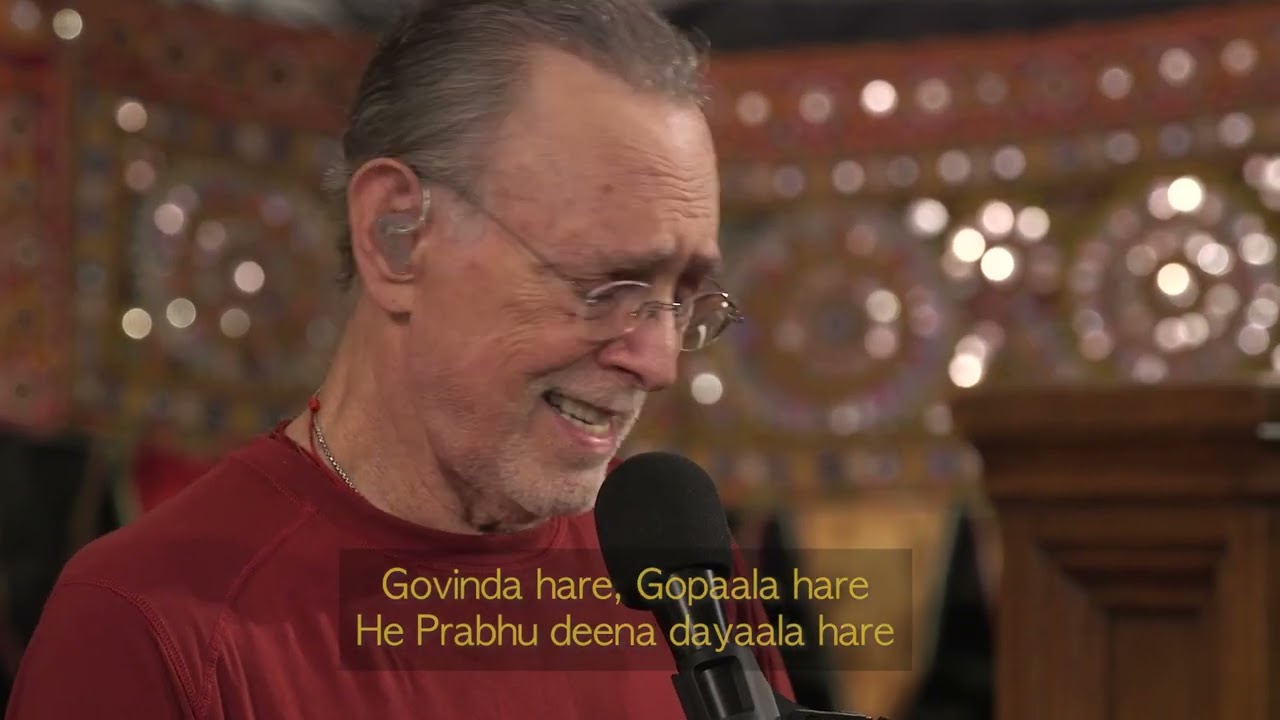
In the words of Krishna Das, "Maharaj-ji says: love everyone, serve everyone, remember God." This succinct yet profound statement encapsulates the essence of a life lived in devotion and service. It invites us to embrace a holistic approach to existence, where love and service are intertwined with the remembrance of the divine. In a world often marked by division and self-interest, this teaching serves as a guiding light, urging us to transcend our individual concerns and connect with a greater purpose.
At its core, this quote challenges us to reconsider our relationships with ourselves, others, and the divine. It suggests that love is not merely an emotion but an active choice that manifests through service. By serving others, we not only express our love but also cultivate a deeper awareness of the divine presence in our lives. This triad of love, service, and remembrance forms a sacred cycle, each element reinforcing the others, ultimately leading us toward a more profound spiritual awakening.
The image / the metaphor
The imagery within this quote is rich and evocative, inviting us to visualize a life steeped in love and service. The verbs "love," "serve," and "remember" are not passive; they demand action and engagement. Love is portrayed as a universal force that transcends boundaries, while service becomes the tangible expression of that love. Remembering God, then, is the spiritual anchor that grounds our actions, reminding us of the divine essence that permeates all existence.
In the speaker's tradition
Krishna Das, rooted in the bhakti tradition, draws upon a rich tapestry of spiritual concepts that resonate deeply with this quote. Bhakti, or devotion, emphasizes the importance of surrendering oneself to the divine through love and service. This aligns with the notion of dharma, which calls us to act in accordance with our highest purpose, often realized through selfless service to others. Concepts such as kenosis, the self-emptying of one's ego, and sunyata, the emptiness that allows for the fullness of divine presence, further illuminate the path laid out by Maharaj-ji's teachings.
In the Bhagavad Gita, a foundational text in the bhakti tradition, Lord Krishna speaks of selfless action as a means to attain spiritual liberation. He encourages Arjuna to perform his duty without attachment to the fruits of his actions, embodying the essence of love and service. This echoes Maharaj-ji's message, reminding us that true devotion is not merely about personal gain but about serving the greater good while remaining anchored in the remembrance of the divine.
Living the teaching
Consider a modern scenario where this teaching can be applied: a community struggling with division and misunderstanding. By embodying the principles of love and service, individuals can come together to support one another, fostering a sense of unity and compassion. Whether through volunteering at a local shelter or simply offering a listening ear to a neighbor in need, these acts of service become expressions of love that can transform the community. In this way, remembering God becomes a collective endeavor, as the divine is experienced through the connections forged in service.
In the context of personal relationships, this teaching can also serve as a powerful guide. Imagine a moment of conflict with a loved one, where misunderstandings and hurt feelings threaten to create distance. By choosing to love and serve, one can approach the situation with empathy and compassion, seeking to understand rather than to be understood. This conscious choice to remember the divine presence in the other person can shift the dynamics of the relationship, fostering healing and deeper connection.
A reflection
As we contemplate the wisdom of Maharaj-ji's words, we are invited to reflect on our own lives: How can we embody love, service, and remembrance in our daily actions? This question encourages us to examine our relationships, our communities, and our spiritual practices, prompting us to seek out opportunities for connection and service. In doing so, we may discover that the path to spiritual fulfillment lies not in isolation but in the embrace of love and the commitment to serve others.