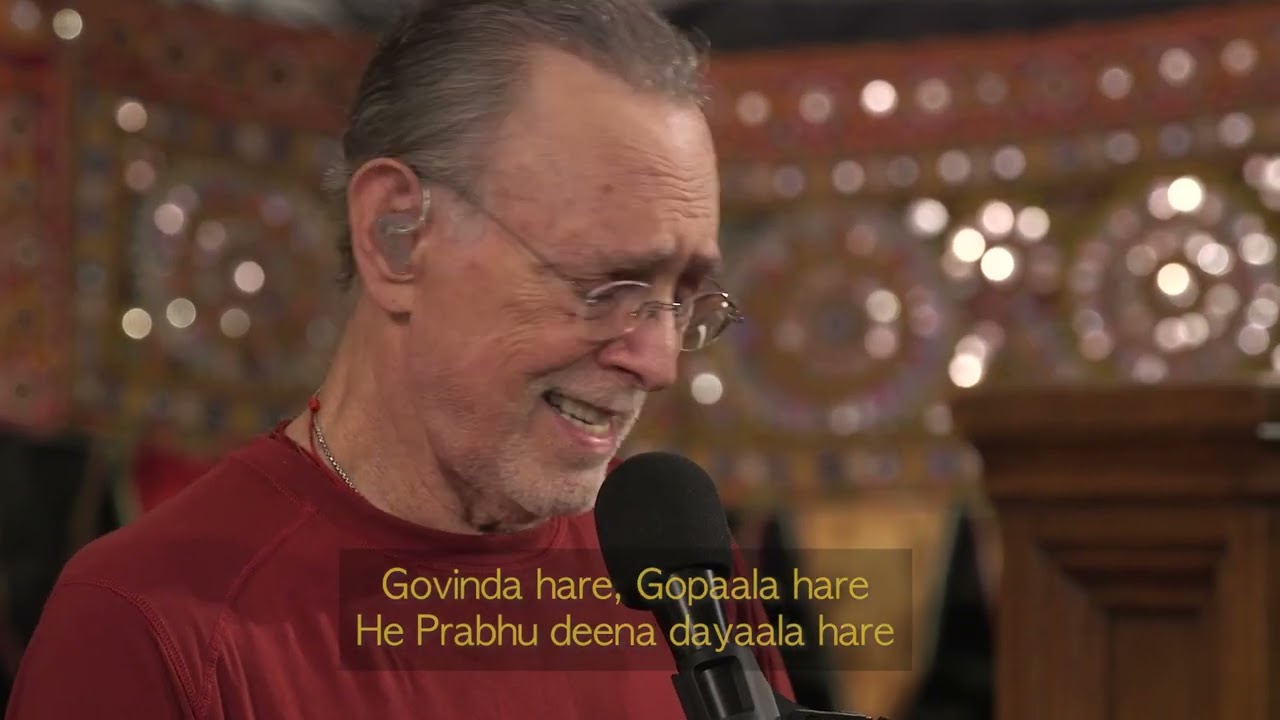
Breaking Down the Walls: The Transformative Power of Chanting
In the words of Krishna Das, "In the chanting, my walls come down." This poignant statement encapsulates the profound experience of vulnerability and openness that arises through the practice of chanting. It suggests that the act of vocalizing sacred sounds can dismantle the barriers we erect around ourselves, allowing for a deeper connection to the divine and to one another. This matters immensely in a world often characterized by isolation and disconnection, as it invites us to explore the transformative potential of surrendering our defenses.
Chanting, as a practice, serves as a bridge between the individual and the universal, facilitating a journey toward inner peace and communal harmony. When Krishna Das speaks of walls coming down, he evokes a sense of liberation from the constraints of ego and fear. This liberation is not merely a personal experience; it resonates with the collective longing for connection and understanding. In a society that often prioritizes self-protection, the invitation to chant becomes a call to embrace vulnerability and authenticity.
The image / the metaphor
The imagery in Krishna Das's quote is rich and evocative. The "walls" he refers to symbolize the emotional and psychological barriers we construct to shield ourselves from pain, judgment, and intimacy. The act of chanting, then, becomes a powerful verb, suggesting movement and action that leads to the dismantling of these barriers. It conjures a felt sense of release, as if the vibrations of sound penetrate the fortified structures of our defenses, allowing light and connection to flow in.
Diving deeper into the metaphor, we can see that these walls are not only personal but also societal. They represent the divisions that separate us from one another—cultural, ideological, and spiritual. By engaging in the communal act of chanting, we participate in a collective unearthing of these barriers, fostering a sense of unity that transcends individual differences. The walls that once isolated us begin to dissolve, revealing the interconnectedness that lies at the heart of our shared humanity.
In the speaker's tradition
Krishna Das's insights are deeply rooted in the tradition of bhakti, which emphasizes devotion and love for the divine. In bhakti philosophy, the concept of surrender—often referred to as "kenosis"—is central to the practice. This self-emptying allows individuals to let go of their ego-driven desires and open themselves to divine grace. Chanting serves as a vehicle for this surrender, creating a space where the heart can soften and walls can fall away, aligning with the essence of bhakti as a path of love and devotion.
Moreover, this idea resonates with the Buddhist concept of "sunyata," or emptiness, which invites practitioners to recognize the impermanence of self-constructed identities. Just as chanting can lead to the dissolution of walls, the realization of sunyata encourages the letting go of attachments that bind us. In the Bhagavad Gita, Krishna speaks of the importance of surrendering to the divine will, reinforcing the notion that true freedom arises when we relinquish our need for control and embrace the flow of life.
Living the teaching
Consider a modern scenario where this teaching might resonate: a person navigating the complexities of social anxiety. In moments of overwhelming fear, the idea of chanting can serve as a grounding practice, allowing them to express their vulnerability and connect with others. As they engage in the rhythmic repetition of sacred sounds, they may find that their internal walls begin to crumble, creating space for authentic interactions and a sense of belonging.
Another application of this teaching can be found in relationships, particularly during conflicts. When tensions rise and defensiveness takes hold, the act of chanting together can serve as a powerful tool for reconciliation. By inviting the sacred into the space between them, individuals can lower their walls, fostering an atmosphere of openness and understanding. This practice not only deepens their connection but also transforms the energy of the relationship, allowing love and compassion to flourish.
A reflection
As we contemplate Krishna Das's profound statement, we are invited to reflect on our own walls. What barriers have we constructed that prevent us from experiencing deeper connections with ourselves and others? In what ways can we incorporate the practice of chanting or other forms of expression into our lives to facilitate the dismantling of these walls? Let this inquiry guide you toward a more open and connected existence.