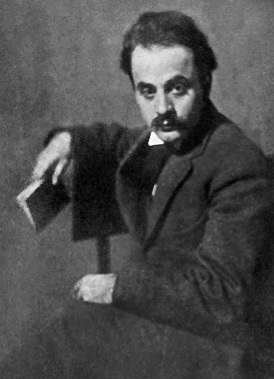
Kahlil Gibran's profound assertion, "When you reach the end of what you should know, you will be at the beginning of what you should sense," invites us to explore the delicate interplay between knowledge and intuition. This statement suggests that the culmination of intellectual understanding often marks the initiation of a deeper, more instinctual awareness. In a world that often prioritizes empirical knowledge, Gibran's words remind us of the importance of attuning ourselves to the subtler dimensions of existence, where wisdom transcends mere facts and figures.
In a society enamored with information, Gibran's insight serves as a gentle nudge towards a more holistic approach to understanding life. It beckons us to recognize that true wisdom is not solely derived from what we can quantify or articulate, but also from what we can feel and intuit. This journey from knowing to sensing is not merely a transition; it is an invitation to embrace the fullness of our human experience, where intellect and intuition coalesce into a richer tapestry of understanding.
The image / the metaphor
The imagery in Gibran's quote evokes a sense of journeying through a landscape of knowledge, where one traverses the peaks of understanding only to find oneself at a precipice. The verbs "reach" and "beginning" suggest a dynamic movement, a progression that is both linear and cyclical. As we arrive at the end of what we have learned, we are not met with a dead end but rather a doorway leading us into the realm of sensing—an invitation to engage with the world through a different lens, one that is less about analysis and more about feeling.
In the speaker's tradition
Kahlil Gibran's work is steeped in the rich soil of Christian mysticism, where the interplay of knowledge and intuition is a recurring theme. Concepts such as kenosis—the self-emptying of the mind to make space for divine wisdom—echo the essence of Gibran's message. In this tradition, the journey towards spiritual maturity often involves a relinquishing of rigid certainties, allowing for a more fluid and responsive engagement with the divine and the world around us. This aligns with the idea of prajna in Buddhist thought, where wisdom is not merely intellectual but deeply experiential, rooted in the heart's understanding.
In Gibran's own writings, particularly in "The Prophet," we find reflections on the importance of listening to the inner voice that transcends conventional wisdom. His poetic explorations often reveal that the essence of life is not found in the accumulation of facts but in the depth of our experiences and the insights they yield. This resonates with the mystical traditions across various cultures, where the journey inward often leads to profound revelations that cannot be articulated but can be sensed deeply.
Living the teaching
Consider a modern scenario where this teaching might resonate: a professional who has spent years accumulating knowledge in their field, yet finds themselves feeling unfulfilled. They may have reached the pinnacle of their career, armed with degrees and accolades, but a sense of emptiness lingers. In this moment, Gibran's words serve as a reminder that the end of their intellectual pursuit could be the beginning of a deeper exploration of their passions and values. By allowing themselves to sense what truly resonates within, they may discover new avenues for fulfillment that transcend their previous understanding.
In the realm of relationships, Gibran's insight can illuminate the dynamics between partners. Often, couples may find themselves caught in cycles of rational debate, where knowledge of each other's preferences and histories becomes a barrier to genuine connection. Here, the transition from knowing to sensing invites them to move beyond intellectual exchanges and into the realm of emotional attunement. By fostering a deeper sensitivity to each other's feelings and intuitions, they can cultivate a richer, more empathetic relationship that honors both their individual experiences and their shared journey.
A reflection
As we contemplate Gibran's profound statement, we are invited to reflect on our own lives: What areas have we reached the limits of our knowledge, and how might we open ourselves to the wisdom of sensing? This question encourages us to consider where we might be clinging to certainty at the expense of deeper understanding. In embracing the unknown, we may find that the heart has much to teach us, guiding us toward a more integrated and fulfilling existence.
