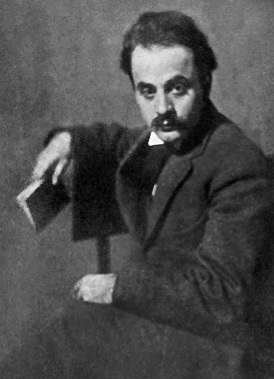
The Hidden Grace of Competition
Kahlil Gibran's assertion that "Beauty is not the goal of competitive sports, but it is a wonderful by-product" invites us to reconsider the essence of competition and the nature of beauty itself. In a world often obsessed with winning and accolades, Gibran gently reminds us that the true value of our endeavors may lie not in the trophies we collect but in the grace and artistry that emerge from our efforts. This perspective challenges us to look beyond the surface of achievement and recognize the deeper, often unacknowledged, beauty that arises when we engage fully in our passions.
As we delve deeper into Gibran's words, we uncover a profound truth about the human experience: that beauty often flourishes in the spaces between intention and outcome. In competitive sports, the drive to excel can overshadow the joy of participation, yet it is within this very struggle that moments of beauty manifest. Whether it is the elegance of a perfectly executed movement or the camaraderie shared among competitors, these by-products of competition remind us that beauty is not merely an end goal but a spontaneous expression of our humanity.
The image / the metaphor
The imagery in Gibran's quote evokes a sense of movement and dynamism, suggesting that beauty is not static but rather a fluid by-product of action. The verb "is" connects beauty to the act of competition, implying that beauty emerges naturally when we engage wholeheartedly in our pursuits. This notion of beauty as a by-product invites us to appreciate the subtleties of our experiences, recognizing that the most profound moments often arise unexpectedly, like a flower blooming in the midst of a bustling garden.
Diving deeper into the metaphor, we can see that Gibran is not merely speaking of aesthetic beauty but rather a more holistic understanding of beauty that encompasses grace, harmony, and connection. In this context, beauty becomes a reflection of our inner state, a manifestation of our spirit's engagement with the world. The competitive arena, often perceived as a battleground, transforms into a canvas where the artistry of human expression unfolds, revealing the beauty inherent in our struggles and triumphs.
In the speaker's tradition
Kahlil Gibran, rooted in the Christian-mystic tradition, draws upon concepts that resonate deeply with the idea of beauty as a by-product of our endeavors. The notion of kenosis, or self-emptying, aligns with Gibran's perspective, as it encourages individuals to surrender their ego-driven desires in pursuit of a higher purpose. In this light, competition becomes less about personal glory and more about the collective experience, where beauty arises from the shared journey of striving and growing together.
Moreover, Gibran's emphasis on beauty as a by-product echoes the teachings found in various mystical texts, such as the works of Meister Eckhart, who spoke of the divine presence manifesting in the ordinary. Just as Eckhart invites us to recognize the sacred in our daily lives, Gibran encourages us to see the beauty that emerges from our competitive endeavors. In both traditions, the focus shifts from the external validation of success to the internal cultivation of grace and beauty in our actions.
Living the teaching
Consider a modern scenario where this teaching resonates: a local community sports event where participants of all ages come together not merely to win but to celebrate their shared love for the game. In this environment, the beauty of the event is palpable—not in the scoreboard, but in the laughter, the encouragement exchanged, and the sense of belonging that envelops everyone involved. Here, Gibran's insight comes to life, as the beauty of the experience transcends the competitive nature of the event, reminding us that the essence of participation is rooted in connection and joy.
This teaching can also be applied in the context of personal relationships, particularly during challenging moments. When conflicts arise, the focus often shifts to winning the argument or proving a point. However, if we approach these situations with the intention of fostering understanding and connection, we may discover unexpected beauty in the resolution process. The grace that emerges from vulnerability and empathy can transform a difficult moment into an opportunity for deeper intimacy, illustrating Gibran's assertion that beauty is a by-product of our genuine engagement with one another.
A reflection
As we contemplate Gibran's words, we are invited to reflect on our own lives: In what areas do we find ourselves overly focused on outcomes, potentially missing the beauty that arises in the process? This question encourages us to shift our perspective, allowing us to appreciate the artistry of our experiences and the connections we forge along the way. By embracing the notion that beauty is a by-product of our endeavors, we open ourselves to a richer, more fulfilling engagement with life.
