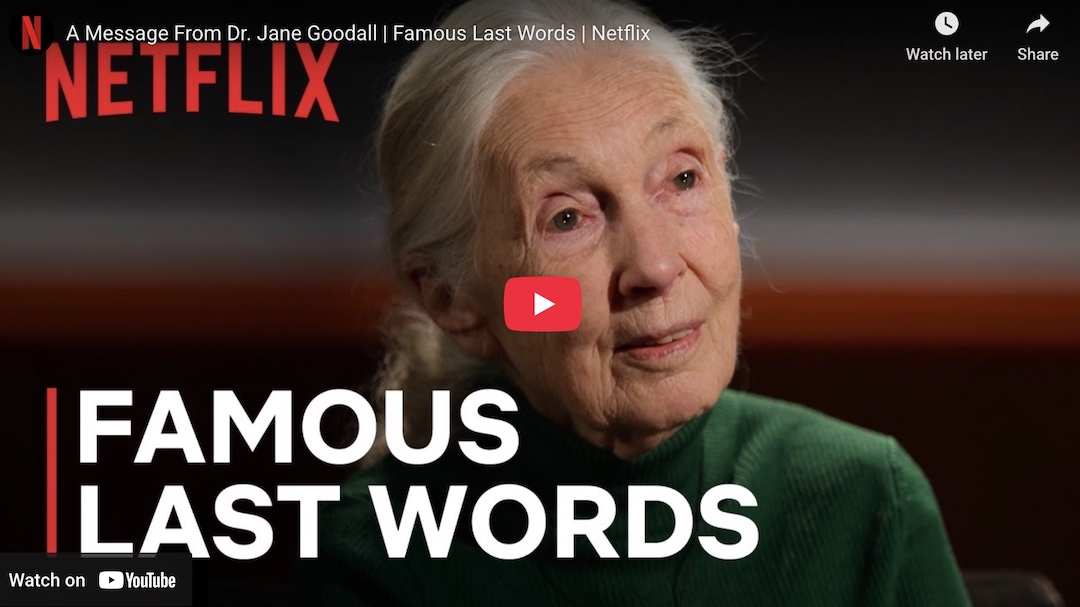
Jane Goodall's assertion that "the future is not a place we go. It is a place we make" invites us to reconsider our relationship with time and possibility. Rather than viewing the future as a distant destination, this perspective encourages us to see it as a canvas upon which we can actively paint our intentions and actions. This understanding is crucial in a world often dominated by uncertainty and fear, as it empowers us to take responsibility for the outcomes we desire.
In a rapidly changing environment, the notion that we can shape our future becomes a source of hope and agency. Goodall's words resonate deeply within the context of ecological consciousness, urging us to recognize that our choices today directly influence the world we inhabit tomorrow. This shift from passivity to active engagement is not merely a philosophical stance; it is a call to action that invites us to participate in the creation of a sustainable and compassionate future.
The image / the metaphor
The imagery embedded in Goodall's quote is rich and evocative. By stating that the future is not a place we go, she dismantles the conventional notion of time as linear and predetermined. Instead, she presents the future as a dynamic space that we actively construct through our thoughts, decisions, and actions. The verbs "make" and "go" suggest a profound agency; we are not mere travelers on a path laid out before us but rather artisans of our destiny, wielding the tools of creativity and intention.
In the speaker's tradition
Jane Goodall's insights are deeply rooted in the tradition of contemplative ecology, which emphasizes the interconnectedness of all living beings and the importance of mindful stewardship of the Earth. Concepts such as dharma, which refers to the ethical path or duty, resonate with her call to actively shape the future. In this context, making the future becomes not only a personal endeavor but also a collective responsibility, where our actions contribute to the greater good of the planet and its inhabitants.
Goodall's work parallels the teachings found in various spiritual texts that advocate for a harmonious relationship with nature. For instance, the Buddhist concept of sunyata, or emptiness, invites us to recognize the impermanence of all things and the potential for transformation. This understanding aligns with Goodall's message, as it encourages us to embrace the fluidity of the future and to engage in practices that foster ecological balance and resilience.
Living the teaching
Consider a modern scenario where this teaching can be applied: a community grappling with the effects of climate change. Residents may feel overwhelmed by the enormity of the crisis, perceiving the future as bleak and predetermined. However, by embracing Goodall's perspective, they can come together to envision and create sustainable practices, such as community gardens or renewable energy initiatives. In doing so, they shift from a mindset of despair to one of empowerment, actively participating in the creation of a healthier environment for future generations.
Another application of this teaching can be found in personal relationships. Imagine a couple facing challenges in their communication. Instead of resigning themselves to a future marked by conflict, they can choose to engage in open dialogue and active listening, thereby crafting a more harmonious relationship. This conscious effort to "make" their future together illustrates how the principles of Goodall's quote can manifest in everyday life, transforming difficulties into opportunities for growth and connection.
A reflection
As we contemplate Goodall's profound insight, we are invited to reflect on our own role in shaping the future. What intentions and actions can we cultivate today that will contribute to a more compassionate and sustainable world tomorrow? This question encourages us to engage in a contemplative practice, examining our choices and their potential impact on the lives of others and the planet. In this way, we can begin to embody the essence of Goodall's message, recognizing that the future is indeed a place we make, one mindful decision at a time.