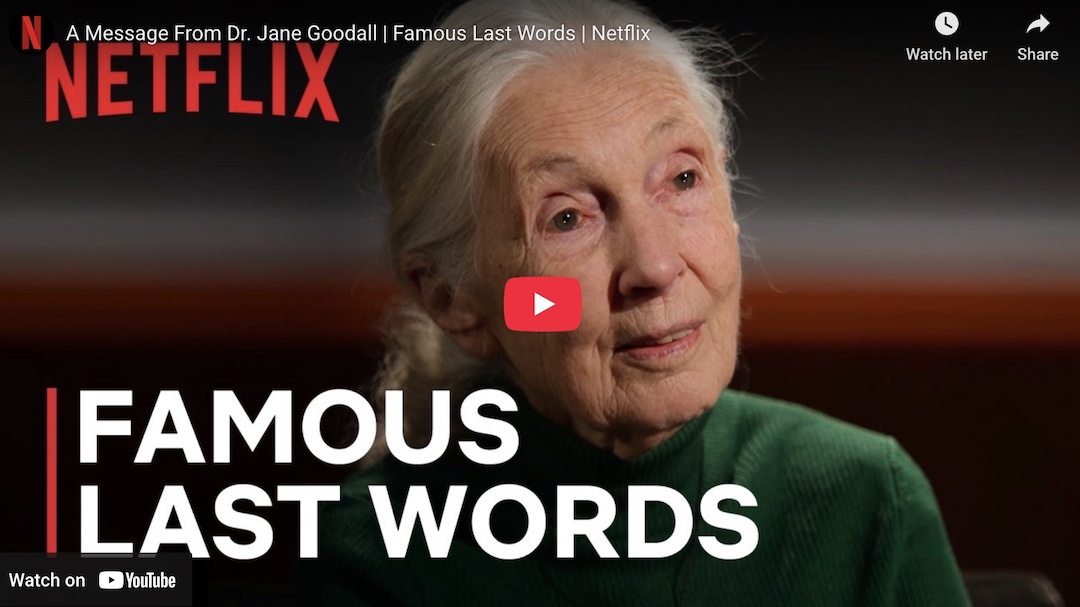
Jane Goodall's assertion that "Our power to think — our power to feel — that is what matters" invites us to reflect on the profound significance of our cognitive and emotional faculties. In a world increasingly dominated by external distractions and technological advancements, this statement serves as a reminder of the intrinsic power we hold within ourselves. It emphasizes that our ability to engage thoughtfully and empathetically with the world shapes not only our personal experiences but also the collective consciousness of humanity.
This quote resonates deeply within the context of contemplative ecology, where the interconnectedness of all beings is acknowledged. Goodall, a pioneer in the study of primates and a passionate advocate for environmental conservation, underscores the importance of nurturing our inner lives. By cultivating our capacity to think critically and feel deeply, we can foster a more compassionate and sustainable relationship with the natural world. This duality of thought and emotion becomes a powerful tool for transformation, both personally and globally.
The image / the metaphor
The imagery in Goodall's quote evokes a sense of agency and responsibility. The verbs "think" and "feel" suggest active engagement rather than passive observation. This distinction is crucial; it implies that our thoughts and emotions are not merely reactions but powerful forces that can shape our reality. The phrase "that is what matters" elevates these faculties to a place of paramount importance, urging us to recognize their potential in influencing our actions and decisions.
In the speaker's tradition
Jane Goodall's work is deeply rooted in the tradition of contemplative ecology, which emphasizes the interconnectedness of all living beings and the importance of nurturing our relationship with the natural world. Concepts such as "dharma," which refers to the inherent duty to live in harmony with the universe, resonate with Goodall's message. By recognizing our power to think and feel, we align ourselves with our dharma, fostering a sense of responsibility towards the environment and all its inhabitants.
In her book "Reason for Hope," Goodall draws upon her experiences with chimpanzees to illustrate the profound emotional lives of these creatures. This connection to the animal kingdom serves as a poignant reminder of our shared existence and the moral imperative to protect the planet. The teachings of compassion and empathy found in various spiritual traditions, such as the Buddhist concept of "karuna," echo Goodall's call to harness our cognitive and emotional powers for the greater good.
Living the teaching
Consider a modern scenario where this teaching can be applied: a community grappling with environmental degradation. In such a context, individuals who harness their power to think critically can analyze the root causes of the issues at hand, while those who cultivate their emotional intelligence can inspire collective action through empathy and understanding. By fostering a dialogue that combines both thought and feeling, communities can mobilize to create sustainable solutions that honor the interconnectedness of all life.
In the realm of personal relationships, Goodall's teaching can also find resonance. Imagine a moment of conflict with a loved one, where misunderstandings arise. By engaging both our thinking and feeling faculties, we can approach the situation with clarity and compassion. This dual engagement allows us to navigate the complexities of human interaction, fostering deeper connections and healing. In daily practice, this might manifest as taking a moment to reflect before responding, ensuring that our thoughts and feelings align with our intentions for understanding and connection.
A reflection
As we contemplate Goodall's assertion, we are invited to consider how we can cultivate our powers of thought and feeling in our daily lives. What practices can we engage in to deepen our understanding of ourselves and our connection to the world around us? Reflecting on this question can lead us to explore mindfulness, active listening, and compassionate action as pathways to harnessing our inner power for the greater good.