The Boundless Heart: Embracing Compassion for All Beings
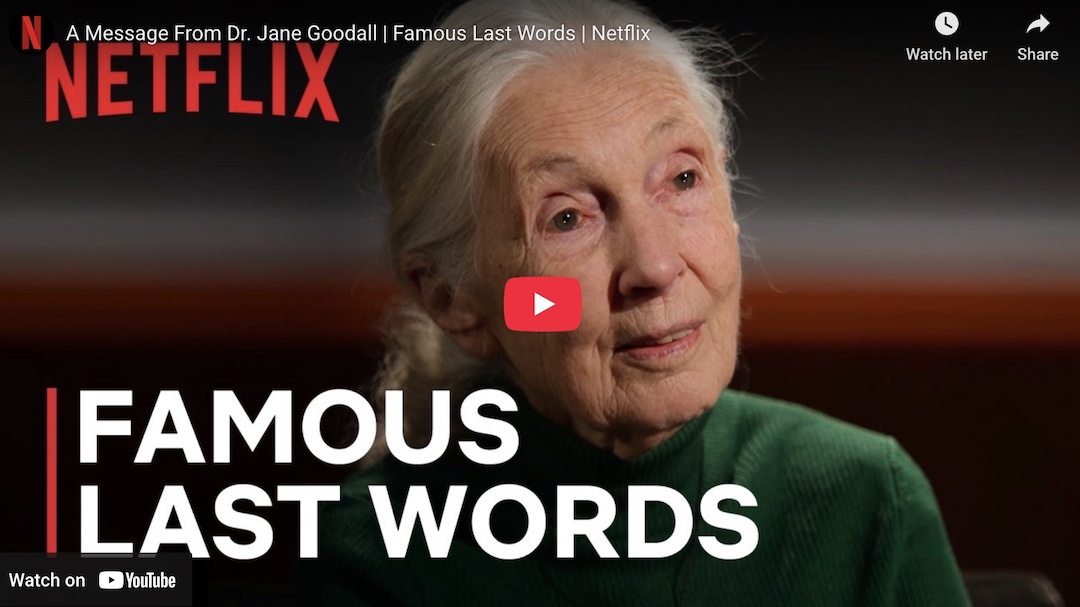
Jane Goodall's assertion that "compassion has no boundaries" invites us to consider the vastness of our empathy, extending beyond the confines of human experience to encompass all sentient beings. This perspective challenges us to reflect on the interconnectedness of life and the moral imperative to act with kindness and understanding toward every creature. In a world often marked by division and indifference, embracing such a boundless compassion is not merely a lofty ideal; it is a profound necessity for the well-being of our planet and its inhabitants.
To truly grasp the depth of Goodall's message, we must recognize that compassion is not a finite resource, but rather an expansive force that can transform our relationships with others and the environment. It calls us to transcend our biases and limitations, fostering a sense of unity with all living beings. This understanding is crucial in a time when ecological crises and social injustices demand our attention and action. By nurturing a compassionate heart, we can cultivate a more harmonious existence, not only for ourselves but for the entire web of life.
The image / the metaphor
The imagery in Goodall's quote evokes a sense of limitless space, where compassion flows freely and unimpeded. The phrase "has no boundaries" suggests an openness that defies the barriers we often erect—whether they be cultural, species-based, or personal. The verbs "extends" and "has" imply an active, ongoing process, inviting us to engage in a continuous practice of compassion that reaches out to all sentient beings, including those we may not typically consider in our sphere of concern.
Diving deeper into the metaphor, we can envision compassion as a vast ocean, where each wave represents an act of kindness that ripples outward, touching shores far beyond our immediate surroundings. This oceanic quality of compassion reminds us that our actions, no matter how small, can have significant impacts on the lives of others. The boundless nature of compassion encourages us to see ourselves as part of a larger ecosystem, where every being's suffering and joy are interconnected, urging us to respond with empathy and care.
In the speaker's tradition
Jane Goodall's work is deeply rooted in the principles of contemplative ecology, which emphasizes the interconnectedness of all life forms and the moral responsibility we hold toward them. This perspective resonates with concepts such as dharma, which calls for ethical living in harmony with the natural world, and kenosis, the self-emptying love that allows us to embrace others without reservation. In this light, Goodall's call for boundless compassion aligns with the idea of sunyata, or emptiness, where the self dissolves into a greater awareness of our shared existence.
Moreover, Goodall's insights echo the teachings found in various spiritual texts that advocate for compassion as a foundational virtue. For instance, the Buddhist text "The Dhammapada" emphasizes the importance of loving-kindness and compassion toward all beings, stating that "hatred does not cease by hatred, but only by love." This sentiment mirrors Goodall's assertion, reinforcing the notion that true compassion transcends boundaries and is essential for fostering peace and understanding in our world.
Living the teaching
Consider a modern scenario where this teaching can be applied: a community grappling with the effects of climate change. As individuals witness the devastating impact on both human and animal populations, the call for compassion becomes urgent. By recognizing the suffering of displaced communities and endangered species alike, we can mobilize our efforts to advocate for sustainable practices and policies that honor the needs of all beings. This collective action, rooted in compassion, can lead to meaningful change and healing for our planet.
In a more personal context, imagine navigating a difficult relationship with a friend or family member. When conflicts arise, it can be easy to retreat into defensiveness or blame. However, if we approach the situation with the understanding that compassion knows no boundaries, we can foster a dialogue that prioritizes empathy and understanding. By acknowledging the shared struggles and vulnerabilities we all face, we can cultivate deeper connections and navigate challenges with grace and kindness.
A reflection
As we contemplate Goodall's profound assertion, we may ask ourselves: How can I expand my capacity for compassion in my daily life? This question invites us to reflect on our interactions with others, the environment, and even ourselves. By considering the ways in which we can embody boundless compassion, we open ourselves to a richer, more connected existence, ultimately contributing to the well-being of all sentient beings.